
Portable power equipment is becoming part of a growing range of products, from mobile energy storage systems to robotics and electric mobility devices. As these applications develop, battery designers face a familiar challenge: how to fit sufficient energy capacity into a practical battery pack without overlooking size, weight, and electrical requirements.
The choice of individual battery cells has a direct influence on the final design. Capacity determines how much charge a cell can store, while its dimensions and electrical characteristics affect how multiple cells can be arranged and connected.
This is one reason why 21700 lithium-ion cells have attracted attention in rechargeable battery development. Their cylindrical format offers battery manufacturers a standardized physical form to work with, while high-capacity versions can help reduce the number of cells required for a given nominal capacity.
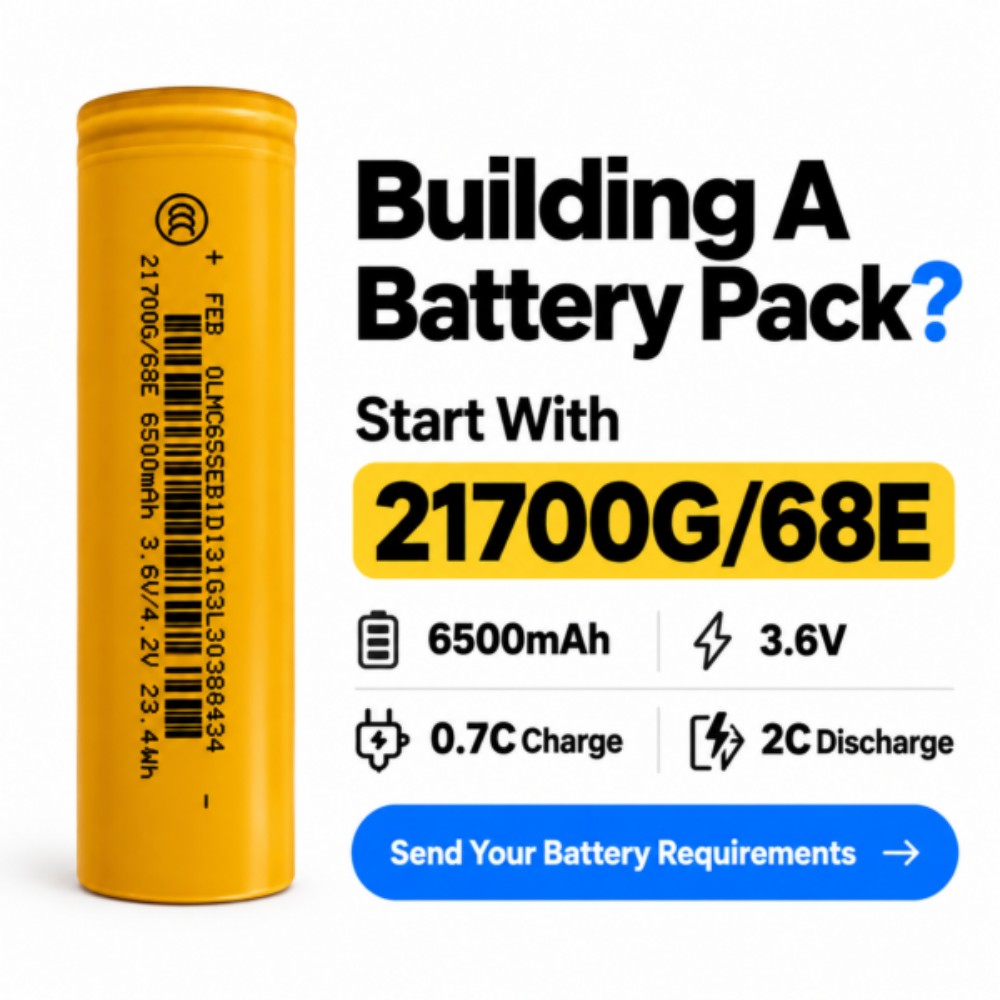
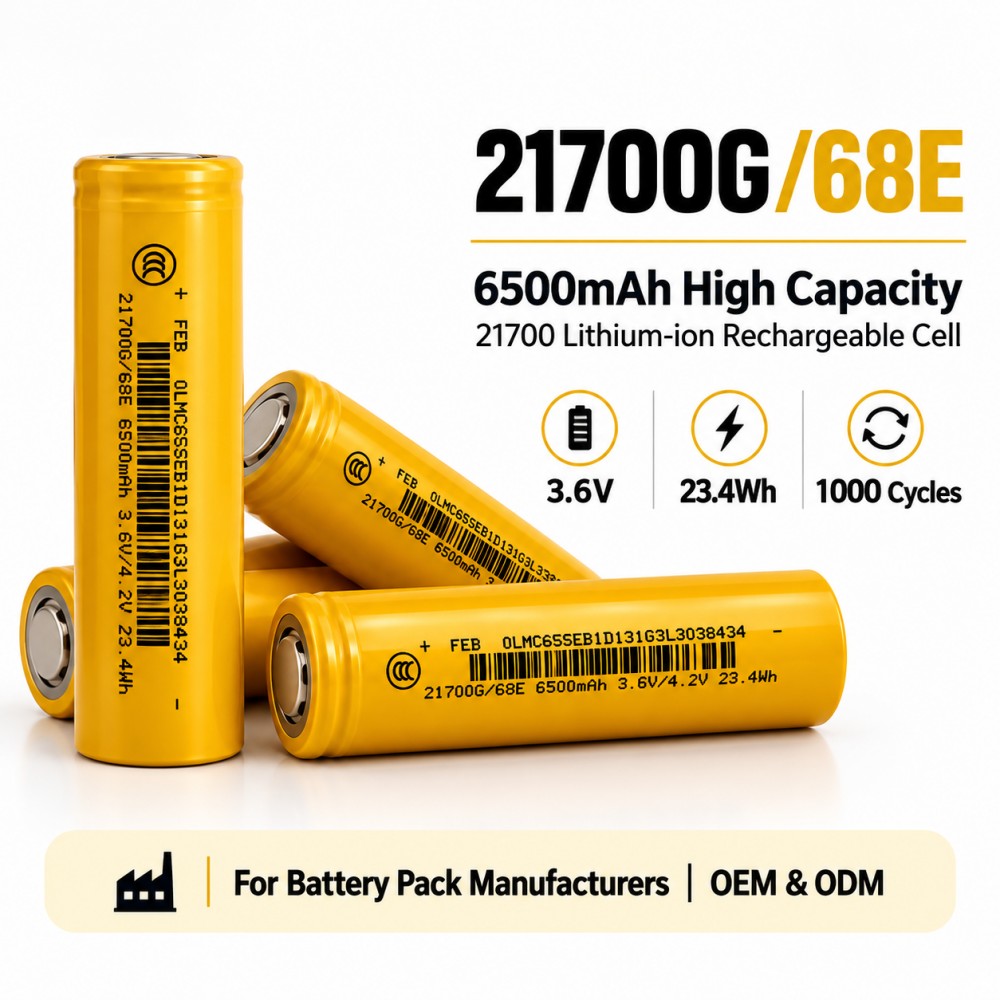
The Yifang 21700G/68E is designed around this requirement. With a capacity of 6500mAh, a nominal voltage of 3.6V, and a rated cycle life of 1000 cycles, it provides a cell option for battery systems that require substantial capacity in a cylindrical format.
1. Why Does Cell Capacity Matter in Portable Power Equipment?
Battery capacity is one of the first specifications engineers consider when developing a portable power solution. It affects how much electrical charge a battery can store and contributes to the operating time of the equipment.
A higher-capacity cell can provide more ampere-hours within an individual battery position. This may allow designers to achieve a target pack capacity with fewer cells, depending on the system voltage, discharge requirements, and overall battery configuration.
For example, a 6500mAh lithium-ion cell offers a nominal capacity of 6.5Ah. When several cells are connected in parallel, their capacities add together, provided the cells are appropriately matched and configured. Series connections, by comparison, increase the overall pack voltage while maintaining the capacity of each parallel group.
This flexibility is useful when designing portable power equipment with different energy requirements. A compact device may need a relatively small battery pack, while a larger energy storage application may require more cells to achieve its target capacity.
The Yifang 21700G/68E provides 6500mAh capacity per cell, giving battery designers a starting point for developing customized rechargeable battery packs.
2. How Does the 21700 Cylindrical Format Support Battery Pack Design?
Battery capacity is important, but it cannot be considered separately from physical dimensions. A cell may offer substantial capacity, yet its size and weight still need to fit the available space inside the finished product.
The 21700 format provides a cylindrical cell structure with a nominal diameter of approximately 21mm and a length of approximately 70mm. This format is used in various rechargeable battery applications where designers need to balance cell capacity, pack dimensions, and mechanical arrangement.
The Yifang 21700G/68E measures 70.95 × 21.65mm and weighs 75g. These specifications help engineers estimate the space and weight requirements when planning a battery assembly.
For battery pack manufacturers, the physical format also influences how cells are positioned, supported, connected, and protected. A suitable arrangement can make better use of the available enclosure space while leaving room for other components, including the battery management system and thermal management structures where required.
Rather than focusing only on the capacity of one cell, designers should evaluate how its dimensions work within the complete battery pack.
3. What Do the 3.6V Nominal Voltage and 6500mAh Capacity Mean for Battery Configuration?
Voltage and capacity serve different purposes in battery design. Nominal voltage describes the typical voltage level used for battery system planning, while capacity indicates how much charge the cell can store.
The 21700G/68E has a nominal voltage of 3.6V and a capacity of 6500mAh. These specifications provide a reference for calculating battery pack configurations.
For instance, connecting cells in series increases the nominal pack voltage. Connecting cells in parallel increases the overall capacity. A series-parallel configuration combines both approaches to meet the voltage and capacity requirements of a particular application.
This is particularly relevant for customized lithium-ion battery solutions. Portable power equipment, backup power systems, and e-mobility products do not all operate at the same voltage or require the same energy capacity.
Battery designers can evaluate the 21700G/68E as an individual cell within different series-parallel arrangements. The final configuration should also account for the equipment’s operating voltage range, current demand, protection requirements, and charging system compatibility.
4. Why Should Charging and Discharging Rates Be Considered Together?
A high-capacity battery cell is not automatically suitable for every power application. Its charging and discharging characteristics must match the electrical demands of the equipment.
The Yifang 21700G/68E has a specified 0.7C charge rate and 2C discharge rate. These values provide useful reference points when evaluating how the cell may perform within a rechargeable battery system.
The C-rate expresses current in relation to the cell’s rated capacity. For a 6500mAh cell, a 0.7C charge rate corresponds to a nominal current of approximately 4.55A, while a 2C discharge rate corresponds to approximately 13A.
These figures help engineers assess whether the cell’s charging and discharging characteristics align with the intended application. For example, a portable power device may have different current requirements during normal operation and charging.
However, the actual operating current must follow the manufacturer’s specifications and the battery system’s design limits. Temperature, protection circuitry, cooling arrangements, and charging control also need to be considered during product development.
5. How Does Cycle Life Affect Long-Term Battery Applications?
For rechargeable battery products, initial capacity is only part of the evaluation. Buyers also need to consider how the cell supports repeated charging and discharging throughout its intended service life.
The Yifang 21700G/68E has a rated cycle life of 1000 cycles. This specification is relevant to applications where the battery is expected to undergo repeated use rather than being replaced after a single discharge.
Portable power equipment, energy storage systems, robotics, and backup power products may all involve recurring charge and discharge cycles. When selecting a cell, manufacturers should consider how frequently the battery will operate and how its capacity retention requirements fit the intended product lifecycle.
It is also important to understand the test conditions behind a cycle-life rating. Charging and discharging conditions, operating temperature, discharge depth, and the defined end-of-life capacity threshold can all influence the result.
For commercial battery projects, sample testing under representative operating conditions provides a more useful basis for evaluating whether a cell meets the application’s long-term requirements.
6. Where Can High-Capacity 21700 Lithium-Ion Cells Be Used?
The combination of cylindrical construction, 6500mAh capacity, and rechargeable operation makes the 21700G/68E relevant to several types of battery development projects.
Potential application areas include:
- Portable power equipment: Battery packs for products that require rechargeable energy in a relatively compact enclosure.
- Energy storage systems: Configurations designed to store and supply electrical energy according to system requirements.
- E-mobility battery packs: Battery assemblies for electric mobility applications, subject to the required voltage, discharge, and safety specifications.
- Robotics: Rechargeable power systems for mobile robots and other equipment with defined operating energy requirements.
- Backup power equipment: Battery packs designed to provide stored electrical energy when the primary power source is unavailable.
- Customized lithium-ion solutions: OEM and ODM battery projects requiring specific series-parallel configurations.
Each application has its own electrical and mechanical requirements. Battery manufacturers should therefore assess cell compatibility through technical review and sample testing rather than assuming that one cell specification fits every project.
7. Why Consider Yifang 21700G/68E for Customized Battery Projects?
Selecting a battery cell involves balancing several factors rather than comparing capacity alone. Physical dimensions, nominal voltage, charging and discharging rates, weight, and cycle-life specifications all contribute to the suitability of a cell for a particular design.
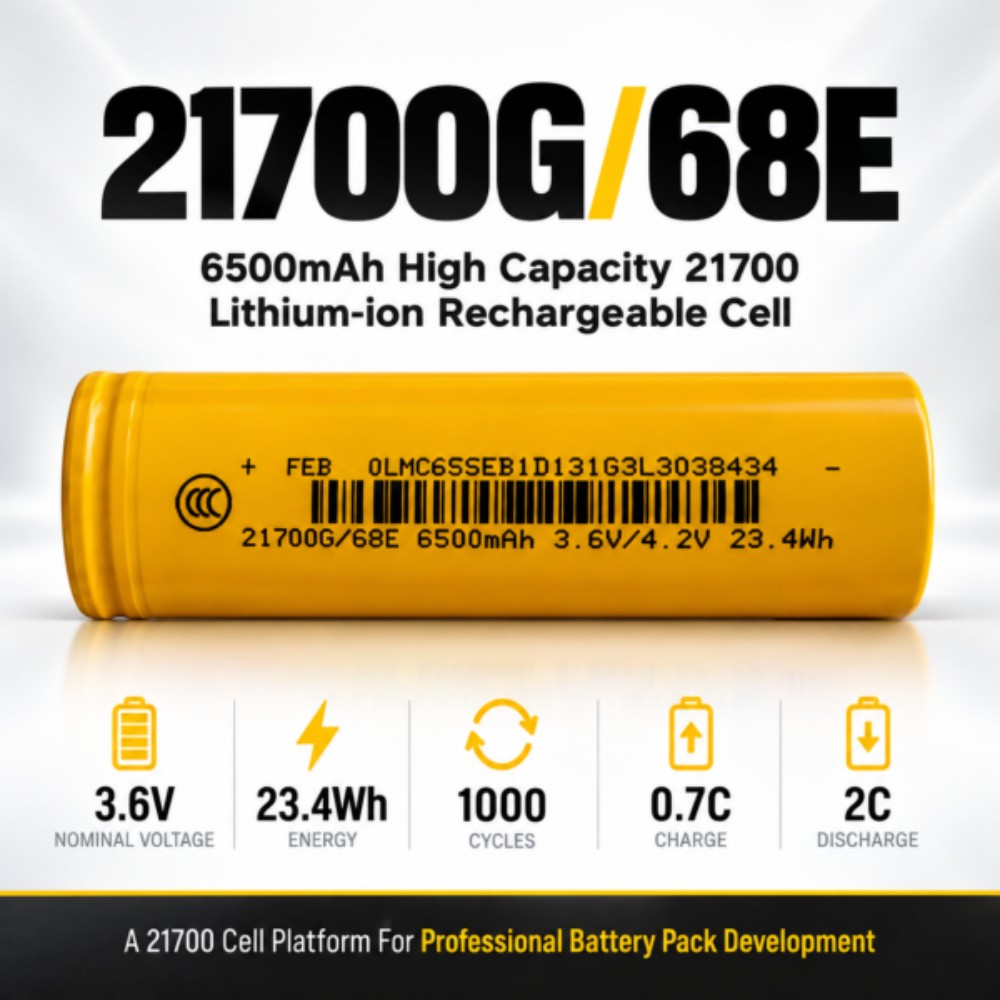
The Yifang 21700G/68E brings these specifications together in one high-capacity cylindrical lithium-ion rechargeable cell:
- Cell format: 21700
- Rated capacity: 6500mAh
- Nominal voltage: 3.6V
- Charge rate: 0.7C
- Discharge rate: 2C
- Dimensions: 70.95 × 21.65mm
- Weight: 75g
- Rated cycle life: 1000 cycles
For battery manufacturers and product developers, these specifications provide a basis for evaluating the cell in customized battery pack designs. Sample testing can help verify its suitability for the intended operating conditions, while series-parallel configurations allow the battery system to be developed around different voltage and capacity targets.
Conclusion
High-capacity 21700 lithium-ion cells are relevant to modern portable power solutions because they give battery designers another way to balance energy capacity, physical size, and battery pack configuration.
The Yifang 21700G/68E combines a 6500mAh capacity with a 3.6V nominal voltage, a 21700 cylindrical format, and a rated cycle life of 1000 cycles. Its specified charging and discharging rates also provide useful reference points for evaluating different rechargeable battery applications.
For OEM manufacturers and battery system developers, the next step is to match these cell characteristics with the actual voltage, current, space, and operating requirements of the finished product. With appropriate technical evaluation and sample testing, the 21700G/68E can be considered for portable power equipment, energy storage systems, e-mobility, robotics, and other customized lithium-ion battery projects.