
How Home Energy Storage Helps Reduce Household Electricity Bills and Financial Pressure
Electricity bills have become an important concern for households around the world. Rising energy prices, changing electricity tariffs and increasing household electricity consumption are putting additional pressure on family budgets.
From heating and air conditioning to kitchen appliances, lighting and electric vehicle charging, modern homes rely heavily on electricity every day. For many families, simply reducing electricity consumption is no longer the only solution. Finding smarter ways to manage when and how electricity is used is becoming increasingly important.
Home energy storage systems offer a practical approach. By storing electricity and making it available when households need it, these systems can help families improve energy management, increase solar self consumption and potentially reduce electricity costs.
1. Why Are Household Electricity Bills Increasing?
Household electricity expenses are influenced by several factors. The most common include:
Rising electricity prices
In many markets, electricity prices fluctuate according to energy supply, demand and market conditions. Higher electricity prices can directly increase monthly household expenses.
Peak and off peak electricity tariffs
Some electricity providers charge different rates depending on the time of day. Electricity consumed during peak demand periods may cost more than electricity used during off peak hours.
Increasing household energy consumption
Air conditioning, electric heating, home appliances, electric vehicle charging and other electrical equipment can significantly increase daily electricity consumption.
Greater dependence on the grid
Households without solar generation or energy storage may need to purchase almost all their electricity from the utility grid.
These factors make household energy management an important part of controlling long term living expenses.
2. How Does Home Energy Storage Work?
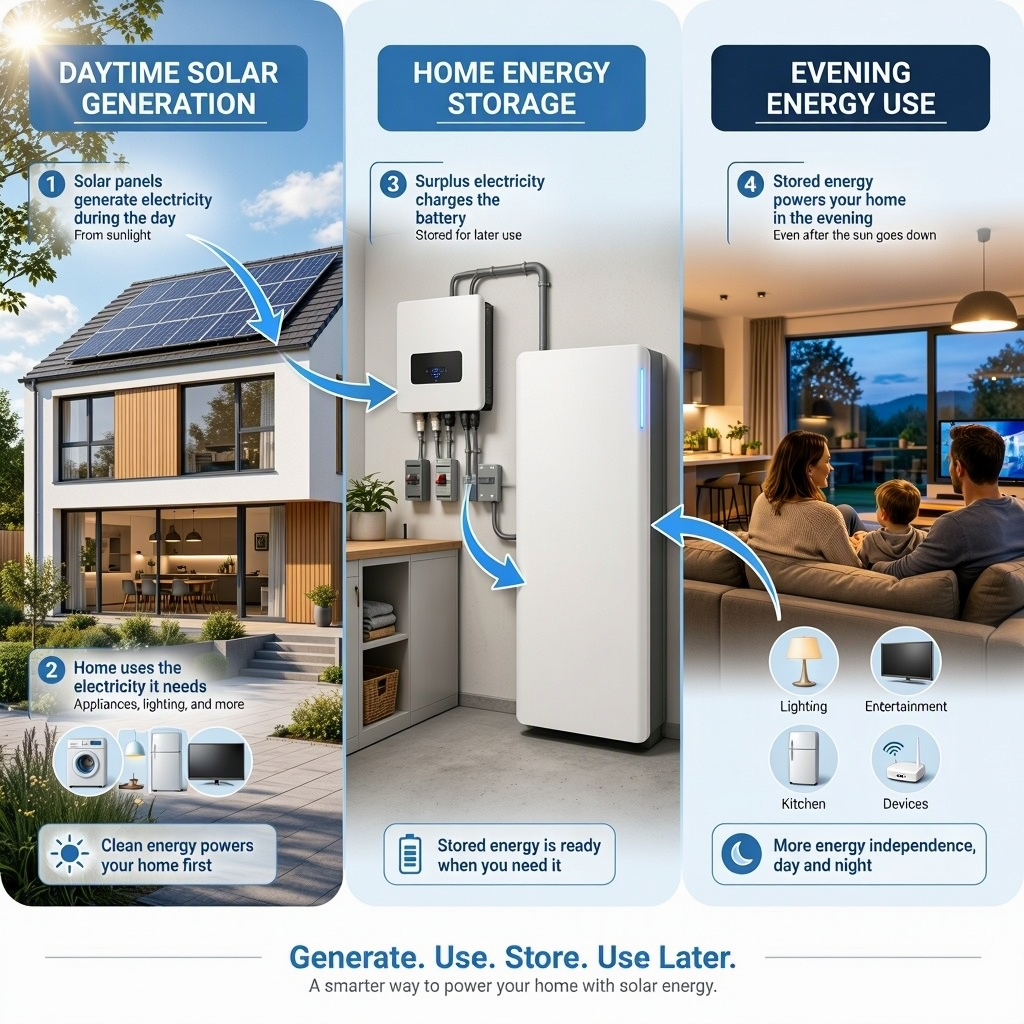
A home energy storage system stores electricity for later use.
When connected to a compatible solar power system, solar panels can generate electricity during the day. Instead of sending all excess electricity back to the grid, part of the surplus energy can be stored in a battery.
When solar generation decreases in the evening or household electricity demand increases, the stored electricity can be used to supply the home.
A typical home energy storage system includes:
-
Battery modules for storing electrical energy
-
A compatible inverter for converting electricity
-
A battery management system for monitoring and protection
-
Energy monitoring and control functions
-
Compatible solar panels, where applicable
The system helps households use more of their own generated electricity instead of relying entirely on grid power.
3. Four Ways Energy Storage Can Help Reduce Electricity Costs
3.1 Store Solar Energy for Evening Use
One of the main benefits of combining solar panels with battery storage is the ability to use solar electricity after sunset.
During sunny hours, solar panels may generate more electricity than the household needs. A battery can store some of this surplus energy for later use.
For example, a family may generate solar electricity during the afternoon but consume more electricity in the evening when cooking, lighting and entertainment equipment are in use.
Without storage, surplus electricity may be exported to the grid. With a suitable battery system, more of that energy can be reserved for household consumption.
This can reduce the amount of electricity purchased from the grid, depending on local export compensation and electricity prices.
3.2 Use Electricity During Expensive Peak Hours
In areas with time of use electricity tariffs, electricity prices can change throughout the day.
A home battery can be charged when electricity is cheaper or when solar generation is available. The stored electricity can then be used during more expensive periods.
This strategy is often called energy arbitrage or peak shaving.
However, the actual savings depend on the difference between peak and off peak electricity prices, battery efficiency, system operating costs and the utility tariff structure.
3.3 Reduce Dependence on Grid Electricity
A household that generates and stores its own electricity may need to purchase less power from the grid.
This is particularly useful for homes with suitable rooftop solar installations and sufficient battery capacity.
The more effectively a household matches its energy generation, storage and consumption, the greater its potential to improve energy independence.
3.4 Provide Backup Power During Grid Outages
Electricity interruptions can create inconvenience and additional expenses for households.
Depending on the inverter configuration and system design, a home energy storage system may provide backup electricity during a grid outage.
It can help keep selected essential appliances operating, such as lighting, refrigerators, communication equipment and other critical household loads.
Backup power is primarily a reliability benefit rather than a guaranteed electricity bill saving. Its availability depends on the system’s backup function, battery capacity, output power and installation design.
4. A Simple Example: Managing Household Electricity More Efficiently
Consider a household with rooftop solar panels and a home battery system.
During the day, solar panels generate electricity. The household uses part of the energy directly, while surplus electricity charges the battery.
In the evening, solar generation decreases, but household electricity consumption continues. Instead of purchasing all the required electricity from the grid, the family can use the energy stored earlier.
The basic energy management process looks like this:
| Time of day | Energy management |
|---|---|
| Morning | Solar generation begins and supplies household loads |
| Midday | Solar energy powers the home and charges the battery |
| Afternoon | Surplus solar energy continues charging the battery |
| Evening | Stored battery energy supplies part of household demand |
| Night | The system uses remaining stored energy or grid electricity as required |
The financial benefit depends on the household’s electricity consumption profile, solar generation, battery size, electricity tariff and local energy policies.
5. How Much Can a Home Battery Actually Save?
There is no single savings figure that applies to every household.
The financial performance of a home energy storage system depends on several important factors:
-
Local electricity prices: Higher electricity prices can increase the value of stored energy.
-
Time of use tariffs: Larger differences between peak and off peak prices may create more opportunities for savings.
-
Solar generation: Homes with sufficient solar generation may have more surplus electricity available for storage.
-
Battery capacity: The battery should match the household’s actual energy consumption and usage patterns.
-
System efficiency: Energy conversion and storage losses affect the amount of usable electricity.
-
Installation and maintenance costs: These should be included when calculating the payback period.
-
Grid export compensation: In some regions, exporting electricity may be financially attractive, so storing every surplus unit is not necessarily the best option.
Before purchasing a system, households should compare their existing electricity bills, local tariff rules and expected energy consumption.
A properly sized system is generally more important than simply choosing the largest available battery.
6. What Should Families Consider Before Installing Energy Storage?
Choosing a home energy storage system requires careful planning.
Daily electricity consumption
Review monthly electricity bills and identify how much electricity the household uses during the day and at night.
Battery capacity
Select a battery capacity that matches the household’s energy requirements. Oversizing can increase the initial investment without providing proportional savings.
Inverter compatibility
Ensure that the battery and inverter are compatible in terms of voltage, communication protocols and power requirements.
Installation environment
Consider available installation space, ventilation, temperature conditions and applicable local installation regulations.
Safety and protection
A suitable battery management system and appropriate electrical protection are essential for safe operation.
Future expansion
For households expecting higher electricity consumption, modular or expandable storage systems may provide additional flexibility.
7. Is Home Energy Storage Worth the Investment?
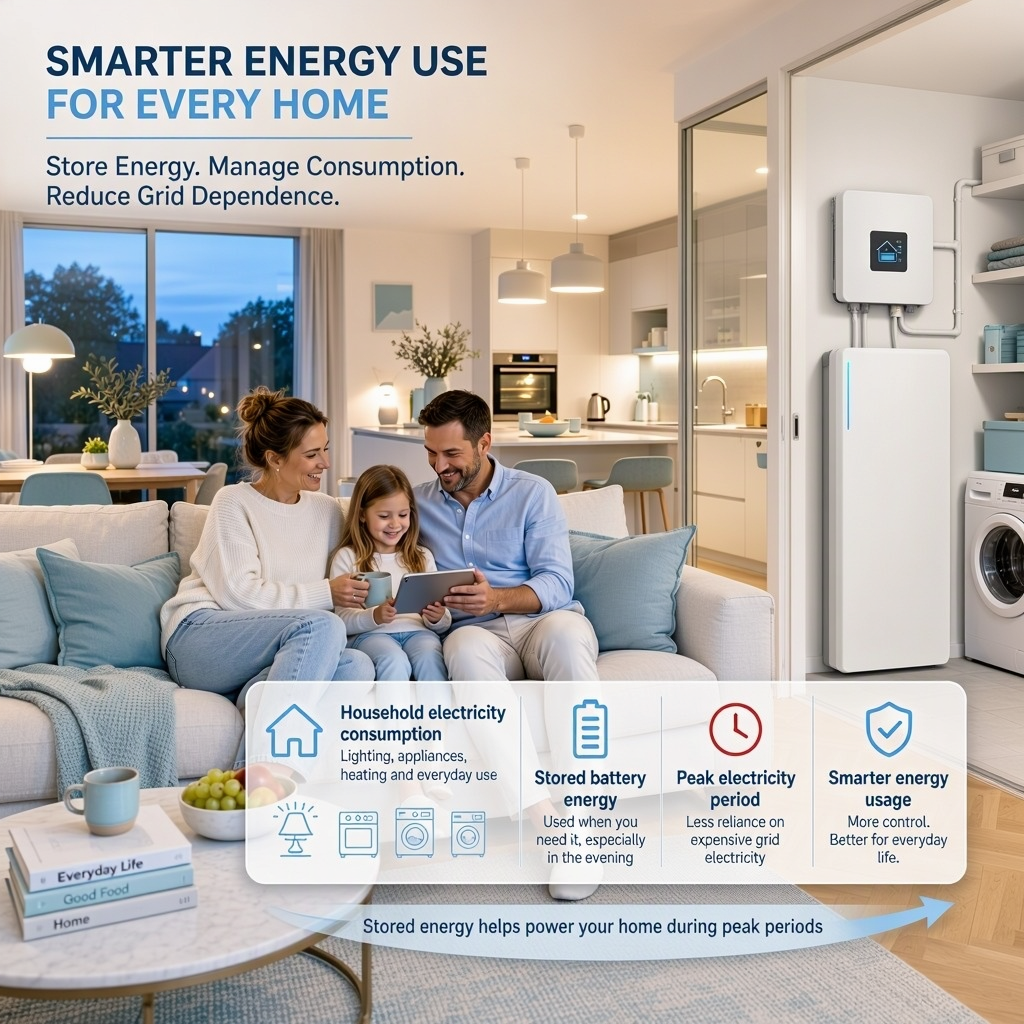
Home energy storage is not only about installing a battery. It is about changing how a household manages electricity.
For families with suitable solar generation, high electricity prices or time of use tariffs, battery storage may provide meaningful financial benefits.
It can also improve energy flexibility and provide backup power when the grid is unavailable.
However, the investment should be evaluated using actual electricity bills, local energy prices, system costs and expected usage. Government incentives, export compensation policies and installation regulations should also be considered.
The best solution is not necessarily the system with the highest capacity. It is the system that matches the household’s energy consumption and financial goals.
Conclusion: Take Control of Household Energy Costs
Electricity expenses are becoming an increasingly important part of household budgets. Home energy storage gives families another way to manage energy consumption, store surplus solar electricity and reduce dependence on expensive grid power.
By combining solar generation, battery storage and intelligent energy management, households can make better use of the electricity they produce and potentially reduce their monthly energy expenses.
For families looking toward a more efficient energy future, home energy storage is worth considering as part of a long term household energy strategy.
Looking for a suitable home energy storage solution? Evaluate your daily electricity consumption, available solar capacity and local electricity tariffs to identify the right battery capacity and system configuration for your home.