
Understanding 21700 Lithium Battery Packs: 51.8V 45Ah Configuration, BMS and Key Selection Factors
Introduction
Lithium battery technology continues to play an important role in modern electrical equipment, battery-powered systems and energy storage applications. As demand for reliable and configurable battery solutions grows, manufacturers and system integrators are paying closer attention to battery cell formats, pack configurations and battery management systems.
Among the available cylindrical lithium battery formats, the 21700 cell has become an important option for battery pack development.
However, choosing a battery pack involves more than looking at voltage and capacity. Cell configuration, discharge current, charging voltage, BMS functions and electrical compatibility all need to be considered.
In this article, EH POWERTECH explores the key characteristics of 21700 lithium battery packs, using a 51.8V 45Ah battery configuration as a practical technical example.
1. What Is a 21700 Lithium Battery?
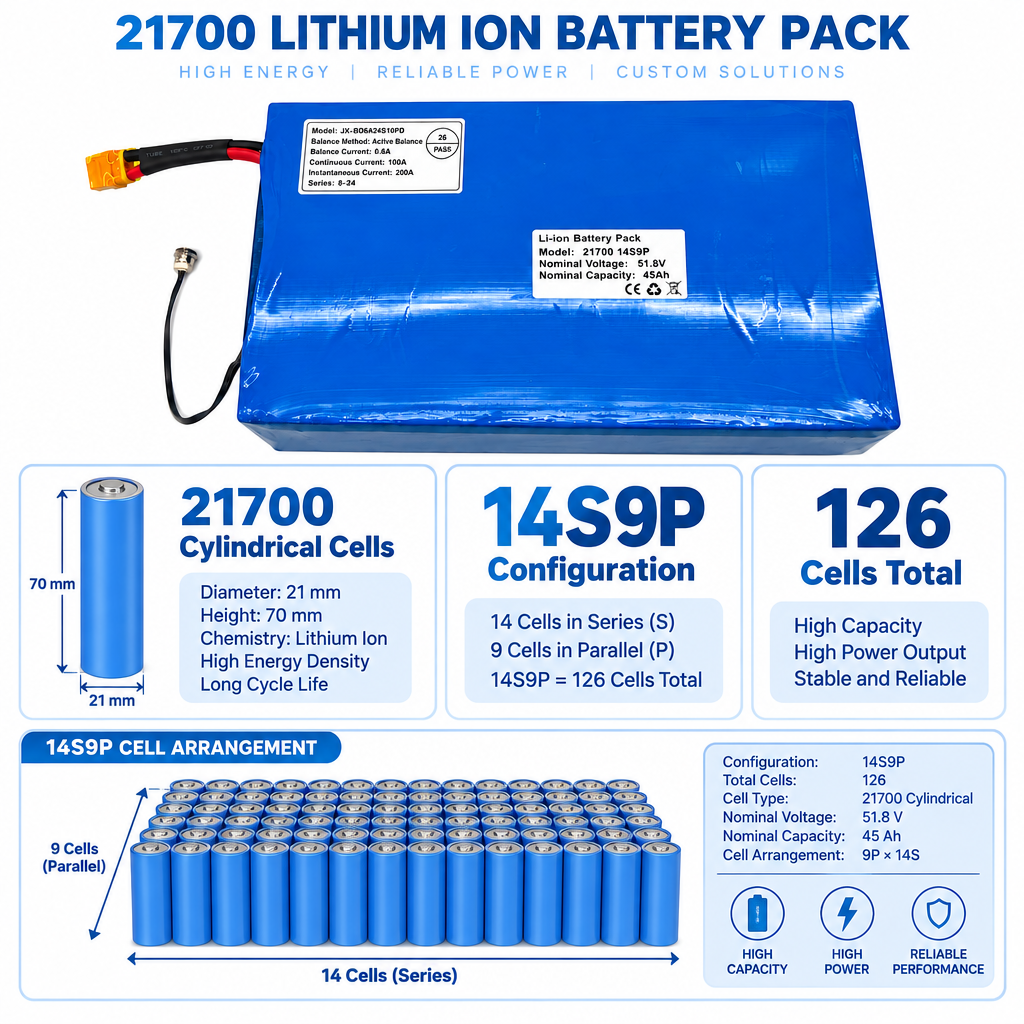
A 21700 battery is a cylindrical lithium battery cell format. Its designation describes a cell approximately 21 mm in diameter and 70 mm in length.
Compared with different cylindrical cell formats, 21700 cells provide manufacturers with another option for designing battery packs with specific voltage, capacity and structural requirements.
The actual performance of a 21700 battery depends on its cell chemistry, manufacturer, capacity, discharge characteristics and operating conditions.
For battery pack manufacturers and equipment developers, selecting the appropriate cell specification is an important part of the overall battery design process.
2. Understanding the 14S9P Battery Configuration
Battery pack configuration determines how individual cells are connected to achieve the required voltage and capacity.
A 14S9P configuration means:
- 14 cells connected in series in each parallel group.
- 9 parallel groups.
- 126 individual cells in total.
Series connections increase the overall battery voltage, while parallel connections increase the overall capacity.
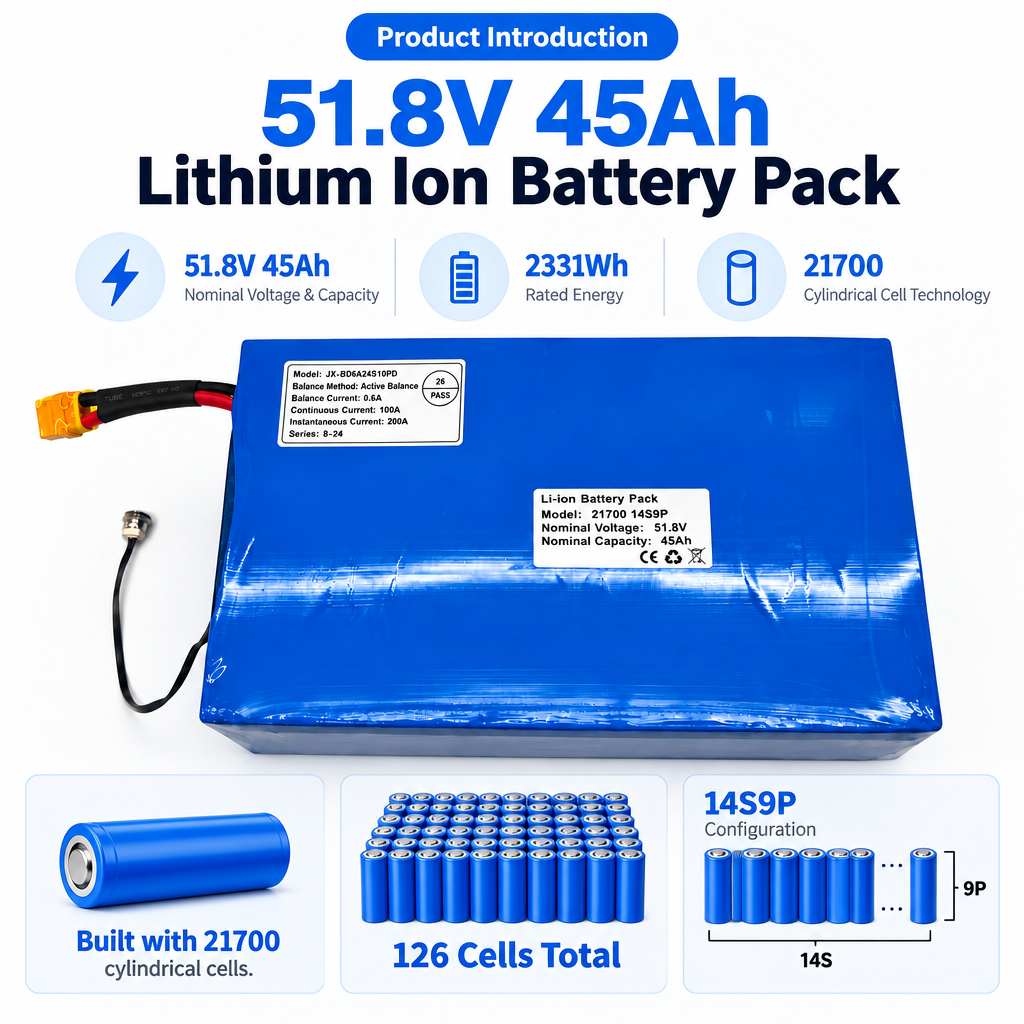
For the 51.8V 45Ah lithium ion battery pack, the specified configuration is 14S9P.
Its main electrical specifications include:
- Nominal Voltage: 51.8V
- Nominal Capacity: 45Ah
- Rated Energy: 2331Wh
- Cell Format: 21700
- Total Cell Quantity: 126
Understanding the series and parallel arrangement helps equipment manufacturers and battery integrators evaluate whether a battery pack matches their electrical system requirements.
3. Why Is the Battery Management System Important?
The Battery Management System, commonly known as BMS, is an important component of a lithium battery pack.
It helps manage battery operating conditions and supports the monitoring and management of battery cells.
Depending on the BMS model and configuration, available functions may include voltage monitoring, current monitoring, temperature monitoring, balancing and protective control.
A battery pack’s BMS specifications should always be evaluated according to the actual equipment configuration and manufacturer documentation.
The 51.8V 45Ah battery pack discussed in this article uses a JK PCM 100A BMS.
Its specified features include:
- 100A BMS rating
- Active balancing
- 0.6A balancing current
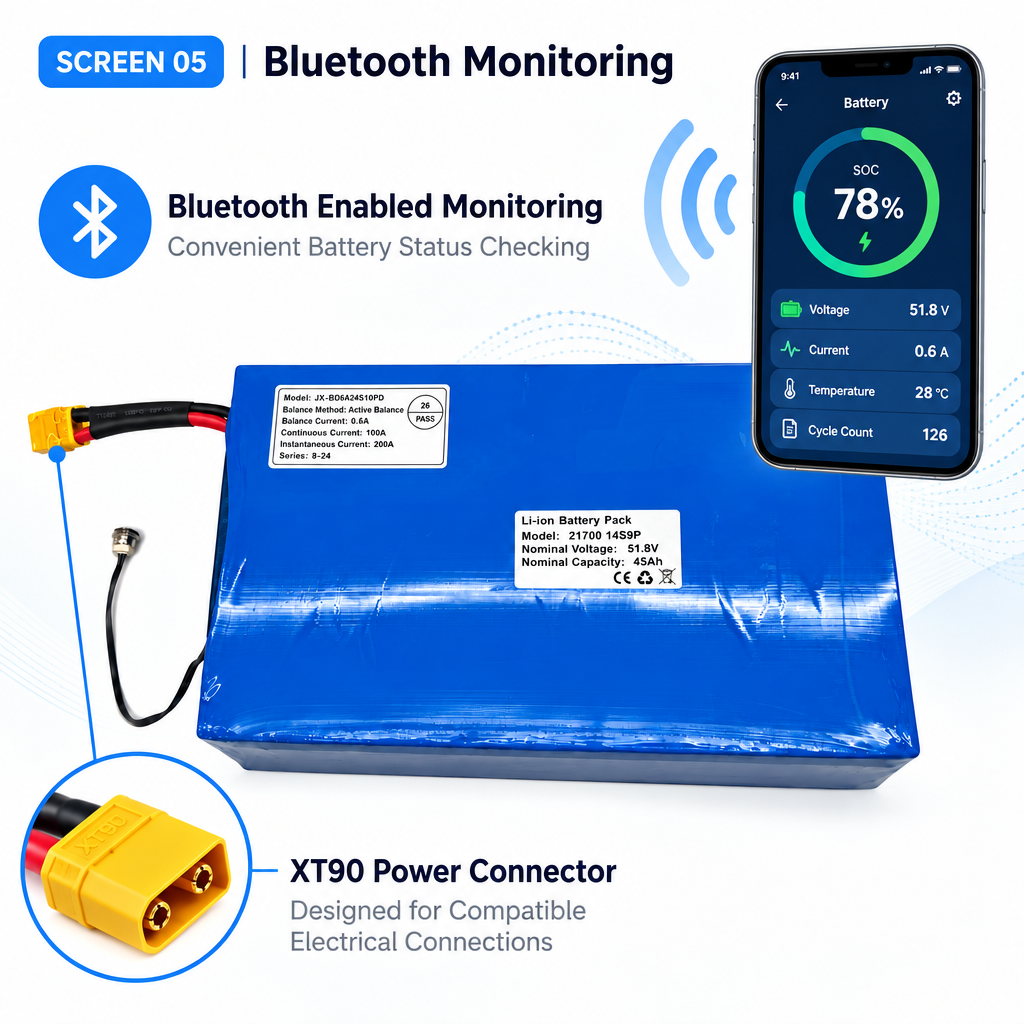
- Bluetooth monitoring
These functions provide battery management capabilities for compatible battery system integration projects.
4. Bluetooth Monitoring and Active Cell Balancing
Battery monitoring is useful for understanding battery operating conditions.
Bluetooth monitoring allows users to access available battery information through a compatible monitoring interface.
This can make routine battery status checking more convenient for users and system integrators.
Active balancing is another important BMS feature.
During battery operation, individual cells may develop differences in voltage and state of charge. A balancing system helps manage these differences according to its operating design.
For battery pack projects, customers should check the BMS balancing method, balancing current and supported communication functions before purchasing.
The example 51.8V 45Ah battery pack specifies an active balancing current of 0.6A and Bluetooth monitoring functionality.
5. Understanding Charging Voltage and Discharge Current
Voltage and current specifications are essential when selecting a lithium battery pack.
The charging voltage determines the required charging equipment specification, while the continuous discharge current indicates the specified current that the battery pack can deliver continuously under its rated conditions.
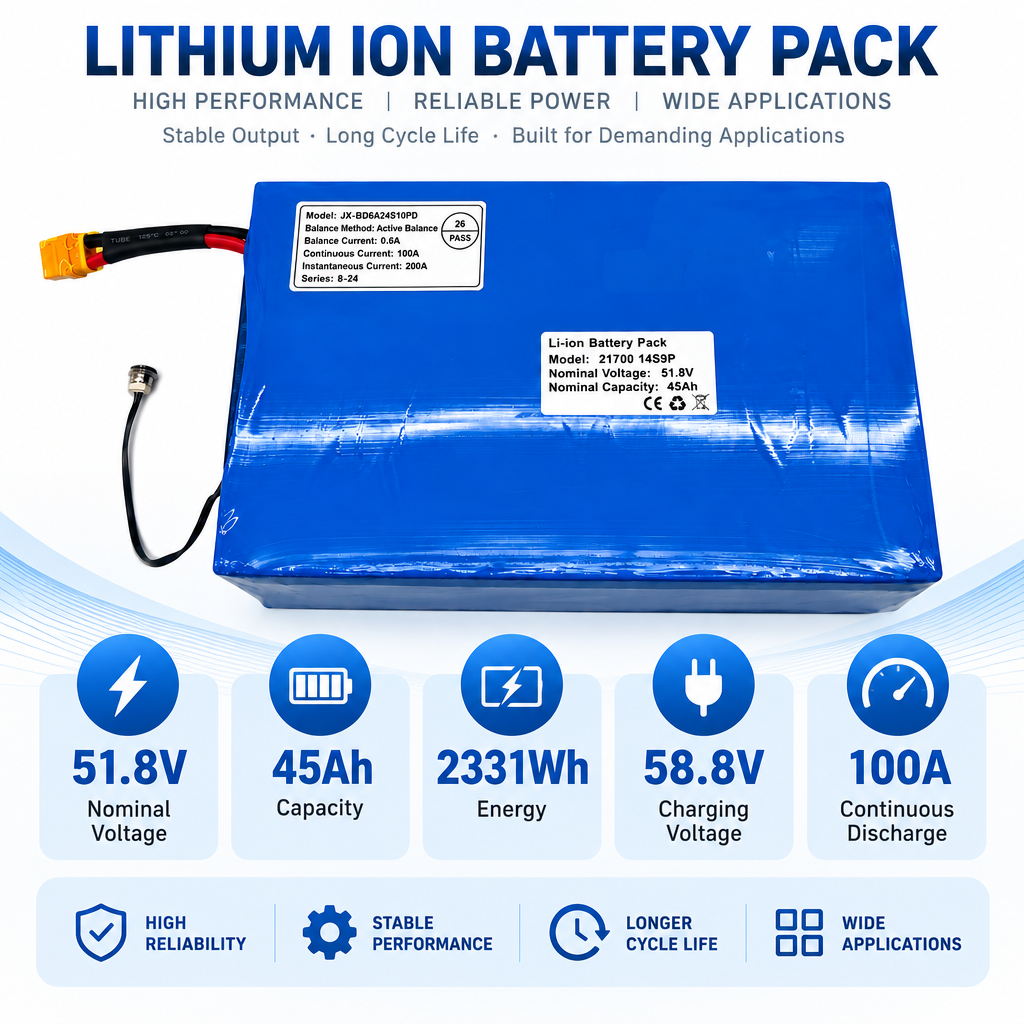
For the 51.8V 45Ah battery pack, the specified electrical parameters are:
| Parameter | Specification |
|---|---|
| Nominal Voltage | 51.8V |
| Nominal Capacity | 45Ah |
| Rated Energy | 2331Wh |
| Charging Voltage | 58.8V |
| Continuous Discharge Current | 100A |
| Instantaneous Current | 200A |
The specified instantaneous current of 200A should be evaluated together with its peak duration and operating conditions. These details should be confirmed with the battery manufacturer before system integration.
Customers should also ensure that the charger, wiring, connectors and connected equipment are compatible with the battery’s electrical specifications.
6. What Should Buyers Consider When Selecting a Lithium Battery Pack?
For battery distributors, equipment manufacturers and system integrators, evaluating a battery pack requires more than comparing prices.
The following factors are important during the purchasing process.
Voltage Compatibility
Confirm that the battery’s nominal voltage and charging voltage match the requirements of the intended electrical system.
Capacity and Energy
Compare the rated capacity in Ah and energy in Wh to determine whether the battery meets the project’s requirements.
Cell Configuration
Understand the cell format, series configuration and parallel configuration. These specifications influence the battery’s electrical characteristics.
BMS Specifications
Check the BMS model, rated current, balancing functions, monitoring capabilities and protection specifications.
Connector Compatibility
Verify the connector type, cable specifications and electrical connection requirements before installation.
Product Documentation
Request the technical datasheet, cell specifications and applicable transportation documentation from the supplier.
OEM and ODM Support
For customized projects, discuss voltage, capacity, BMS configuration, connector requirements and order quantities with the manufacturer before placing an order.
7. Why Work with an Experienced Battery Solution Provider?
Choosing a battery supplier is an important decision for distributors and equipment manufacturers.
A reliable B2B supplier should be able to communicate technical specifications clearly, understand project requirements and support customers throughout the product sourcing and customization process.
EH POWERTECH focuses on lithium battery cells, battery packs and energy storage solutions for international B2B customers.
Our product portfolio includes cylindrical lithium battery cells, prismatic cells, lithium battery packs and energy storage products.
We work with distributors, equipment manufacturers and system integrators to discuss battery specifications, product sourcing and OEM and ODM cooperation.
Whether you are evaluating a standard battery pack or developing a customized battery project, clear technical communication is essential to finding the right solution.
Conclusion
21700 lithium battery packs offer a flexible option for battery system development. However, selecting the right battery requires careful consideration of cell configuration, nominal voltage, capacity, charging requirements, discharge current and BMS functions.
The 51.8V 45Ah 21700 lithium ion battery pack provides a practical example of how these specifications come together in a 14S9P battery configuration with 126 cells, a JK PCM 100A BMS, Bluetooth monitoring and active balancing.
For distributors, manufacturers and system integrators, understanding these technical details can help improve battery sourcing decisions and project compatibility.
Looking for a 21700 lithium battery pack supplier?
Contact EH POWERTECH to discuss battery pack specifications, wholesale orders and OEM or ODM project requirements.
Our team welcomes inquiries from international distributors, equipment manufacturers and battery system integrators.