
Introducción
A medida que la demanda de almacenamiento de energía confiable continúa creciendo, lithium iron phosphate batteries are becoming an important choice for residential energy storage, solar power systems, y aplicaciones de energía de respaldo.
For system integrators, instaladores solares, distribuidores, and battery solution providers, selecting the right battery involves more than comparing capacity. Compatibilidad de voltaje, charging capability, rendimiento de descarga, características de protección, and installation requirements all influence whether a battery is suitable for a particular project.
A 25.6V 206Ah LiFePO4 battery offers approximately 5.27kWh of nominal energy, providing a practical configuration for compatible solar energy storage and UPS backup systems.
1. Understanding the 25.6V 206Ah Battery Configuration
The battery has a nominal voltage of 25.6V and a rated capacity of 206Ah.
Based on these specifications, its nominal energy is approximately 5.27kWh:
25.6V × 206Ah = 5,273.6Wh
This capacity provides a useful reference for system planning. Sin embargo, actual usable energy depends on the battery’s operating limits, configuración del inversor, and system settings.
Para compradores B2B, understanding the relationship between voltage, capacidad, and energy is essential when selecting batteries for different project requirements.
2. Supporting Solar Energy Storage Applications
Solar energy systems generate electricity during daylight hours, but household and commercial electricity demand does not always match solar generation.
Battery storage helps address this difference by storing available energy for later use. A compatible 25.6V 206Ah LiFePO4 battery can be integrated into suitable solar storage systems to support energy storage and power supply requirements.
Antes de seleccionar una batería, installers and system integrators should verify:
-
Compatibility with the solar inverter
-
Required battery voltage and charging settings
-
Corriente de carga máxima
-
Continuous discharge requirements
-
Battery communication and monitoring compatibility
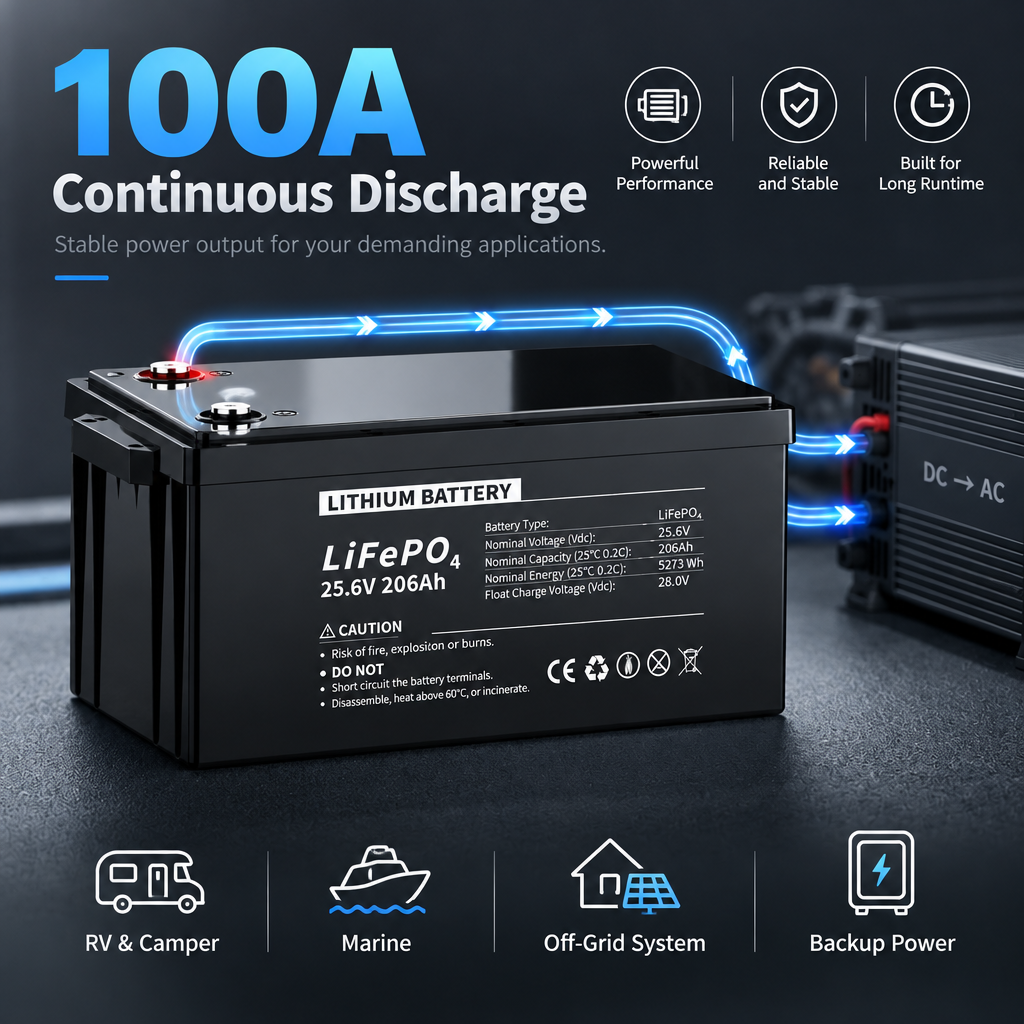
The battery supports a maximum charging current of 50A and a continuous discharge current of 100A according to the currently available product information. Final system configuration should follow the confirmed battery specifications and inverter requirements.
3. Why Battery Protection Matters
Battery protection is an important consideration in energy storage system design.
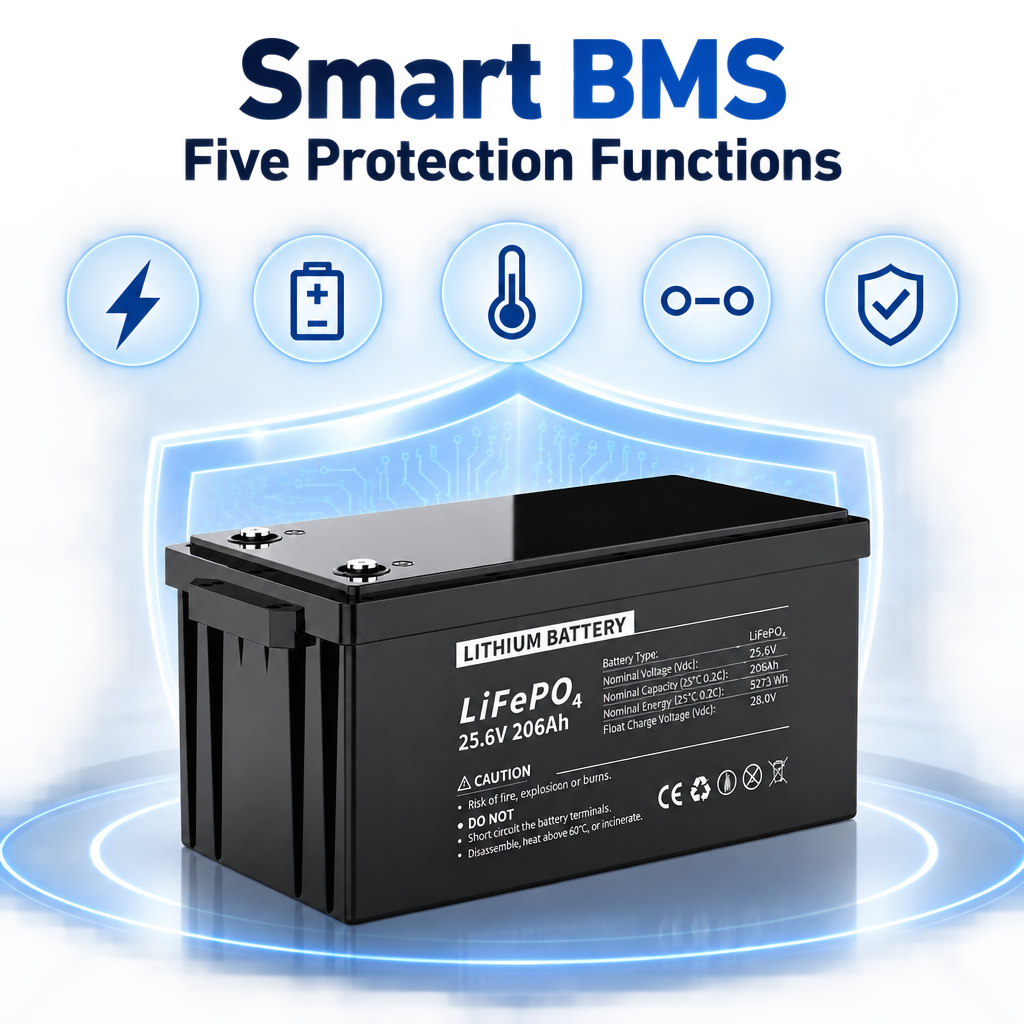
This battery incorporates a smart Battery Management System (BMS) with five protection functions. The specific protection items should be confirmed against the manufacturer’s technical documentation before system integration.
A properly configured BMS helps manage battery operation within its specified limits. Para instaladores y desarrolladores de proyectos, confirming the BMS functions and compatibility with the selected inverter is an important step before deployment.
4. IP65 Protection for Different Installation Environments
Installation conditions can vary significantly between residential, comercial, and backup power projects.
The battery is specified with an IP65 protection rating. This rating can be an important consideration when evaluating installation environments, although it does not mean the battery can be installed in every outdoor location without additional protection.
Buyers should also consider ventilation, condiciones de temperatura, mounting arrangements, cable protection, and the manufacturer’s installation instructions.
5. Optional Bluetooth Monitoring
Battery monitoring can make system operation and maintenance more convenient.
With optional Bluetooth monitoring, users may be able to access battery information through a compatible monitoring solution. The available monitoring functions and supported application should be confirmed before purchase.
Para distribuidores e integradores de sistemas, monitoring options can also be a useful consideration when matching battery products to different customer requirements.
6. Suitable Applications for Different Projects
A 25.6V 206Ah LiFePO4 battery can be considered for several application categories, provided the electrical configuration is compatible.
Almacenamiento de energía solar residencial
It can serve as a battery option in compatible residential solar storage systems, helping store electricity for later use.
UPS Backup Systems
For suitable UPS configurations, the battery can provide stored energy for backup power requirements. Buyers should verify voltage, actual, cargando, and communication compatibility.
Customized Energy Storage Projects
Distribuidores de baterías, fabricantes de equipos, and system integrators may evaluate this configuration for customized energy storage solutions based on their project specifications.
7. Key Specifications Buyers Should Evaluate
When comparing battery products, B2B buyers should look beyond nominal capacity and consider the complete technical configuration.
| Parámetro | Available Specification |
|---|---|
| Química de la batería | LiFePO4 |
| Tensión nominal | 25.6V |
| Capacidad nominal | 206ah |
| Energía Nominal | Approximately 5.27kWh |
| Corriente de descarga continua | 100A |
| Corriente de carga máxima | 50A |
| Clasificación de protección | IP65 |
| Battery Management | Smart BMS |
| Bluetooth Monitoring | Opcional |
| Dimensiones | 523 × 269 × 218mm |
| Peso neto | 33.5kilos |
| Float Charge Voltage | 28.0V |
These specifications provide an initial reference for product evaluation. Buyers should request the complete technical datasheet to confirm operating voltage limits, charging profiles, rango de temperatura, ciclo de vida, certificaciones, and other project-specific requirements.
8. What B2B Buyers Should Confirm Before Ordering
Para distribuidores, mayoristas, instaladores solares, y desarrolladores de proyectos, confirming technical details before purchasing can reduce compatibility risks and improve project planning.
Consider discussing the following points with your battery supplier:
-
What inverter models are compatible with the battery?
-
What charging voltage and charging profile are required?
-
What are the recommended operating limits?
-
Which five protection functions are included in the BMS?
-
Is Bluetooth monitoring available for the required configuration?
-
Are customized battery solutions available?
-
What documentation is available for transportation and project evaluation?
Clear communication at the beginning of a project helps suppliers provide more suitable product recommendations.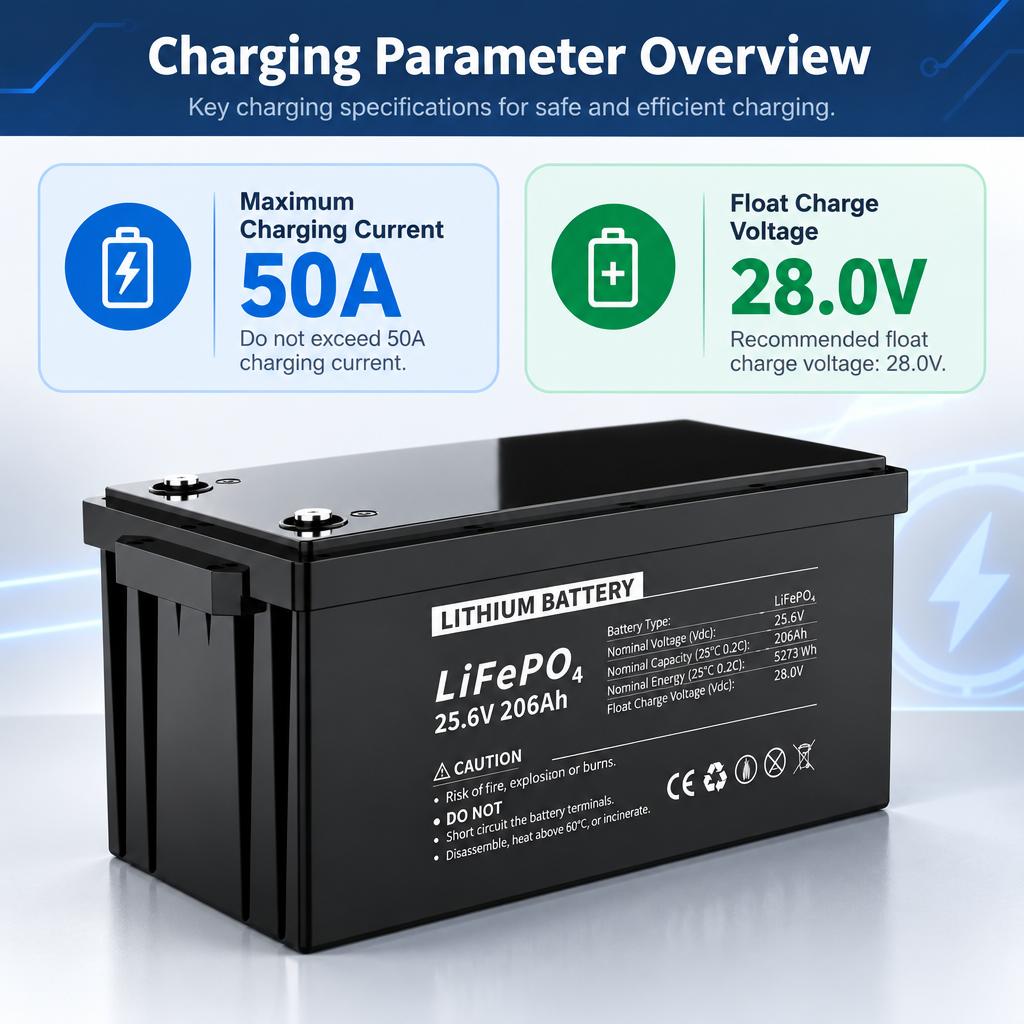
Conclusión
A 25.6V 206Ah LiFePO4 battery combines a 25.6V nominal voltage, 206Ah capacity, approximately 5.27kWh nominal energy, and a 100A continuous discharge rating in one battery configuration.
Con protección IP65, a smart BMS, and optional Bluetooth monitoring, it can be evaluated for compatible solar energy storage, UPS backup, y proyectos de baterías personalizados.
Para compradores B2B, the most important step is to match the battery’s confirmed electrical specifications with the actual requirements of the target system. Careful compatibility checks help create a more reliable foundation for energy storage projects.