
Comprensión 21700 Paquetes de baterías de litio: Configuración de celda, Voltaje y capacidad
Lithium ion battery packs have become an important part of modern portable power systems, rechargeable equipment and various electrical applications. As battery technology continues to evolve, cylindrical lithium ion cells are widely considered in battery pack design because of their standardized format and flexibility in pack configuration.
Among cylindrical cell formats, el 21700 cell is an option frequently evaluated by battery buyers, equipment manufacturers and battery solution providers. Understanding the cell format, configuración de la batería, voltage and capacity can help businesses make more informed decisions when sourcing lithium ion battery packs.
En este artículo, we explore how 21700 battery packs are structured, how series and parallel configurations affect battery specifications, and what B2B buyers should consider before selecting a rechargeable battery solution.
## 1. ¿Qué es un 21700 Batería de iones de litio?
A 21700 lithium ion cell is a cylindrical rechargeable battery cell commonly identified by its format designation. The designation refers to its approximate physical dimensions, with a diameter of 21mm and a length of 70mm.
El 21700 cell format is considered in battery pack development for various rechargeable power requirements. When multiple cells are assembled into a battery pack, they can be connected in series, parallel or a combination of both, depending on the required voltage and capacity.
Battery pack specifications are not determined by cell format alone. Cell chemistry, individual cell capacity, configuración eléctrica, componentes de protección, connection design and application requirements all contribute to the final battery pack characteristics.
For buyers sourcing rechargeable lithium ion battery packs, understanding these elements is important when comparing products and evaluating equipment compatibility.
## 2. Understanding Series and Parallel Battery Configurations
Battery configurations determine how individual cells are electrically connected within a battery pack.
A series connection increases the overall voltage of the battery pack while maintaining the same ampere hour capacity as the parallel group, assuming cells are matched and the configuration is correctly assembled.
A parallel connection combines cells to increase the overall capacity and current capability according to the cell characteristics and battery design, while maintaining the voltage of the parallel group.
Battery pack configurations are commonly expressed using numbers such as 7S2P.
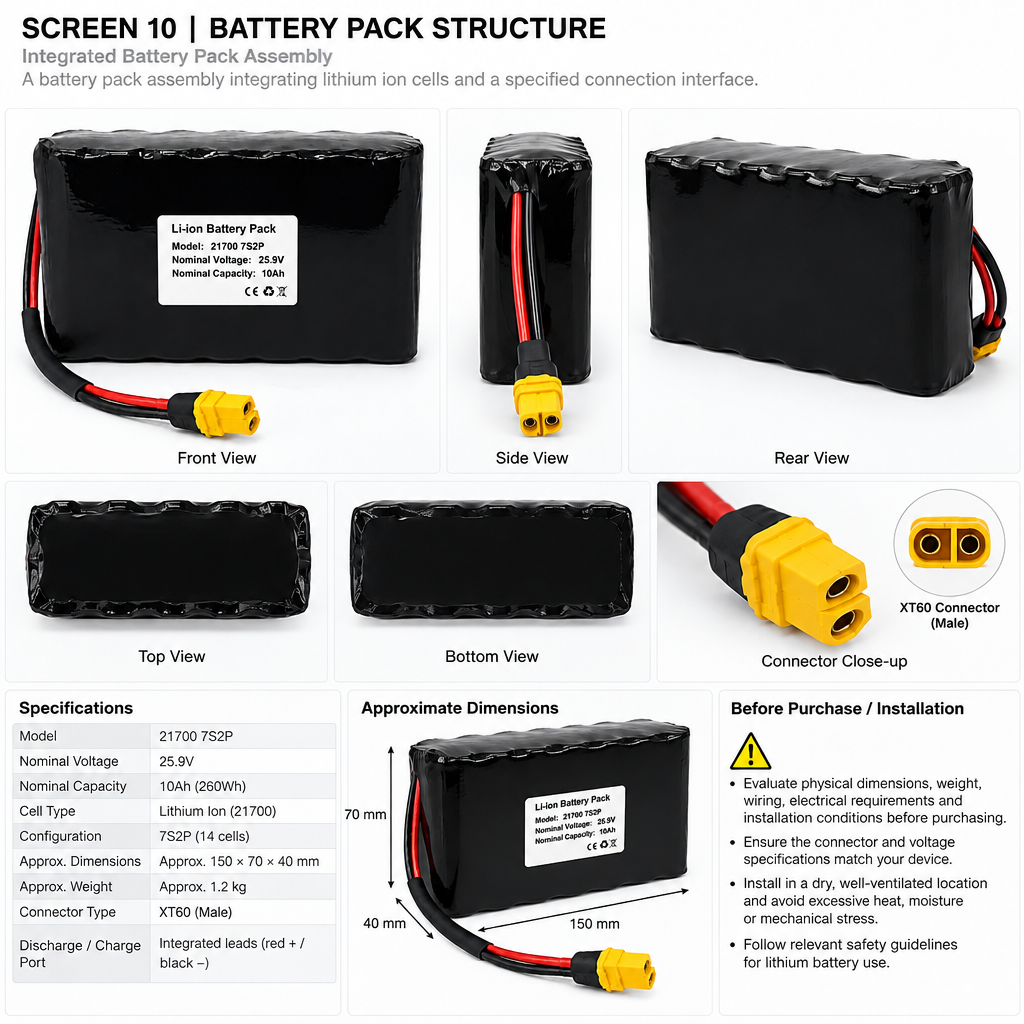
The letter S represents series connections, while P represents parallel connections. In a 7S2P configuration, seven series groups are connected together, with two cells in parallel within each series group.
This configuration represents a total of 14 cells when using individual cells in each parallel group.
Understanding the configuration allows buyers to identify the basic structure of a battery pack and evaluate whether the battery specification is suitable for their equipment.
## 3. What Does a 7S2P Battery Configuration Mean?
A 7S2P battery configuration consists of seven series groups, with two cells connected in parallel in each group.
The configuration can be understood through two basic principles:
Series connection:
Series connections combine the voltage of individual cell groups to achieve the overall battery pack voltage.
Conexión paralela:
Parallel connections combine the capacity of cells within each group, increasing the group capacity according to the individual cell specifications.
A 7S2P battery pack therefore combines the voltage contribution of seven series groups and the capacity contribution of two parallel cells per group.
The actual voltage, capacidad, energy, discharge performance and operating limits depend on the cell specifications and battery pack design.
For battery buyers, the configuration label is a useful starting point for understanding the battery structure, but it should not replace a complete technical datasheet.
## 4. Why Voltage and Capacity Matter When Choosing a Battery Pack
Voltage and capacity are two of the most important parameters when evaluating a rechargeable battery pack.
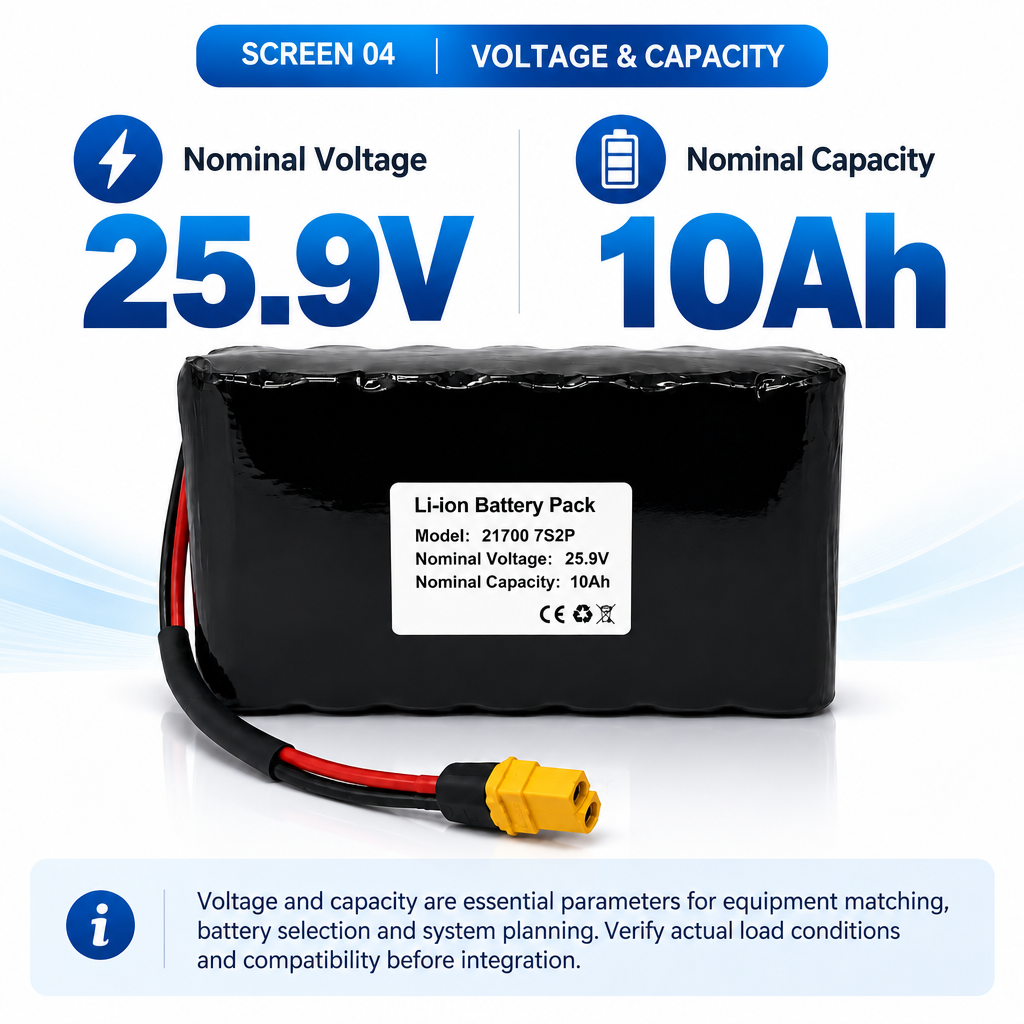
Nominal voltage provides a reference for matching the battery pack to the electrical requirements of the equipment. A battery pack with an incompatible voltage may not operate correctly or may create electrical compatibility issues.
Capacidad, generally expressed in ampere hours (ah), indicates the nominal charge capacity of a battery pack. It is an important parameter when evaluating potential operating duration, but actual runtime depends on the power consumption of the connected equipment, condiciones de funcionamiento, battery characteristics and discharge limits.
Battery energy is commonly expressed in watt hours (¿Qué?) and can be estimated using nominal voltage multiplied by nominal capacity.
Por ejemplo, a battery pack rated at 25.9V and 10Ah has a nominal energy calculation of:
25.9V × 10Ah = 259Wh
This calculation provides a nominal energy reference. Actual usable energy may differ depending on the battery design, operating conditions and discharge limits.
When selecting a battery pack, buyers should evaluate voltage, capacidad, energy, requisitos de carga, discharge requirements and compatibility together rather than relying on a single specification.
## 5. The XT60 Connector and Battery Compatibility
Battery connectors are an important part of battery pack integration.
The connector determines how the battery pack interfaces with compatible equipment or electrical systems. Connector type, wiring design, polaridad, current requirements and connection quality should all be evaluated before installation.
The XT60 connector is a recognizable connector format used in some battery and electrical applications. Sin embargo, the presence of an XT60 connector alone does not guarantee compatibility with a specific device.
Buyers should verify the connector interface, polaridad, alambrado, corriente requerida, equipment voltage and installation requirements before connecting a battery pack.
A compatible connector is only one part of a complete electrical compatibility assessment.
## 6. Battery Protection and Operating Conditions
Battery protection is an important consideration when evaluating rechargeable lithium ion battery packs.
Protection systems may be designed to address specific electrical or temperature conditions, depending on the battery design and protection circuitry. Sin embargo, the protection functions available in a particular battery pack must be confirmed through its technical specifications.
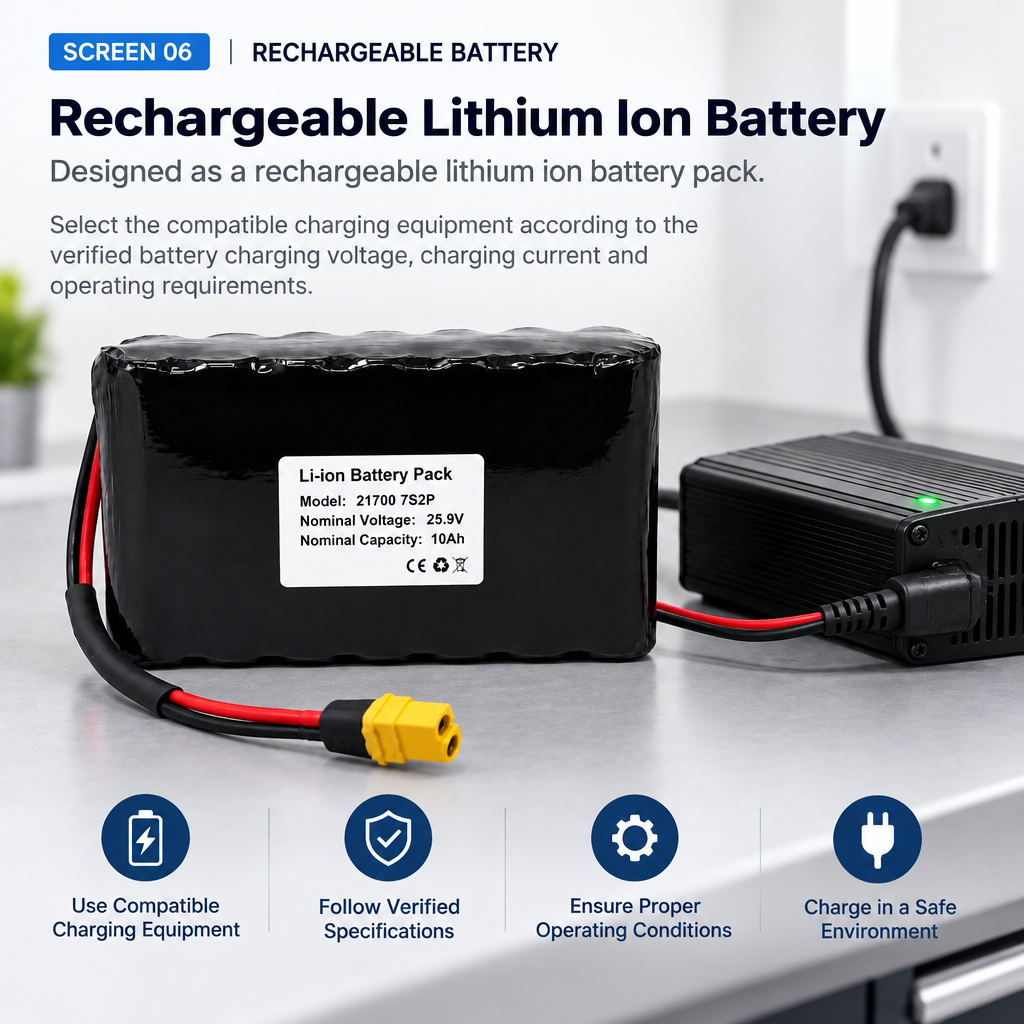
Battery users and equipment manufacturers should review the verified protection functions, requisitos de carga, límites de descarga, operating temperature conditions and relevant safety documentation before integrating a battery pack.
Battery performance and service life are also affected by operating conditions. Charging and discharging practices, temperatura ambiente, condiciones de almacenamiento, system compatibility and battery management requirements can influence battery performance over time.
Para compradores B2B, requesting a complete technical datasheet and relevant supporting documentation is an important part of battery sourcing.
## 7. What Should B2B Buyers Consider Before Purchasing a Lithium Battery Pack?
Selecting a lithium ion battery pack involves more than choosing a nominal voltage and capacity.
Professional buyers should consider the following factors:
Compatibilidad de voltaje:
Confirm that the battery voltage matches the requirements of the equipment and the intended electrical system.
Requisitos de capacidad:
Evaluate the required capacity based on expected operating conditions, energy consumption and usage duration.
Cell format and configuration:
Review the cell format, series and parallel configuration and overall battery pack design.
Compatibilidad del conector:
Verify the connector type, polaridad, wiring and connection requirements.
Requisitos de carga:
Confirm the compatible charging equipment and the specified charging voltage and current.
Requisitos de alta:
Confirm the required operating current, continuous discharge limits and any peak discharge requirements.
Physical integration:
Review battery dimensions, peso, requisitos de montaje, wiring and installation conditions.
Safety and documentation:
Request the relevant technical specifications, test documents and applicable transportation documentation.
Order quantity and purchasing requirements:
Clarify sample requirements, cantidad estimada de pedido, destino de entrega, purchasing schedule and any customization requirements.
A structured evaluation helps buyers reduce uncertainty during product selection and sourcing.
## 8. Finding the Right Battery Pack for Your Project
Battery requirements vary depending on the equipment, system design and intended operating conditions.
A battery pack that meets the voltage and capacity requirements of one application may not be suitable for another. Compatibilidad eléctrica, physical integration, charging design, discharge requirements and relevant safety considerations should be evaluated before selecting a battery pack.
Para distribuidores, fabricantes de equipos, wholesalers and project buyers, sharing detailed requirements with a battery supplier can help simplify product evaluation and quotation discussions.
Useful information includes the required voltage, capacidad, tipo de conector, equipment requirements, solicitud, cantidad estimada de pedido, project stage and destination country.
This information helps suppliers assess the requested specifications and determine whether a particular battery pack is suitable for further technical evaluation.
## Conclusión
21700 lithium ion battery packs provide a cylindrical cell format that can be assembled into different battery configurations according to voltage, capacity and system requirements.
Understanding series and parallel connections, battery voltage, capacidad, nominal energy, connectors and protection requirements is essential when evaluating battery pack solutions.
For professional battery sourcing, a complete technical evaluation should include the battery configuration, compatibilidad eléctrica, charging and discharge requirements, physical integration, safety documentation and purchasing requirements.
EH Powertech welcomes inquiries from professional buyers looking for rechargeable lithium ion battery solutions. Share your project requirements, target specifications and purchasing plans to discuss battery pack sourcing and compatibility evaluation.