
When designing a rechargeable battery pack, manufacturers need to consider more than the capacity of an individual cell. The available installation space, required voltage, prestazione di scarico, and overall battery configuration all influence the final design. Choosing a suitable cylindrical lithium-ion cell can help engineers balance these requirements without making unnecessary compromises in pack layout.
IL 21700 battery format has become an option worth considering for applications that require relatively high-capacity cylindrical cells. By combining a compact cylindrical structure with substantial capacity potential, UN 21700 cella della batteria agli ioni di litio provides battery pack designers with flexibility when developing customized energy solutions.
But how does this battery format balance cell capacity and space efficiency? Understanding its specifications, electrical characteristics, and integration requirements can help manufacturers make more informed decisions.
🔋 1. Why Does Battery Cell Format Matter?
Battery cell format directly influences how individual cells are arranged within a battery pack. Cylindrical cells have a defined physical structure, making them suitable for organized arrangements in different pack configurations.
Per i produttori di batterie, the choice of cell format affects several design considerations:
- Spazio di installazione disponibile: The cell dimensions determine how many cells can fit within a designated enclosure.
- Requisiti di capacità: Individual cell capacity influences the number of cells needed to achieve the target pack capacity.
- Electrical configuration: Series and parallel connections determine the overall voltage and capacity of the battery pack.
- Gestione termica: Cell arrangement affects the space available for heat dissipation and temperature monitoring.
- Assembly requirements: Cell positioning, collegamenti elettrici, and mechanical support all need to be considered.
UN 21700 cylindrical lithium-ion battery cell offers a standardized format for battery pack development. Tuttavia, the most suitable configuration still depends on the application’s capacity targets, dimensioni della custodia, e requisiti elettrici.
⚡ 2. How Does Cell Capacity Influence Space Efficiency?
Capacity is one of the first specifications battery pack designers examine when selecting lithium-ion cells. A higher-capacity cell can potentially reduce the number of individual cells required to achieve a particular pack capacity.
This can simplify certain aspects of battery pack integration, including electrical connections and cell arrangement. Fewer cells may also reduce the number of individual components that need to be managed during assembly.
Tuttavia, cell capacity alone does not determine the overall space efficiency of a battery pack. Engineers also need to account for insulation, structural supports, cablaggio, componenti di protezione, and thermal management space.
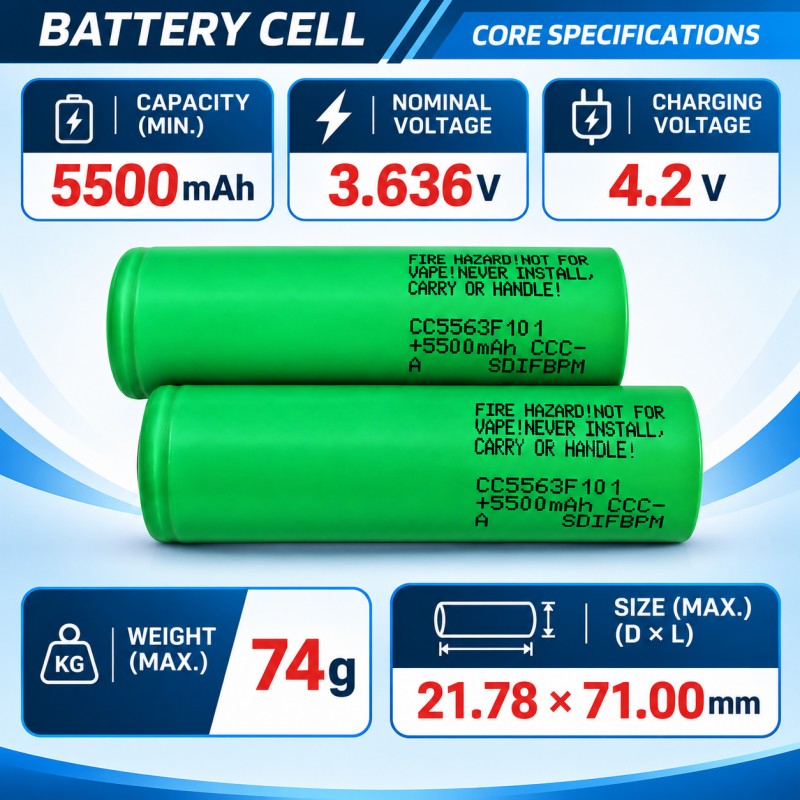
Di Yifang 21700 cylindrical lithium-ion battery cell provides a minimum standard discharge capacity of 5500mAh. This makes it a high-capacity cell option for compatible rechargeable battery applications.
For manufacturers developing customized battery packs, this capacity specification provides a useful reference when estimating the number of cells required and evaluating possible pack configurations.
📐 3. Perché è il 21700 Cylindrical Format Useful for Battery Pack Integration?
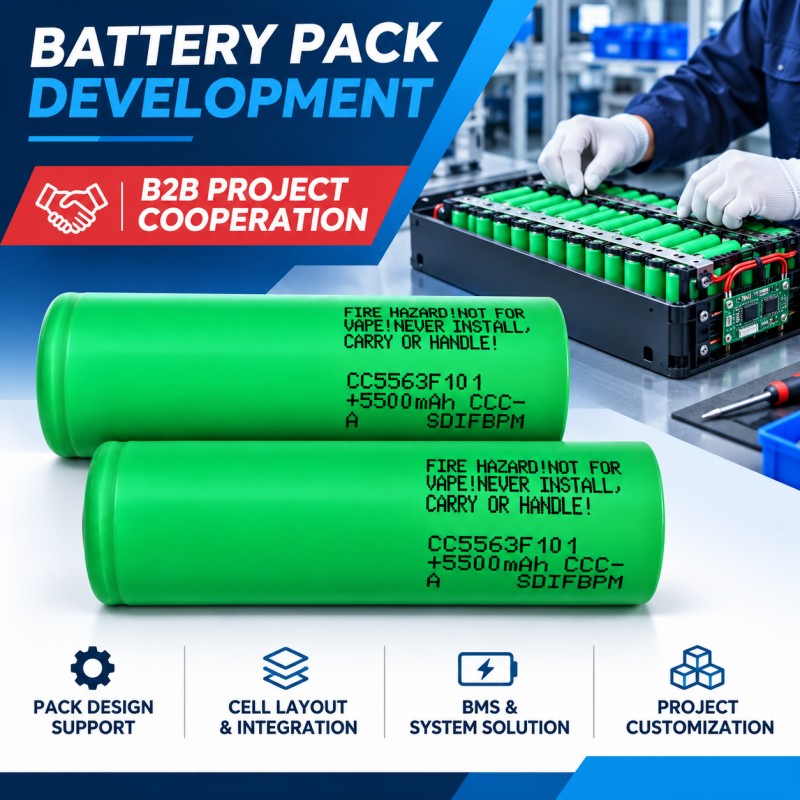
A battery pack must fit the physical requirements of its target application while providing the necessary electrical performance. Cylindrical cells offer a defined shape that supports systematic arrangement and mechanical integration.
IL 21700 format can be considered for battery pack projects where designers need to evaluate the relationship between individual cell capacity and available installation space.
Its suitability depends on several practical factors:
Cell arrangement: Engineers need to determine how individual cells can be positioned within the battery enclosure while maintaining appropriate spacing and support.
Pack configuration: Series and parallel connections must be designed according to the required voltage and capacity.
Progettazione strutturale: The battery enclosure should provide suitable mechanical protection and accommodate the selected cell arrangement.
Thermal considerations: The design needs to account for heat generated during charging and discharging, especially when multiple cells operate together.
The objective is not simply to fit as many cells as possible into a limited area. A well-designed battery pack must also maintain electrical reliability, mechanical stability, and appropriate operating conditions.
🔌 4. How Do Voltage and Discharge Performance Affect Battery Design?
Capacity is only one part of battery performance. Nominal voltage and discharge capability also determine whether a cell is suitable for a particular application.
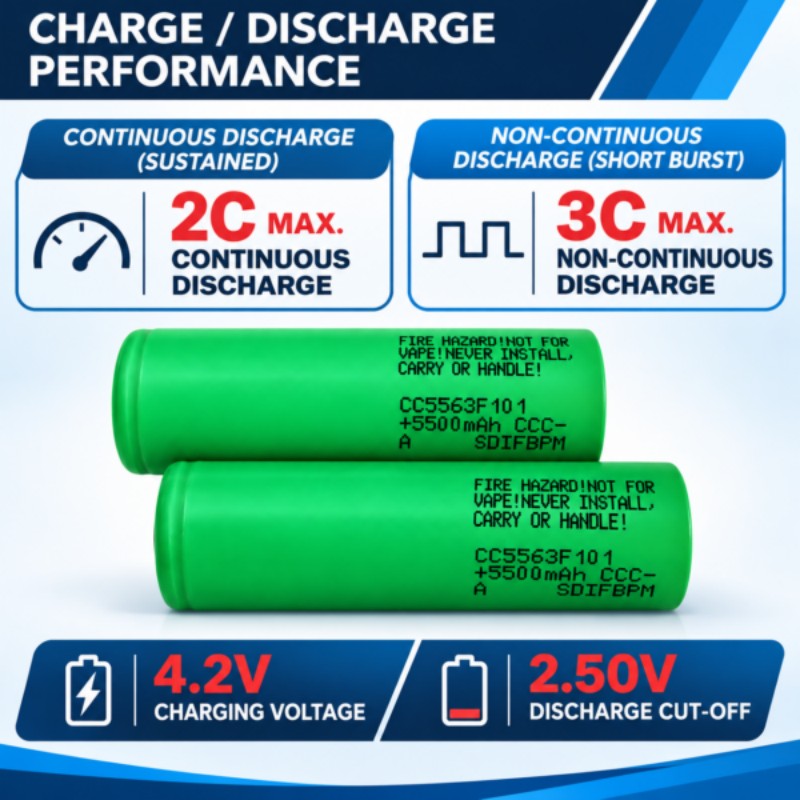
Di Yifang 21700 rechargeable lithium-ion battery cell has a nominal voltage of 3.636V and a specified charging voltage of 4.2V. Its charging process follows the CC-CV method, which uses constant-current charging followed by constant-voltage charging.
The cell also provides defined discharge capabilities:
- 2C continuous discharge: Supports applications designed around the specified continuous discharge conditions.
- 3C non-continuous discharge: Provides a higher discharge capability for applications with limited-duration current demands.
These ratings are important during battery pack development because the required current must be matched with the cell’s specified operating limits.
Per esempio, equipment with relatively steady power consumption may have different discharge requirements from devices that experience temporary increases in current demand. Battery designers should therefore evaluate both continuous and non-continuous load conditions.
The actual operating current should also account for temperature, condizioni di raffreddamento, protection settings, and the complete battery pack design.
🧪 5. Why Should Internal Impedance Be Considered?
Internal impedance is another important parameter when evaluating a lithium-ion battery cell. It influences voltage behavior and electrical losses when current flows through the cell.
Di Yifang 21700 cell specifies an initial AC impedance of no more than 15mΩ under the stated test conditions.
Per i produttori di batterie, this specification can support cell evaluation and electrical matching during the development process. Consistency between cells is particularly important when multiple units are connected in series or parallel.
Tuttavia, AC impedance measurements depend on the specified testing method and conditions. They should not be directly treated as equivalent to DC internal resistance.
When assessing a battery cell, manufacturers should review impedance alongside capacity, voltaggio, capacità di scarico, and other relevant test results.
🏭 6. What Should Manufacturers Consider Before Selecting a 21700 Cella della batteria?
Selecting a high-capacity cylindrical battery cell requires a complete assessment of the intended application. A cell with suitable capacity may still be unsuitable if its electrical characteristics or physical dimensions do not match the battery pack design.
Before integrating a 21700 cella della batteria agli ioni di litio, manufacturers should review:
- Requisiti di capacità: Confirm that the minimum discharge capacity meets the application’s energy requirements.
- Compatibilità di tensione: Check nominal voltage and charging voltage against the system design.
- Discharge conditions: Evaluate continuous and non-continuous current demands.
- Specifiche di ricarica: Follow the recommended CC-CV charging procedure and specified operating limits.
- Impedance characteristics: Review initial AC impedance and cell consistency.
- Compatibilità meccanica: Confirm the actual cell dimensions and available enclosure space.
- Safety and protection: Design suitable BMS functions, gestione termica, and electrical protection.
A complete technical evaluation helps reduce compatibility issues during battery pack development and supports more reliable product integration.
🔍 7. Yifang 21700 Lithium-Ion Battery Cell for Customized Solutions
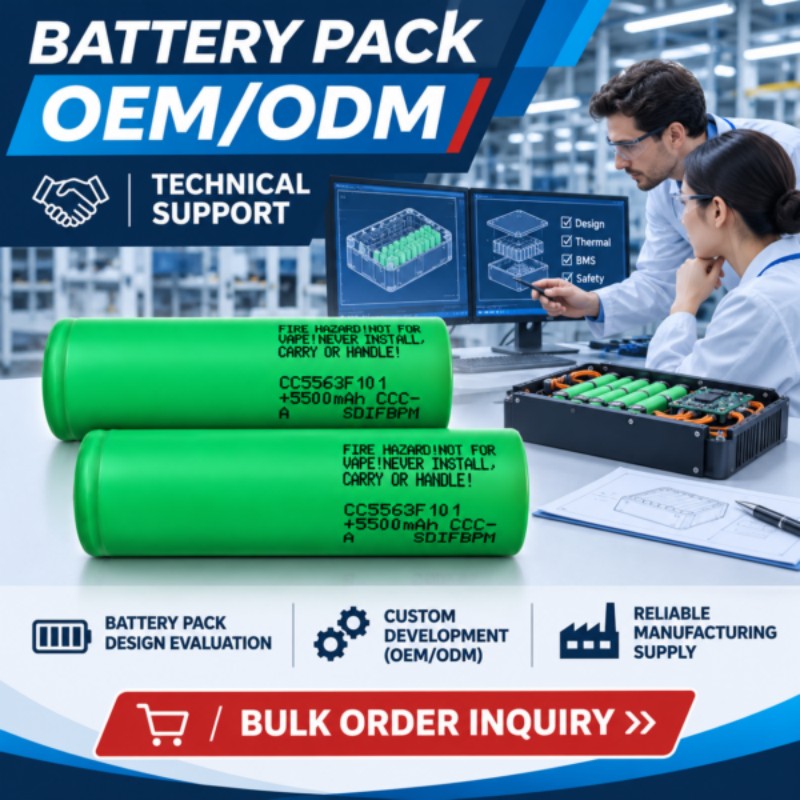
Yifang provides a 21700 cylindrical lithium-ion battery cell designed for professional battery pack development and integration projects.
Le sue specifiche principali includono:
- Tensione nominale: 3.636V
- Minimum Standard Discharge Capacity: 5500mAh
- Tensione di carica: 4.2V
- Metodo di ricarica: CC-CV
- Impedenza CA iniziale: ≤15 mΩ
- Continuous Discharge Capability: Up to 2C
- Non-Continuous Discharge Capability: Up to 3C
These specifications provide battery manufacturers with key reference information when evaluating cell compatibility, configurazione elettrica, and pack design requirements.
For customized rechargeable battery solutions, IL 21700 format offers a practical cylindrical cell option. By considering capacity, voltaggio, capacità di scarico, and physical integration together, engineers can develop battery packs that better match their intended applications.
Conclusione
IL 21700 battery format balances cell capacity and space efficiency through its cylindrical structure and capacity potential. Tuttavia, successful battery pack design depends on more than the format itself. Cell arrangement, configurazione elettrica, gestione termica, and mechanical requirements all influence the final result.
Yifang’s 5500mAh 21700 lithium-ion battery cell provides a high-capacity option for professional battery pack development. Evaluating its electrical specifications alongside the actual installation and operating requirements can help manufacturers determine whether it is suitable for their customized rechargeable battery projects.