
導入
As the global demand for renewable energy continues to grow, energy storage systems are becoming an important part of modern power infrastructure. From residential solar installations to commercial facilities and industrial applications, battery energy storage systems help users store electricity, improve energy flexibility, and make better use of renewable energy.
For homeowners, businesses, 太陽光発電設置業者, 販売代理店, and energy project developers, choosing the right energy storage solution requires more than comparing battery capacity or inverter power. It is important to understand system configuration, バッテリー技術, power requirements, safety features, installation conditions, and long-term operating needs.
In this guide, we explore how energy storage systems work, their major benefits, common applications, and the key factors to consider when selecting a suitable solution.
1. What Is an Energy Storage System?
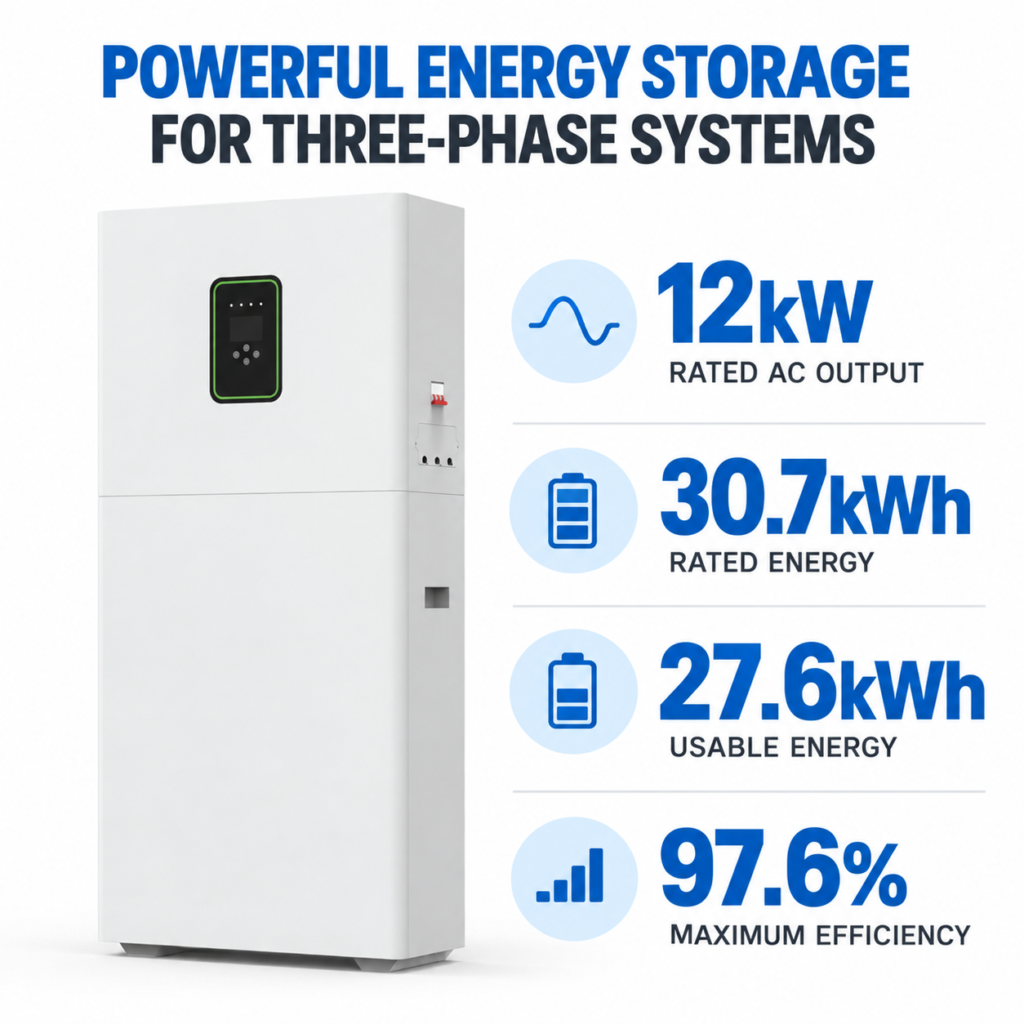
An energy storage system (ESS) is designed to store electrical energy and make it available when needed. A typical battery energy storage system includes a battery pack, a battery management system (BMS), and a power conversion system such as an inverter.
Depending on the design, an ESS may also include an energy management system, monitoring software, communication interfaces, and other components for system control and protection.
A battery energy storage system can store electricity generated by solar panels, receive power from the electrical grid, or work with other compatible energy sources. The stored energy can then be used during periods of high demand, limited solar generation, or power interruptions when the system is configured to provide backup power.
Main Components of a Battery Energy Storage System
バッテリーパック
The battery stores electrical energy for later use. バッテリー容量, 電圧, 化学, サイクル寿命, and operating temperature are important considerations when evaluating a battery system.
バッテリー管理システム (BMS)
The BMS monitors battery operating conditions and helps manage charging, 放電中, 電圧, 温度, and protective functions according to the battery design.
Hybrid or Off-Grid Inverter
The inverter converts DC electricity from batteries and solar panels into AC electricity for compatible loads. A hybrid inverter can coordinate power from multiple sources, depending on its supported operating modes.
Energy Monitoring and Control
Monitoring functions help users and installers check operating status, energy flows, alarms, and performance. Available features may include an LCD display, Wi-Fi monitoring, mobile applications, or remote communication.
2. How Does a Solar Energy Storage System Work?
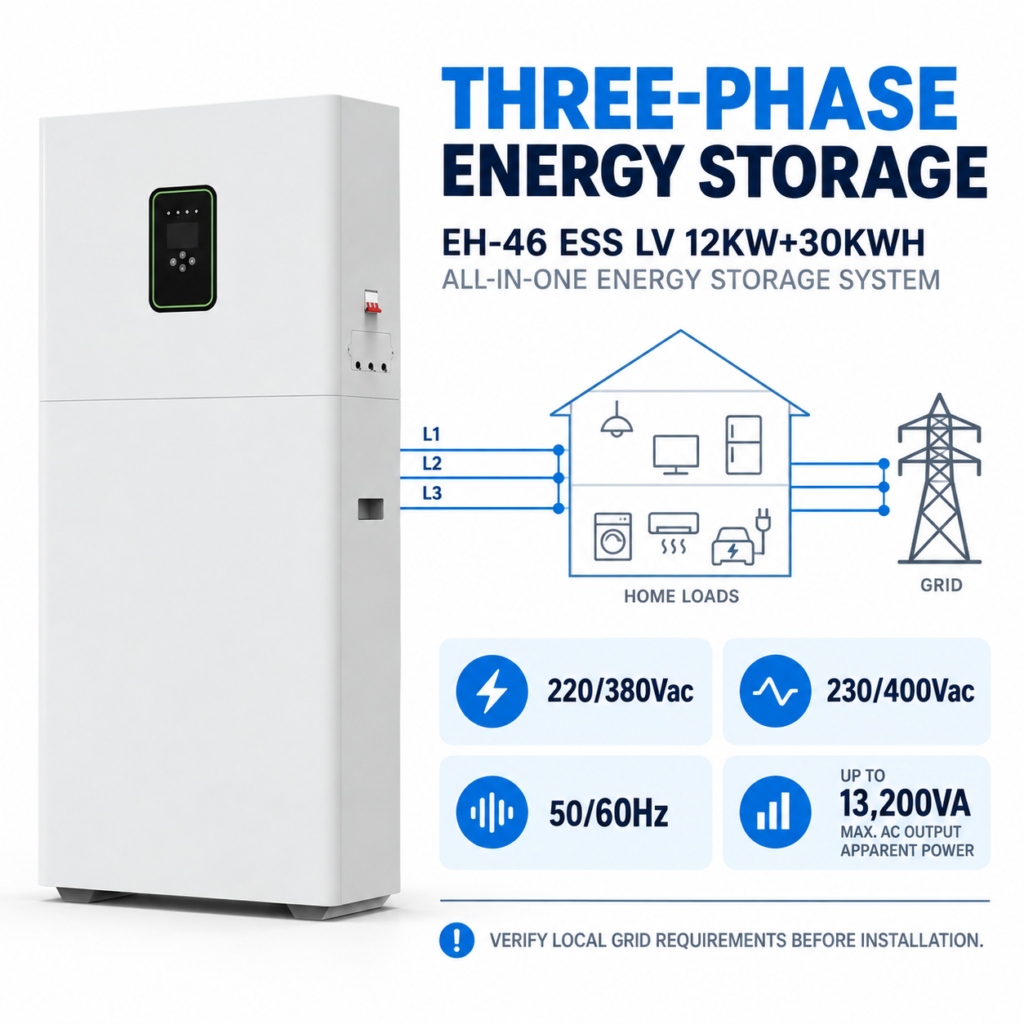
A solar energy storage system combines photovoltaic panels, an inverter, a battery, and electrical loads to manage energy production and consumption.
During the day, solar panels generate electricity. The system supplies compatible loads first according to its configuration, while surplus energy can be used to charge the battery. Depending on the inverter settings and local regulations, excess energy may also be exported to the grid.
When solar generation decreases, the battery can discharge to supply compatible loads. If the system supports grid charging, it may also charge from the grid under configured conditions.
A typical operating process includes:
- Solar generation: Photovoltaic panels produce DC electricity.
- Power conversion: The inverter manages solar power and converts electricity for compatible AC loads.
- Battery charging: Available surplus energy charges the battery.
- Energy supply: Stored energy is discharged when required by the loads.
- Grid or generator support: Compatible systems can use additional power sources when needed.
Actual operation depends on inverter capabilities, battery configuration, system settings, grid requirements, and the installation design.
3. Key Benefits of Battery Energy Storage Systems
Better Use of Solar Energy
Without battery storage, solar energy generation and household or business electricity consumption may not occur at the same time. An energy storage system can store surplus solar electricity for later use, helping users increase the utilization of their own solar generation.
Improved Energy Flexibility
Battery storage gives users greater flexibility in deciding when to store and use electricity. Depending on the system and local electricity tariff, this flexibility may help users shift some energy consumption away from more expensive periods.
Actual savings depend on electricity prices, charging sources, system efficiency, battery degradation, and usage patterns.
Backup Power Capability
Some energy storage systems support backup or off-grid operation during grid interruptions. To provide this function, the system must be designed with compatible backup output, appropriate switching equipment, and sufficient battery capacity.
Not every grid-connected inverter automatically supplies power during an outage, so backup capability should always be confirmed before purchase.
Support for Renewable Energy Integration
Battery storage helps address the difference between renewable energy generation and electricity demand. It can store available solar energy and release it later, supporting more flexible use of renewable electricity.
Scalable Energy Solutions
Some battery systems support parallel connection or modular expansion. This allows a project to be designed around current energy needs while leaving room for future expansion, provided that the battery, inverter, control system, and installation design support the intended configuration.
More Flexible Energy Management
Depending on system capabilities, users may combine solar charging, grid charging, battery discharge, and compatible generator input. Monitoring tools can also help installers and operators review system performance and identify operating issues.
4. Common Applications of Energy Storage Systems
Residential Energy Storage
Residential battery storage is commonly used with rooftop solar systems to store excess daytime generation for evening or nighttime consumption. Depending on system design, it may also support selected household loads during grid outages.
Important selection factors include daily electricity consumption, desired backup duration, available solar capacity, inverter output, installation space, and local electrical requirements.
Commercial Energy Storage
Commercial buildings, retail facilities, offices, and small businesses may use battery storage to improve solar energy utilization and manage electricity consumption.
商業プロジェクトの場合, buyers should evaluate load profiles, peak demand patterns, operating schedules, three-phase power requirements, and the potential financial benefits under the local electricity tariff.
Industrial and Small Manufacturing Applications
Industrial and workshop environments may require higher output power, three-phase supply, or more flexible integration with existing electrical infrastructure.
The appropriate solution depends on equipment startup currents, continuous load demand, critical loads, power quality requirements, and the required operating duration.
Off-Grid and Remote Power Systems
In locations without a reliable grid connection, an appropriately designed off-grid energy storage system can combine solar panels, 電池, an inverter, and optionally a generator.
System sizing should account for daily energy demand, peak loads, seasonal solar availability, autonomy requirements, and generator operating strategy.
Solar Distribution and Energy Projects
For solar installers, 販売代理店, importers, and project developers, selecting a suitable ESS product involves more than evaluating its rated specifications. Product consistency, documentation, communication compatibility, after-sales support, delivery arrangements, and customization options can also affect project success.
5. How to Choose the Right Energy Storage System
Selecting a battery energy storage system begins with understanding the actual application rather than choosing the largest available battery.
Step 1: Calculate Your Power Requirements
Power, measured in kilowatts (kW), indicates how much electrical power a system can supply at a given moment.
List the loads that need to operate simultaneously and calculate their total demand. Consider motor startup currents, compressor loads, and other equipment that may require short-term surge power.
The inverter’s continuous output rating and surge capability should be suitable for the intended loads.
Step 2: Estimate Your Required Energy Capacity
Battery energy capacity, measured in kilowatt-hours (kWh), indicates how much energy the battery can store.
A simple starting point is:
Required usable battery energy = Load power × Required operating time
例えば, if selected loads consume an average of 2 kW for 5 hours, the energy requirement is approximately 10 kWh before accounting for conversion losses, reserve capacity, and other system factors.
The required nominal battery capacity will generally be higher than the usable energy requirement because the actual usable amount depends on the permitted depth of discharge, system efficiency, 温度, and battery specifications.
Step 3: Check Battery Voltage and Chemistry
Battery voltage must be compatible with the inverter and the intended system configuration.
Battery chemistry also affects system design, operating characteristics, safety requirements, サイクル寿命, and maintenance considerations. Lithium iron phosphate (LiFePO4) is widely used in stationary energy storage, but the correct choice depends on the specific product, 応用, and manufacturer’s specifications.
Always verify battery chemistry and operating limits in the product datasheet rather than assuming all products in the same category have identical specifications.
Step 4: Evaluate Solar Input Compatibility
For solar applications, check the inverter’s maximum PV input power, maximum PV open-circuit voltage, MPPT voltage range, input current, and number of MPPT trackers.
These values must be compatible with the planned solar array under expected environmental conditions. Incorrect string configuration can prevent proper operation or exceed equipment limits.
Step 5: Select the Appropriate System Type
Common system configurations include:
- All-in-one ESS: Integrates the inverter and battery into a single product, simplifying equipment coordination.
- Separate inverter and battery system: Uses an independent inverter and battery, offering flexibility in component selection and replacement.
- Modular or expandable battery system: Allows capacity expansion when supported by the system design.
- Off-grid ESS: Designed to operate independently of the utility grid.
- Hybrid ESS: Coordinates solar, バッテリー, and grid power, with operating modes depending on the inverter.
The best configuration depends on the installation environment, required functions, 利用可能なスペース, budget, and future expansion plans.
Step 6: Review Protection, Monitoring, and Communication
Consider the product’s ingress protection rating, temperature limits, protective functions, monitoring methods, and supported communication interfaces.
For outdoor or demanding installation environments, verify the actual protection rating of the complete equipment and follow the manufacturer’s installation instructions.
If a project requires remote monitoring or integration with another energy management platform, confirm supported protocols, interfaces, and software compatibility before ordering.
Step 7: Confirm Certifications and Local Compliance
Energy storage products must meet the applicable safety, transport, grid-connection, and installation requirements of the destination market.
Buyers should request the relevant product documentation and confirm whether the exact model and configuration meet local requirements. Do not assume that one certificate automatically covers every product variant or destination country.
6. All-in-One ESS vs. Separate Battery and Inverter Systems
Both configurations can be suitable, but they serve different project needs.
| Consideration | All-in-One ESS | Separate Battery and Inverter |
|---|---|---|
| Equipment integration | Inverter and battery integrated into one product | Components selected separately |
| インストール | May simplify equipment layout and integration | Requires coordination between components |
| Component selection | Usually based on an established configuration | Greater flexibility in choosing components |
| Expansion | Depends on the product design | Depends on inverter and battery compatibility |
| Maintenance | Access and replacement depend on product design | Individual components may be serviced separately |
| Best suited for | Projects prioritizing integrated design | Projects requiring component-level flexibility |
The comparison is general. Actual installation time, serviceability, compatibility, and expansion capability depend on the specific products and system architecture.
7. What Should Distributors and Importers Look for in an ESS Supplier?
B2Bバイヤー向け, product specifications are only one part of the purchasing decision. A reliable supplier should be able to provide clear documentation and consistent communication throughout the sourcing process.
Key points to evaluate include:
Product Range: Does the supplier offer suitable power ratings, battery capacities, voltage configurations, and system types for your target market?
Technical Documentation: Are datasheets, installation instructions, wiring information, and applicable compliance documents available for the exact model?
OEM and ODM Options: If branding or customization is required, clarify the available options, minimum order quantity, lead time, and any engineering limitations.
Quality Control: Ask about production testing, inspection procedures, traceability, and how product consistency is maintained between batches.
Communication and After-Sales Support: Confirm how technical questions, troubleshooting, 保証請求, and replacement parts are handled.
Packaging and Logistics: Verify packaging methods, shipment dimensions and weight, transport documentation, lead time, and delivery terms before confirming an order.
Sample and Project Evaluation: For larger projects, consider evaluating samples or conducting a technical review before placing a bulk order.
A structured supplier evaluation can help reduce compatibility issues and improve purchasing decisions for distributors, 設置者, and project developers.
8. Frequently Asked Questions About Energy Storage Systems
How long can a battery energy storage system supply power?
Operating time depends on usable battery energy and the average load. For a simple estimate, divide usable battery energy in kWh by average load power in kW. Actual runtime will be affected by conversion losses, battery operating limits, 温度, and load variation.
Is a 16kWh battery enough for a house?
It depends on household electricity consumption, the appliances that need to run, and the desired backup duration. A household using 8 kWh during the intended backup period may have different requirements from one using 20 kWh. A load assessment is necessary before selecting a battery capacity.
Can an energy storage system work without solar panels?
Some systems support charging from the electrical grid or a compatible generator. Whether these options are available depends on the inverter and battery configuration.
Can an ESS provide backup power during a grid outage?
Only if the system supports the appropriate backup or off-grid operating mode and has been installed with the necessary equipment and configuration. Confirm the product’s backup output specifications before purchase.
What is the difference between kW and kWh?
kW measures power, or how much electricity can be supplied at a given moment. kWh measures energy, or how much electricity is stored or consumed over time. Both are important when sizing a battery storage system.
Can battery storage capacity be expanded later?
Some systems support parallel connection or modular expansion, while others have fixed configurations. Check the maximum supported units, communication requirements, battery compatibility, and inverter limits before planning expansion.
Is IP65 suitable for outdoor installation?
IP65 indicates a defined level of protection against dust and water jets. It does not automatically mean that every installation location is suitable. Weather exposure, 直射日光, 周囲温度, mounting requirements, cable entry, and the manufacturer’s instructions must also be considered.
結論
Energy storage systems are becoming an increasingly important part of solar power and modern electricity management. By storing available energy and supplying it when needed, battery storage can help improve solar energy utilization, support flexible energy management, and provide backup power when the system is designed for that purpose.
Choosing the right solution requires a clear understanding of power demand, usable battery capacity, battery chemistry, PV compatibility, system configuration, environmental conditions, and local compliance requirements.
For homeowners, 設置者, 販売代理店, importers, and project developers, working with a supplier that provides clear technical specifications and dependable project support is an important step toward a successful energy storage installation.
Looking for an energy storage solution for your next project?
Contact our team to discuss your target application, required inverter power, バッテリー容量, destination market, and OEM/ODM requirements. We can help you identify a suitable configuration for your project.
Suggested SEO Settings
- SEO Title: エネルギー貯蔵システム: 利点, アプリケーション & Buying Guide
- Meta Description: Learn how energy storage systems work, explore their benefits and applications, and discover how to choose the right battery capacity, hybrid inverter, and ESS solution.
- URL Slug:
energy-storage-systems-guide - Focus Keyword: エネルギー貯蔵システム
- Related Keywords: battery energy storage system, 太陽エネルギー貯蔵, hybrid inverter, residential battery storage, commercial energy storage system
- Suggested Category: Energy Storage Knowledge
- Suggested Tags: Energy Storage System, Solar Battery, Hybrid Inverter, Battery Storage, Renewable Energy, ESS Buying Guide
Suggested Featured Image
Use a realistic, high-quality photograph of a modern battery energy storage cabinet installed in a clean residential or commercial energy environment. Include subtle rooftop solar panels in the background and keep the product as the main subject. Use a professional white, grey, and green color palette with the English headline “ENERGY STORAGE SYSTEMS: A COMPLETE GUIDE”. Avoid excessive text, complex backgrounds, and unsupported product specifications.
Image filename: energy-storage-systems-complete-guide.jpg
Image ALT text: Battery energy storage system integrated with solar power for residential and commercial energy applications