
1. Introduction: Why Choose a High Capacity 21700 Lithium Ion Battery Cell?
As battery-powered equipment and energy solutions continue to develop, battery manufacturers are looking for cells that combine high capacity, reliable electrical performance and practical dimensions.
The 21700 cylindrical lithium ion battery cell is an option for battery pack manufacturers and industrial equipment developers who need a compact cell format with substantial energy capacity.
With a rated capacity of 6350mAh, a typical capacity of 6500mAh and a nominal voltage of 3.5V, this cell provides 22.23Wh of rated energy.
Its combination of capacity, current capability and cylindrical structure makes it worth considering for customized battery pack development.
2. Key Specifications of the 21700 6350mAh Battery Cell
Understanding the electrical and physical characteristics of a battery cell is essential before selecting it for a project.
The following table summarizes the main specifications.
| Parameter | Specification |
|---|---|
| Cell Type | Rechargeable Lithium Ion |
| Cell Format | 21700 Cylindrical |
| Rated Capacity | 6350mAh |
| Typical Capacity | 6500mAh |
| Nominal Voltage | 3.5V |
| Rated Energy | 22.23Wh |
| Limited Charging Voltage | 4.20V |
| Standard Charging Current | 3175mA |
| Maximum Charging Current | 6350mA |
| Standard Discharging Current | 1270mA |
| Maximum Discharging Current | 12700mA |
| AC Internal Resistance | ≤8mΩ |
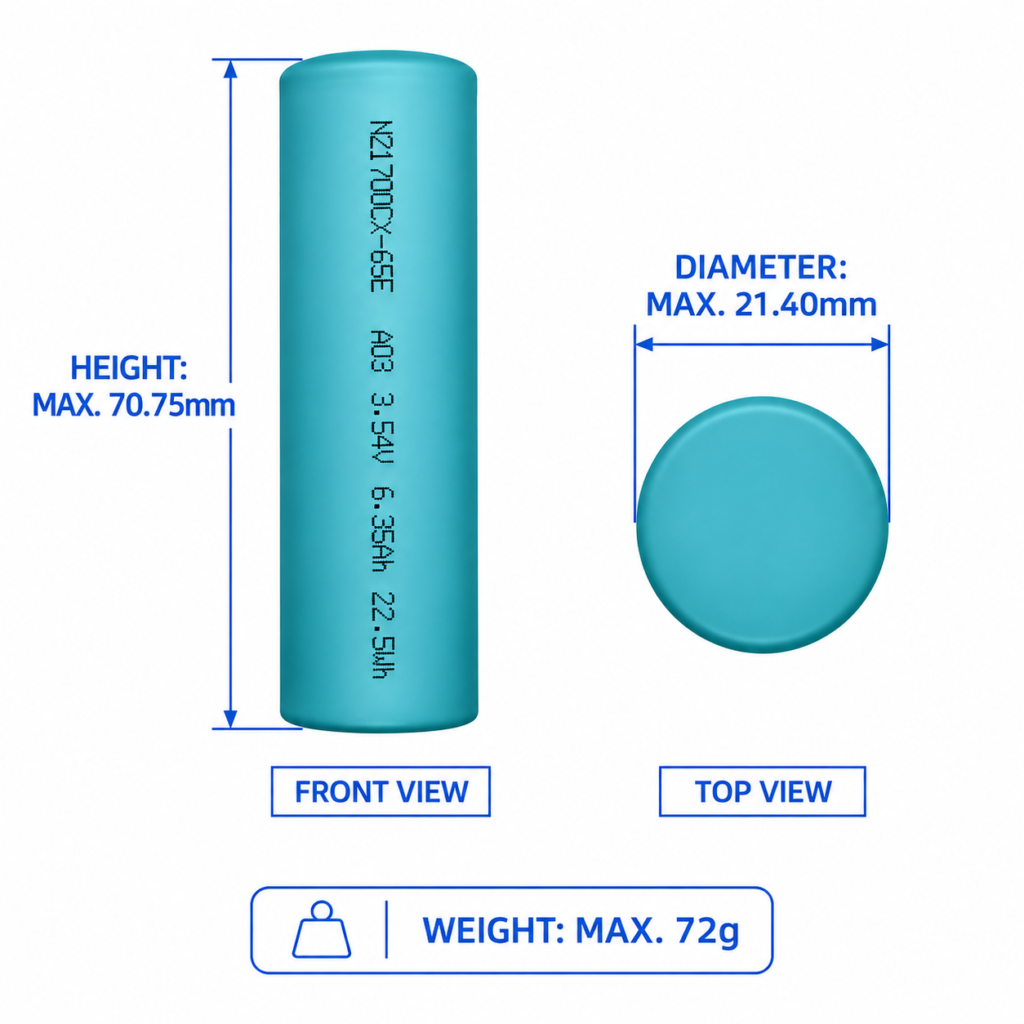
| Maximum Diameter | 21.40mm |
| Maximum Height | 70.75mm |
| Maximum Weight | 72g |
These specifications provide an initial reference for battery pack designers evaluating cell capacity, electrical characteristics and mechanical layout.
3. High Capacity for More Flexible Battery Pack Design
One of the main characteristics of this cylindrical lithium ion cell is its high capacity.
-
Rated capacity: 6350mAh
-
Typical capacity: 6500mAh
-
Rated energy: 22.23Wh
Higher-capacity cells can help battery pack designers evaluate different configurations while managing the number of cells required for a particular energy target.
For B2B buyers, cell capacity is only one selection factor. Voltage requirements, discharge current, thermal management, protection systems and operating conditions should also be considered.
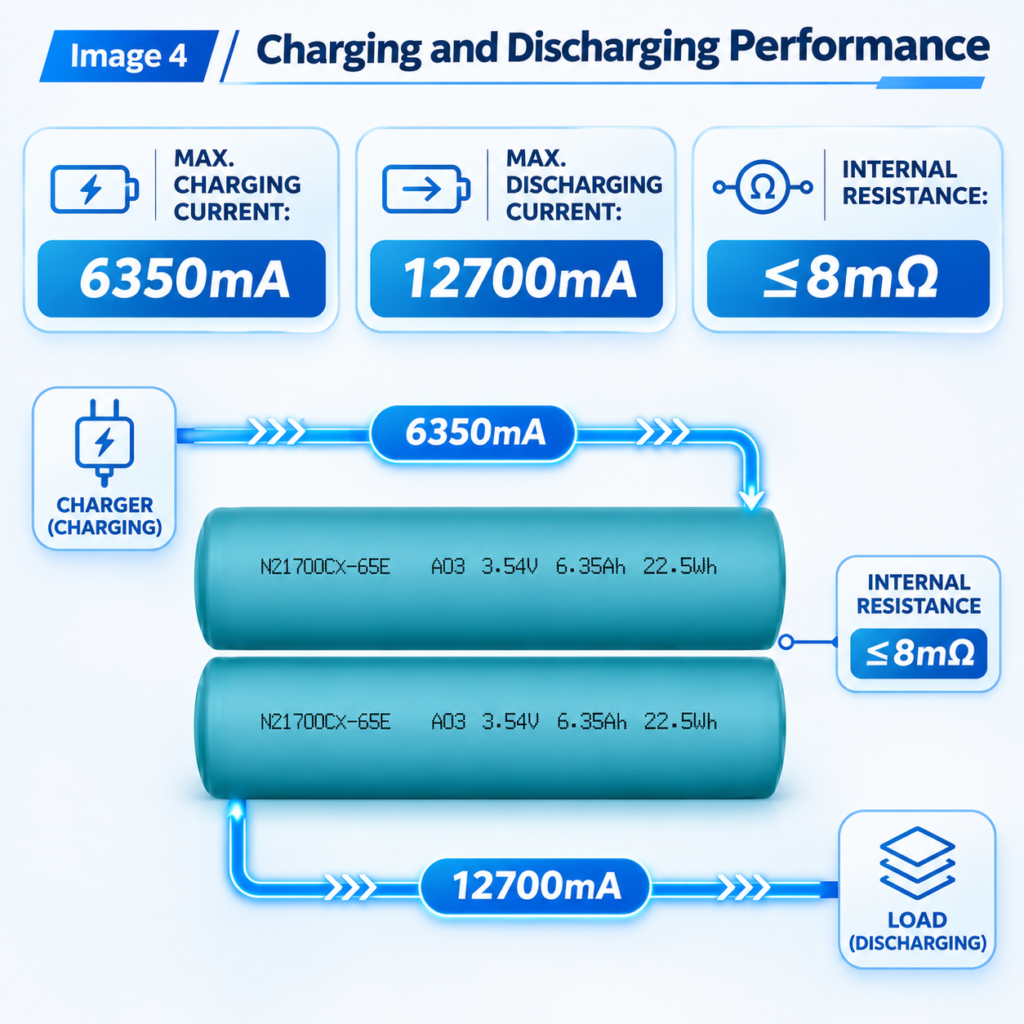
4. Charging and Discharging Performance
Battery current capability is an important consideration when designing a battery pack.
This cell specifies:
Charging Performance
-
Standard charging current: 3175mA
-
Maximum charging current: 6350mA
-
Limited charging voltage: 4.20V
Discharging Performance
-
Standard discharging current: 1270mA
-
Maximum discharging current: 12700mA
-
Test discharge cutoff voltage: 2.50V
The specification also reports relative discharge capacity of at least 95% at 2C and at least 90% at 3C under the stated test conditions.
These figures help engineers evaluate the cell for applications with different discharge requirements. The actual operating current must follow the cell specification and the complete battery system’s safety design.
5. Wide Discharge Temperature Range
Operating temperature can influence battery performance, particularly in equipment used in different climates and environments.
The specified operating temperature ranges are:
| Operating Condition | Temperature |
|---|---|
| Charging | 0°C to 45°C |
| Discharging | -20°C to 60°C |
The specification also provides relative discharge capacity results at different temperatures:
| Temperature | Relative Capacity |
|---|---|
| -20°C | ≥80% |
| -10°C | ≥82% |
| 0°C | ≥85% |
| 25°C | 100% |
| 45°C | ≥90% |
| 60°C | ≥95% |
These results are based on the manufacturer’s specified test method. Actual performance depends on the battery’s operating conditions, thermal design and application environment.
It is also important to follow the specified cell surface-temperature limits and cooling requirements.
6. Cycle Performance and Internal Resistance
For battery pack manufacturers, cycle performance and internal resistance are important parameters during cell evaluation.
The cell specification states:
-
AC internal resistance: ≤8mΩ at 1000Hz.
-
Discharge capacity retention at the 601st cycle: ≥80%.
The cycle result is based on specified test conditions, including a 3.175A charging current, 1.27A discharging current and 2.5V discharge cutoff voltage.
These test results provide useful technical references, but actual battery service life varies according to charging strategy, discharge depth, temperature, operating current and battery management.
7. Potential Applications of 21700 Cylindrical Battery Cells
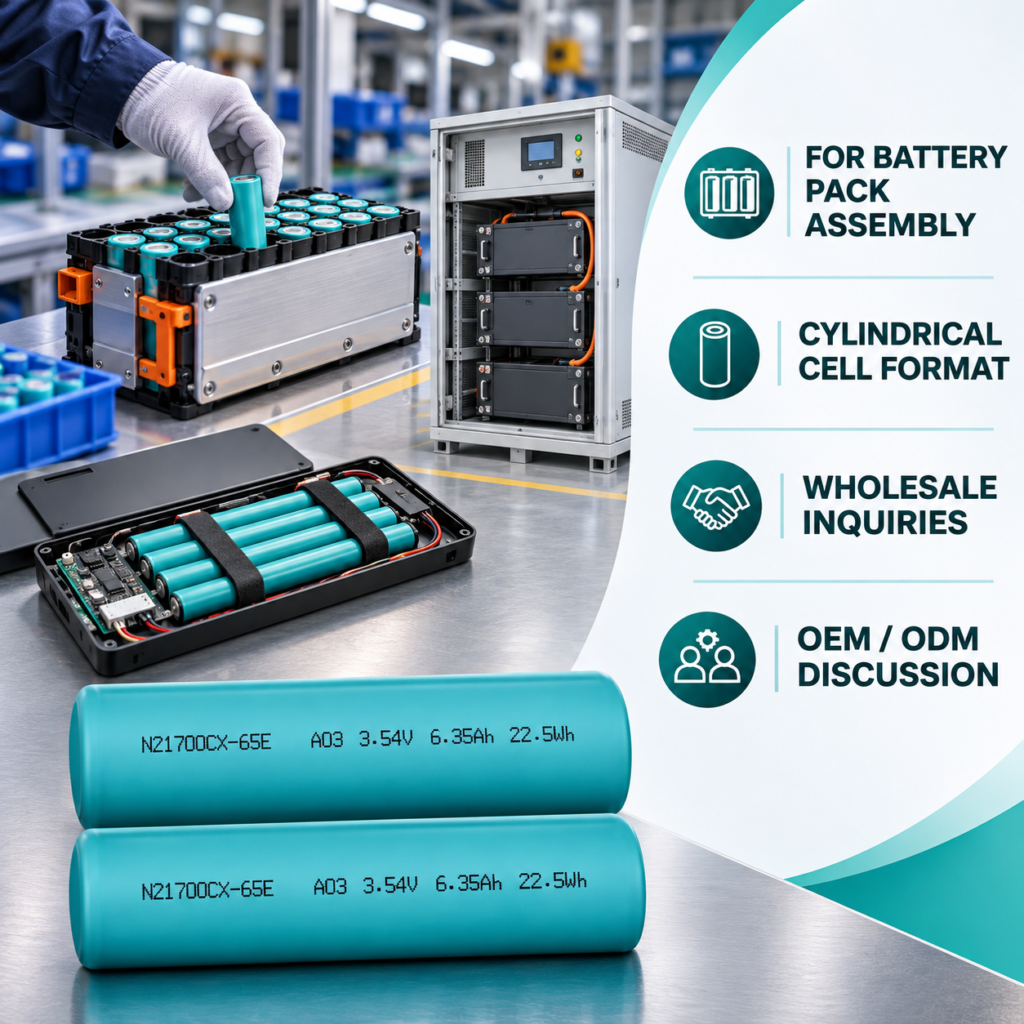
The 21700 cylindrical format can be evaluated for a variety of battery pack development projects.
Potential application directions include:
Customized Battery Packs
Battery manufacturers can evaluate cell combinations according to the required voltage, capacity and discharge characteristics.
Portable Power Equipment
The cell format and capacity may be considered for portable equipment that requires rechargeable battery power.
Industrial Battery Systems
Equipment developers can assess the cell for customized industrial battery configurations.
Battery Product Development
Battery pack designers can use the cell specifications as a reference during prototype development and electrical evaluation.
Final application suitability must be confirmed through system-level engineering and safety testing.
8. What Should B2B Buyers Check Before Purchasing?
Choosing a lithium ion cell for commercial production involves more than comparing capacity and price.
Before placing an order, battery manufacturers and project buyers should evaluate the following:
-
Capacity Requirements: Confirm rated capacity and typical capacity.
-
Voltage Configuration: Determine the required series and parallel cell arrangement.
-
Discharge Current: Check whether the cell supports the project’s operating current.
-
Charging Strategy: Confirm charging voltage, current and temperature limits.
-
Thermal Management: Evaluate heat generation and cooling requirements.
-
Mechanical Dimensions: Verify the cell dimensions against the battery enclosure.
-
Testing Documentation: Request applicable test reports and supporting technical documents.
-
Sample Evaluation: Test samples under the intended operating conditions before mass production.
A complete battery system also requires suitable protection circuits, thermal management and a properly designed battery management system.
9. Partner with EH for Battery Cell Supply
EH focuses on battery and energy storage product supply for international B2B customers.
We welcome inquiries from:
-
Battery pack manufacturers
-
Industrial equipment manufacturers
-
Battery distributors
-
Energy solution providers
-
OEM and ODM project buyers
If you are evaluating high-capacity cylindrical lithium ion cells for a new battery project, our team can discuss your technical requirements and purchasing plans.
Contact EH with your project details:
-
Required quantity
-
Intended application
-
Battery pack voltage and capacity
-
Project development stage
-
Sample requirements
-
Delivery country
-
OEM / ODM requirements
Looking for a 21700 6350mAh lithium ion battery cell supplier? Contact EH to discuss your project and sourcing requirements.
10. Frequently Asked Questions
Q1: What is the rated capacity of this 21700 battery cell?
The rated capacity is 6350mAh, while the typical capacity is 6500mAh.
Q2: What is its nominal voltage?
The nominal voltage is 3.5V.
Q3: What is the rated energy?
The rated energy stated in the electrical specification table is 22.23Wh.
Q4: What is the maximum discharge current?
The specified maximum discharge current is 12700mA. Operating conditions and duration should be confirmed before application.
Q5: What is the maximum charging current?
The specified maximum charging current is 6350mA.
Q6: What is the charging temperature range?
The specified charging temperature range is 0°C to 45°C.
Q7: What is the discharge temperature range?
The specified discharge temperature range is -20°C to 60°C.
Q8: What is the maximum cell weight?
The maximum weight specified is 72g.
Q9: What are the cell dimensions?
The maximum diameter is 21.40mm and the maximum height is 70.75mm.
Q10: Can this cell be used in customized battery packs?
It can be evaluated for customized battery pack development. Final suitability depends on the electrical, mechanical and safety requirements of the battery system.