
Residential energy storage is becoming an important part of modern solar power systems. Homeowners want to make better use of the electricity generated by their solar panels, store excess energy for later use, and manage household power consumption more flexibly. However, building an effective storage solution involves more than selecting a battery. The inverter, battery capacity, solar input, electrical configuration, and monitoring functions must work together.
An all-in-one energy storage system brings several essential functions into one integrated solution. By combining battery storage and power conversion, it can simplify system configuration and reduce the coordination required between separate components.
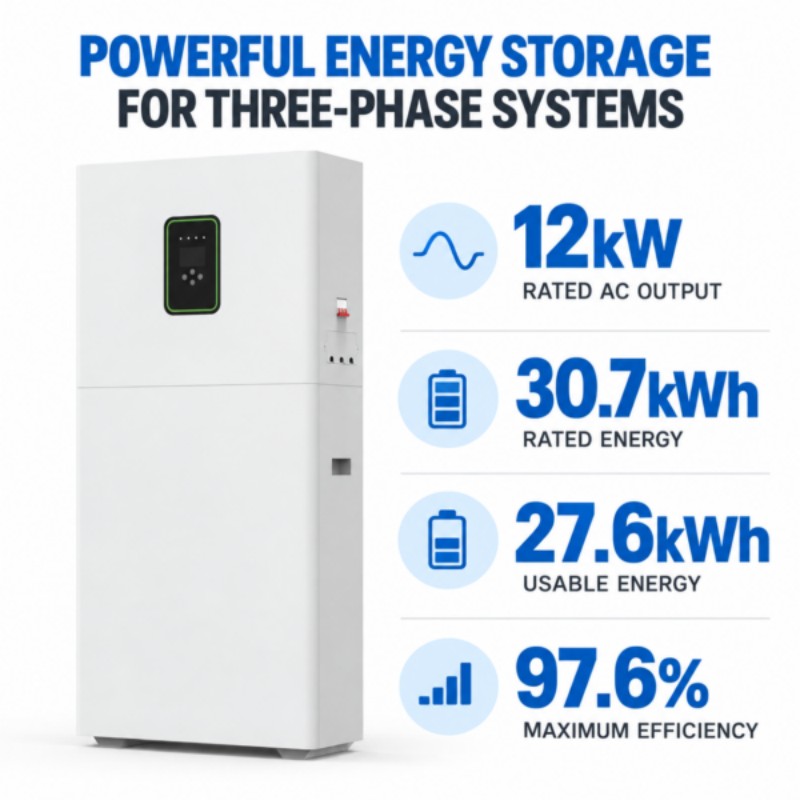
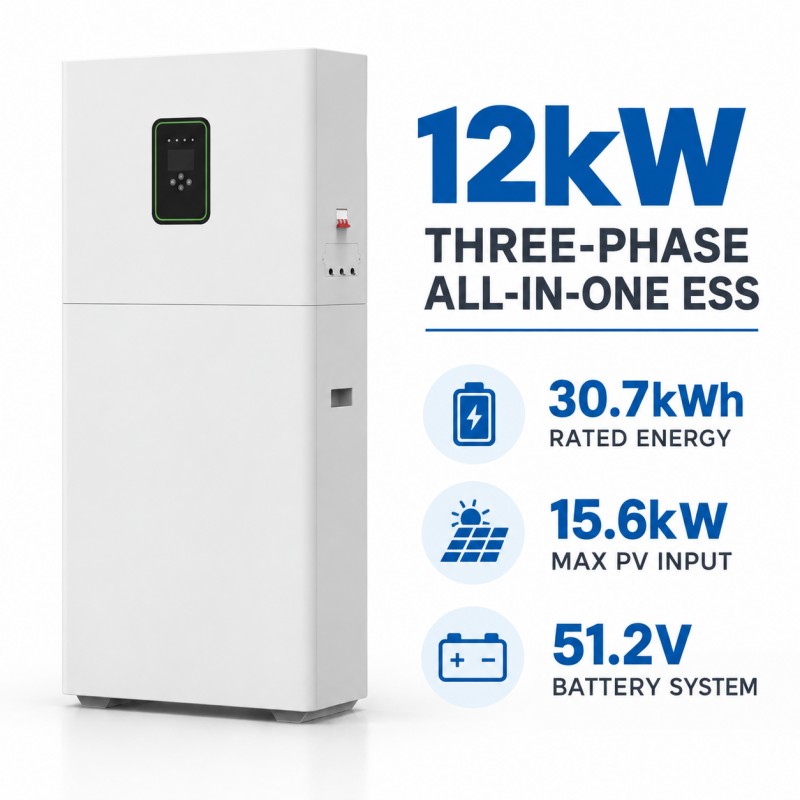
For residential projects that require substantial storage capacity and three-phase power support, YIFANG’s EH-46 ESS LV 12KW+30KWH offers an integrated option. It combines a 12kW rated AC output with 30.7kWh of rated battery energy, supporting solar power conversion, energy storage, and household energy management.
🏠 1. Why Is an Integrated Design Useful for Residential Energy Storage?
A conventional solar storage installation may require separate inverter and battery equipment. Installers must consider their electrical compatibility, communication requirements, installation positions, and system configuration. Managing several independent components can increase installation complexity.
An integrated energy storage system combines inverter and battery functions within one solution. This design helps streamline equipment coordination and provides a more organized installation arrangement. It can also make system planning easier for installers who need to configure solar generation, battery charging, and household power supply together.
The YIFANG EH-46 integrates a 12kW inverter with a low-voltage battery system. Instead of treating solar conversion and battery storage as separate equipment selections, the system brings these functions together in one design.
For homeowners, this integrated approach can simplify equipment planning. For solar installers and distributors, it provides a consolidated solution to evaluate when designing residential energy storage projects.
🔋 2. How Does Battery Capacity Affect Household Energy Storage?
Battery capacity is one of the most important factors when selecting a residential energy storage system. It determines how much electricity the system can store and how much energy may be available when solar generation is low or household demand increases.
However, buyers should distinguish between rated battery energy and usable energy. Rated capacity describes the battery’s specified energy capacity, while usable energy reflects the amount available under the manufacturer’s stated operating conditions.
The EH-46 ESS LV 12KW+30KWH provides 30.7kWh of rated battery energy and 27.6kWh of usable energy at a 90% depth of discharge (DoD), according to its product datasheet. Its battery system operates at 51.2V.
This capacity can support residential projects with relatively substantial electricity storage requirements. Actual backup duration depends on household consumption, connected load, inverter operating limits, battery condition, and system configuration. When comparing an all-in-one battery storage system, buyers should therefore consider both rated and usable capacity rather than relying on the battery capacity figure alone.
☀️ 3. Why Is PV Input Capability Important for Solar Energy Storage?
For households with rooftop solar panels, the ability to integrate photovoltaic generation directly into an energy storage system is essential. The system needs to receive solar power, convert it into usable electricity, and manage energy flow according to the installation configuration.
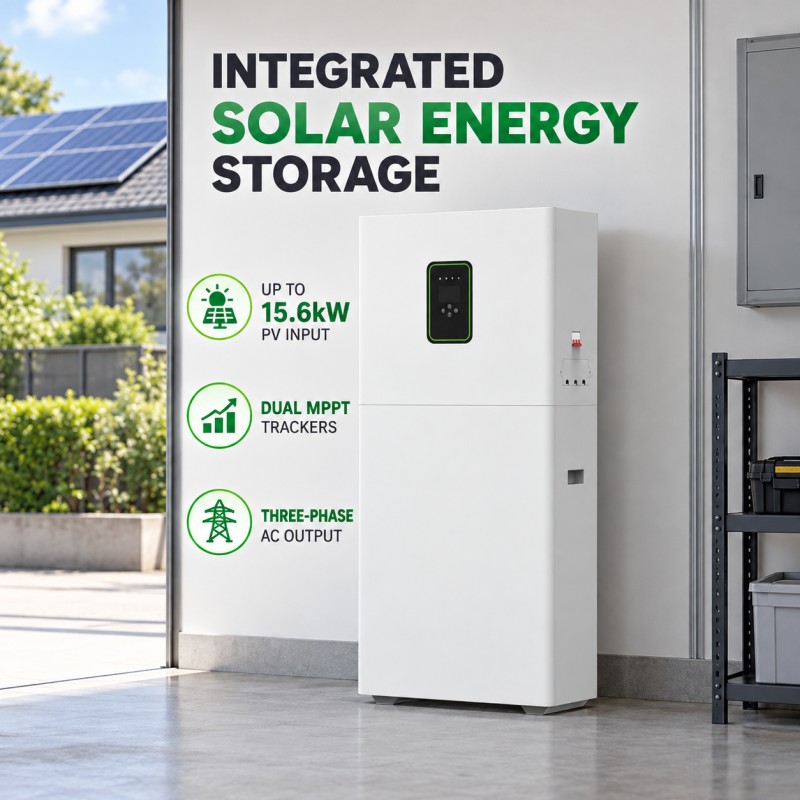
The YIFANG EH-46 supports a maximum PV DC input power of 15,600W. It also features two MPPT trackers and a maximum PV open-circuit voltage of 800V.
MPPT, or Maximum Power Point Tracking, helps optimize the operating point of connected solar panels under changing sunlight conditions. Having two MPPT trackers provides greater flexibility when designing suitable PV array configurations, particularly where different panel groups experience different orientations or shading conditions.
This capability makes the EH-46 relevant to residential solar projects that require a combination of solar generation and battery storage. Nevertheless, installers must check the PV string voltage, current limits, panel arrangement, and other electrical specifications before finalizing a system design. A properly matched solar energy storage system can help households make better use of generated electricity instead of depending entirely on immediate solar production or grid supply.
⚡ 4. What Are the Benefits of Three-Phase AC Output?
Not every residential property uses the same electrical configuration. Some homes and larger residential properties require three-phase power to support their electrical infrastructure and connected equipment.
The EH-46 provides a rated AC output of 12kW and supports three-phase configurations. Its listed AC voltage options include 220/380Vac and 230/400Vac, with 50/60Hz frequency support.
This flexibility allows the system to be considered for compatible three-phase solar and storage installations. However, buyers should confirm the local grid standard, inverter configuration, and electrical requirements before selecting equipment.
For installers and project developers, checking the AC output specification early in the planning process helps avoid compatibility issues between the energy storage system and the property’s electrical infrastructure.
📈 5. Can Parallel Operation Support Future Energy Requirements?
Household electricity demand may change over time. Families may add electric appliances, install additional solar panels, or require greater storage capacity as their energy needs develop.
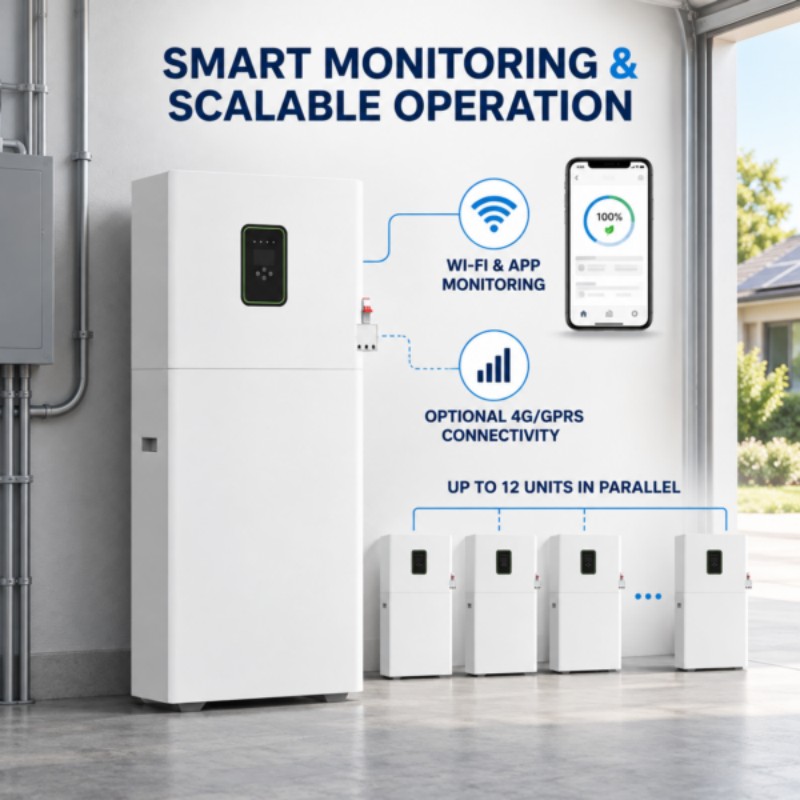
A storage system that supports parallel operation can provide additional configuration flexibility. According to the datasheet, up to 12 EH-46 units can operate in parallel.
This capability gives system designers more options when planning larger installations or projects that may require future expansion. Rather than selecting equipment solely around the initial installation, buyers can consider how the system may fit changing energy requirements.
The product also supports configuration of up to six charging time periods and cutoff thresholds. These settings allow installers to tailor charging behavior and operating parameters to project requirements.
For a home battery storage system, such configuration options can help align system operation with household energy patterns, solar generation, and applicable electricity tariffs.
🌡️ 6. How Does Cooling Affect Energy Storage System Operation?
Battery and inverter equipment generate heat during operation. Temperature management is therefore an important consideration when evaluating an integrated energy storage solution.
The YIFANG EH-46 uses an intelligent air-cooling system designed to manage operating temperatures. Its specified operating temperature range is -20°C to 50°C, with acoustic noise below 50dB according to the datasheet.
These specifications give installers useful information when assessing installation environments. They should still consider ventilation, installation clearance, ambient temperature, and the manufacturer’s installation requirements.
For residential applications, equipment placement also matters. A suitable location should provide the necessary airflow while keeping the system accessible for inspection and maintenance.
📱 7. Why Are Monitoring and Remote Connectivity Important?
Energy storage systems need ongoing operational monitoring. Homeowners and installers may want to check battery status, solar generation, power output, and system operation without repeatedly accessing the equipment itself.
The EH-46 lists Wi-Fi and APP monitoring as standard options. An optional 4G/GPRS module is also available for remote connectivity.
These functions support more convenient system supervision. Homeowners can use the available monitoring interface to review system information, while installers and service teams can benefit from remote access when managing supported installations.
Before purchasing an all-in-one solar energy storage system, buyers should confirm which monitoring functions are included, whether additional communication modules are required, and which data can be accessed through the application.
✅ 8. What Should Buyers Consider Before Choosing an All-in-One Energy Storage System?
An integrated design can simplify equipment coordination, but the right system still depends on the requirements of each property. Buyers and installers should evaluate several technical factors before making a decision:
- Battery capacity: Compare rated energy with usable energy and consider actual household consumption.
- Inverter output: Check rated power, phase configuration, voltage, and frequency compatibility.
- Solar input: Verify maximum PV input power, MPPT quantity, voltage limits, and string design.
- Expansion capability: Consider whether parallel operation is necessary for future project requirements.
- Thermal management: Review cooling design, operating temperature range, and installation conditions.
- Monitoring: Confirm standard communication functions and the availability of optional remote connectivity.
The YIFANG EH-46 ESS LV 12KW+30KWH combines a 12kW three-phase inverter, 30.7kWh rated battery energy, 27.6kWh usable energy, and a maximum PV input power of 15.6kW. Its integrated design, dual MPPT trackers, parallel operation support, and monitoring options make it a solution worth evaluating for residential solar energy storage projects with compatible electrical requirements.
Ultimately, a suitable all-in-one energy storage system should match the property’s energy consumption, solar installation, electrical configuration, and future requirements. By evaluating these factors together, homeowners, installers, and energy storage distributors can make more informed equipment decisions.