
Alta capacidad 21700 Celdas de batería de iones de litio: Apoyando el desarrollo de paquetes de baterías de alta potencia
As demand for high-performance battery systems continues to grow, battery manufacturers are paying increasing attention to cell capacity, capacidad de descarga, operating temperature and cycle performance. These factors directly influence battery pack design, application suitability and long-term operating reliability.
Among cylindrical lithium ion battery formats, el 21700 cell has become an important option for battery pack development. Its cylindrical structure and available capacity range make it suitable for various applications requiring a balance between energy capacity and power output.
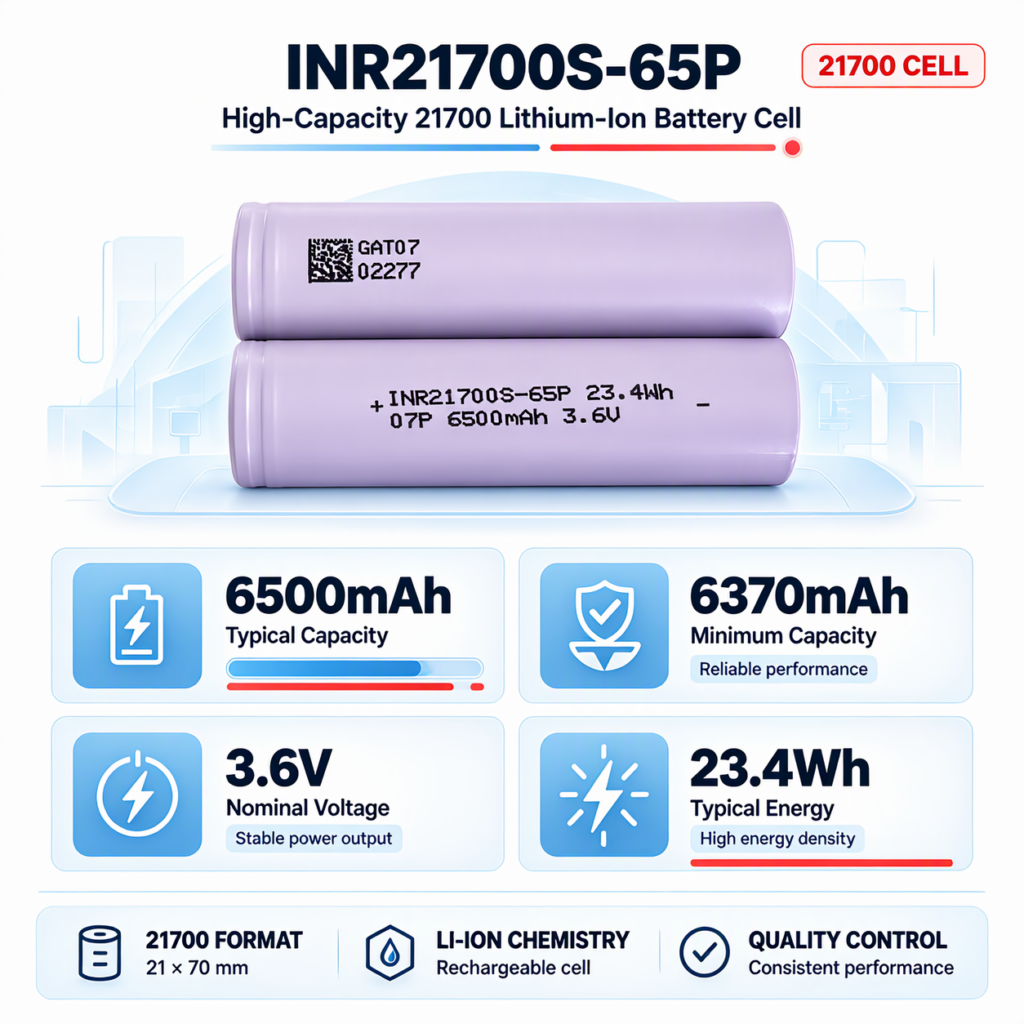
1. Why Are High Capacity 21700 Battery Cells Important?
Battery capacity determines how much electrical energy a cell can store. A higher-capacity cell can help battery pack designers achieve their target energy requirements with fewer individual cells, depending on the pack configuration.
Para fabricantes de baterías, this can provide several design considerations:
-
Optimizing battery pack space utilization
-
Reducing the number of parallel cells required for certain configurations
-
Supporting higher energy requirements
-
Simplifying battery pack structural design
-
Providing flexibility for customized battery solutions
Sin embargo, capacity should never be considered independently. Capacidad de descarga, gestión térmica, protection design and operating conditions must also be evaluated.
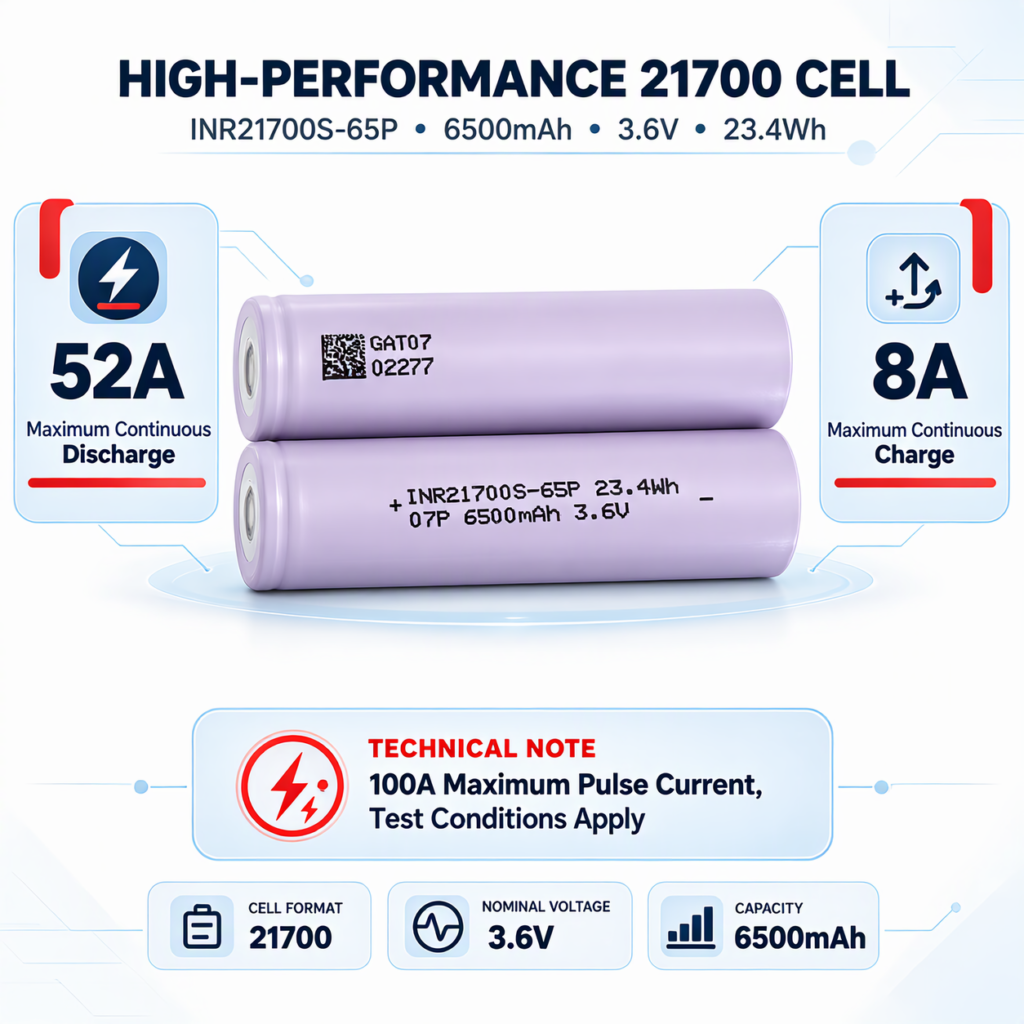
2. High Discharge Capability for Power Demanding Applications
Some battery applications require more than energy storage. They also need sufficient current output to support demanding operating conditions.
A high discharge capability lithium ion cell can provide battery pack designers with more flexibility when developing power-oriented battery systems.
Important factors to evaluate include:
-
Corriente de descarga continua
-
Pulse discharge capability
-
Resistencia interna
-
Temperatura de funcionamiento
-
Battery management system requirements
Por ejemplo, a cylindrical 21700 lithium ion cell with a nominal capacity of 6500mAh and a nominal voltage of 3.6V provides 23.4Wh of nominal energy. Its documented continuous discharge capability is up to 52A under the specified test conditions.
The actual performance of a finished battery pack depends on cell configuration, temperatura, alambrado, protection systems and thermal management. Cell-level specifications should not automatically be treated as battery-pack performance guarantees.
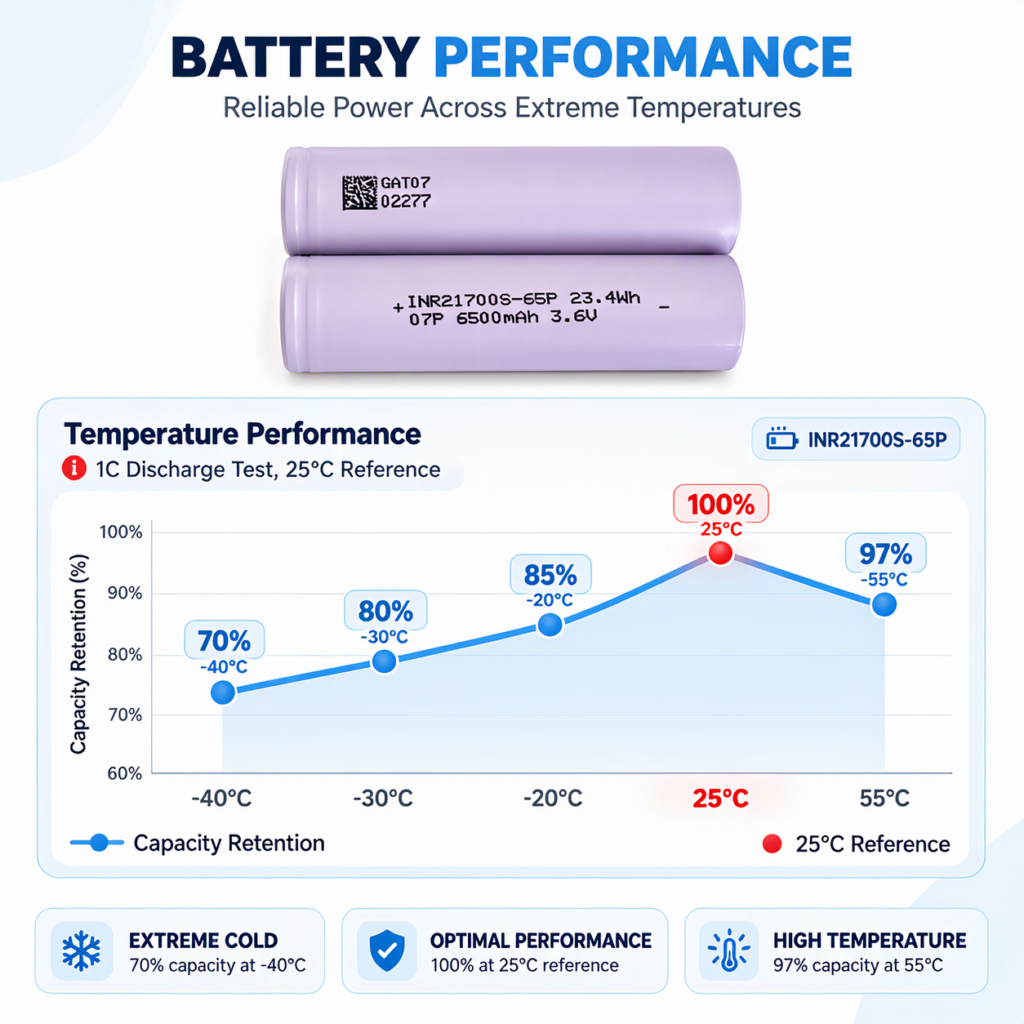
3. Low Temperature Performance Matters
Operating temperature is an important consideration for battery systems used in cold environments.
Low temperatures can affect battery capacity, internal resistance and available power output. Por lo tanto, battery manufacturers should evaluate cell performance under the temperature conditions expected in the target application.
Low temperature discharge testing provides useful reference data for battery pack development.
When selecting cells for cold-weather applications, buyers should consider:
-
Discharge capacity at different temperatures
-
Permitted charging temperature range
-
Charging current limitations
-
Thermal management requirements
-
Battery protection and monitoring functions
Charging and discharging have different temperature limitations. A cell’s low temperature discharge performance does not mean that charging is permitted at the same low temperature.
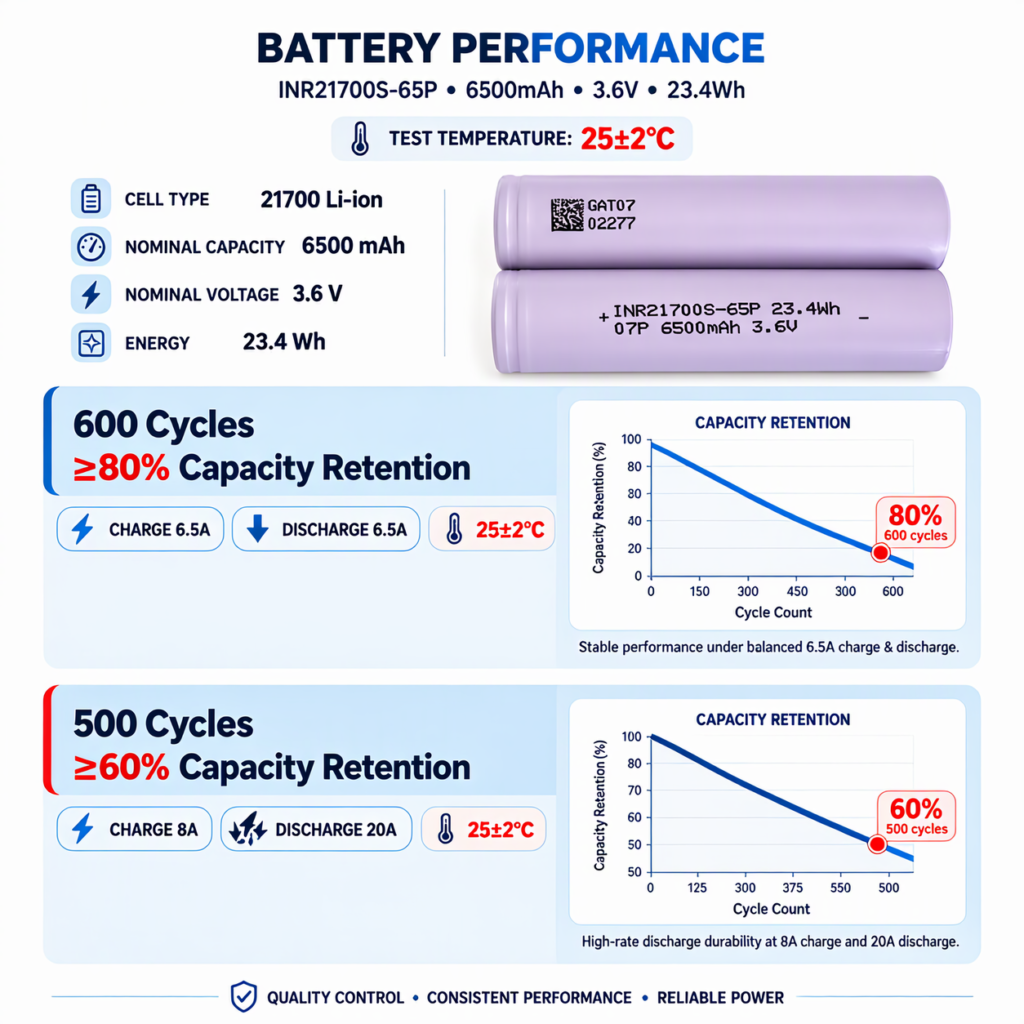
4. Cycle Performance and Long Term Reliability
Cycle performance is another important factor when evaluating lithium ion battery cells.
Battery manufacturers should review test conditions carefully rather than comparing cycle numbers alone. Corriente de carga, discharging current, temperatura, depth of discharge and capacity retention criteria can all influence test results.
Por ejemplo, documented test results for a high-capacity cylindrical cell include:
-
At 6.5A charging and 6.5A discharging, capacity retention is at least 80% after 600 ciclos.
-
At 8A charging and 20A discharging, capacity retention is at least 60% after 500 ciclos.
-
Both tests are conducted at an ambient temperature of 25 ±2°C.
These results provide reference information for engineering evaluation. Actual battery life will vary according to application conditions, operating strategy and battery pack design.
5. What Should B2B Buyers Consider When Selecting 21700 Células?
Para fabricantes de baterías, distributors and energy solution providers, choosing a suitable cell requires more than comparing capacity and price.
A comprehensive evaluation should include:
Especificaciones eléctricas
Comprobar la tensión nominal, nominal capacity, minimum capacity, voltaje de carga, discharge cut-off voltage and current limits.
Dimensiones mecánicas
Confirm cell diameter, altura, weight and dimensional tolerances to ensure compatibility with the intended battery enclosure.
Temperature requirements
Evaluate both charging and discharging temperature limits according to the actual application environment.
Seguridad y protección
The battery pack should incorporate appropriate overcharge, overdischarge and overcurrent protection, together with suitable temperature monitoring and thermal management.
Consistency and quality control
For series or parallel battery pack assembly, coincidencia de celdas, voltage consistency and internal resistance consistency should be considered.
Documentación técnica
Request the latest specification sheet and relevant test documentation before making purchasing and engineering decisions.
6. Building Better Battery Solutions Through Cell Selection
The development of a reliable battery system starts with selecting cells that match the intended application.
High-capacity cylindrical lithium ion cells can offer battery manufacturers additional flexibility in designing compact and power-oriented battery packs. Sin embargo, successful integration depends on a complete engineering approach that considers electrical performance, comportamiento térmico, mechanical design and protection systems.
Para compradores B2B, comparing verified specifications and test conditions is an important step toward selecting the right battery cell for each project.
Whether developing customized battery packs or evaluating new battery supply options, working with accurate technical data helps reduce design uncertainty and supports more efficient product development.
Looking for high-capacity cylindrical lithium ion cells for your next battery project? Share your target capacity, requisitos de alta, temperatura de funcionamiento, battery configuration and estimated order quantity to begin a technical evaluation.