
As demand for renewable energy and reliable backup power continues to grow, choosing the right battery is becoming increasingly important for residential energy storage projects, solar system integrators, distributeurs, and commercial buyers.
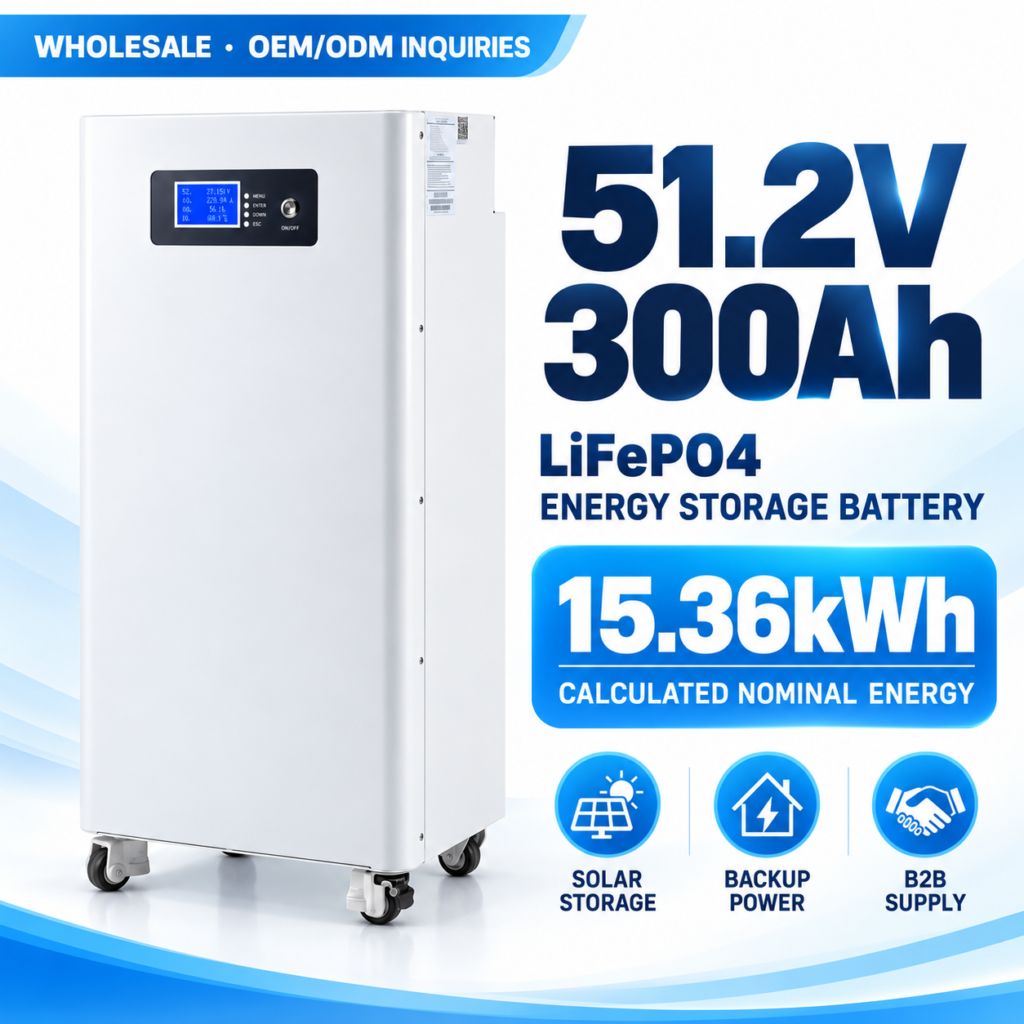
A 51.2V 300Ah LiFePO4 battery offers a calculated nominal energy capacity of 15.36kWh, making it an option worth evaluating for compatible solar energy storage and stationary backup power systems. With lithium iron phosphate chemistry, defined charging and discharging limits, and a cabinet-style design, this battery is intended for projects that require substantial energy storage capacity and clearly specified electrical parameters.
Dans cet article, we explore its key specifications, potential applications, cycle-life rating, installation considerations, and the factors B2B buyers should evaluate before purchasing.
1. What Is a 51.2V 300Ah LiFePO4 Battery?
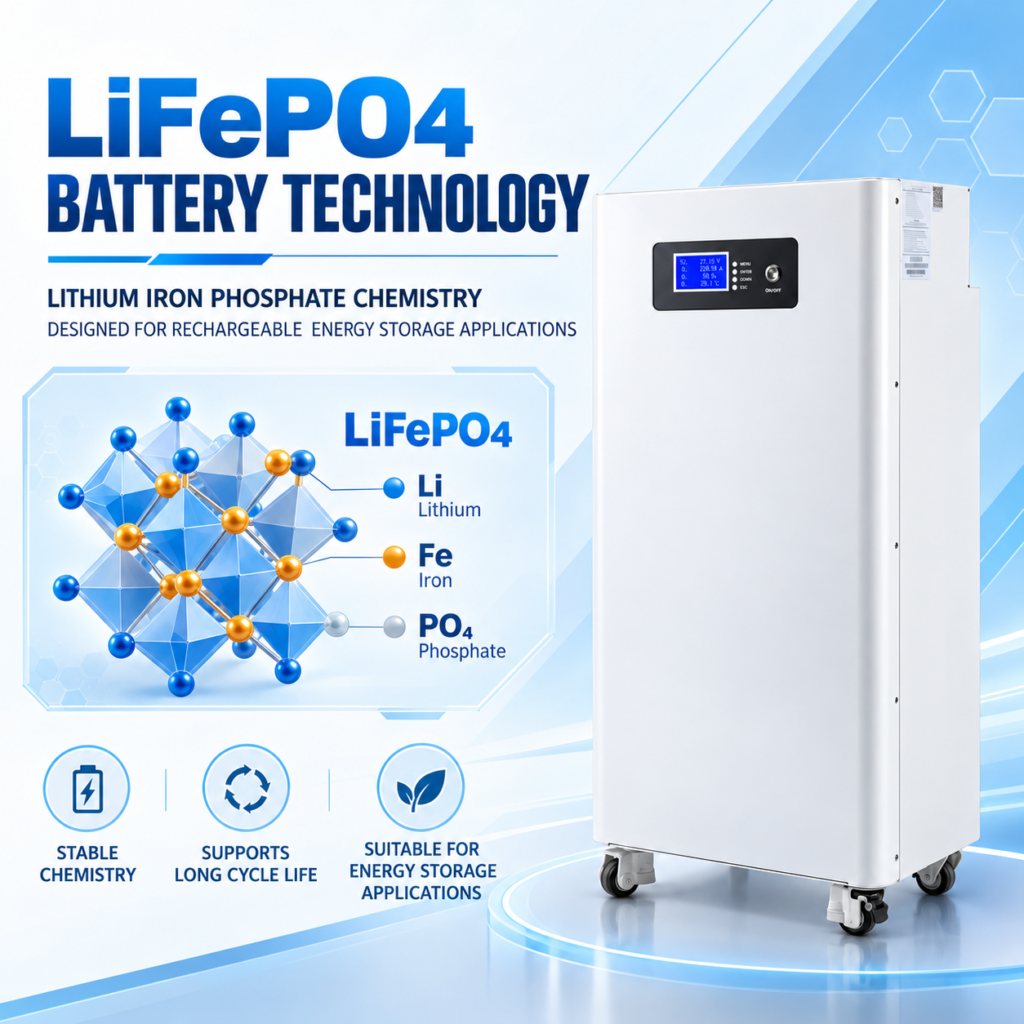
A 51.2V 300Ah LiFePO4 battery is a rechargeable lithium battery designed for compatible energy storage applications.
Its nominal energy can be calculated using the following formula:
Nominal Energy = Nominal Voltage × Rated Capacity
51.2V × 300Ah = 15,360Wh, or 15.36kWh.
This calculation provides a useful starting point for system planning. Cependant, the energy available to a connected load depends on the battery’s operating limits, conversion losses, system configuration, and other application-specific factors.
The battery uses lithium iron phosphate (LiFePO4) chimie, which is widely used in stationary energy storage applications. For system designers and procurement teams, understanding the rated voltage, capacité, charging limits, courant de décharge, and operating temperature is essential when evaluating battery compatibility.
2. Key Technical Specifications
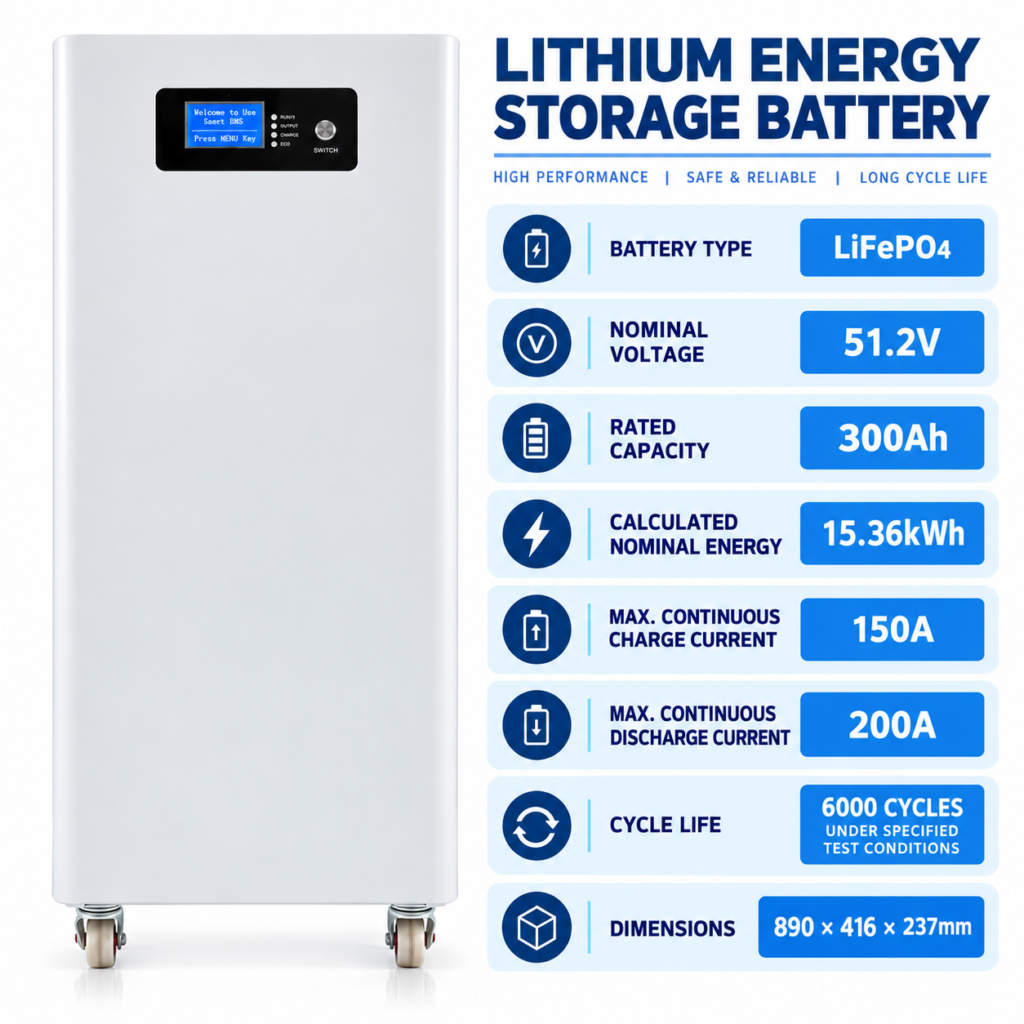
The following table summarizes the available specifications for this battery.
| Paramètre | Spécification |
|---|---|
| Chimie des batteries | LiFePO4 |
| Tension nominale | 51.2V |
| Capacité nominale | 300Ah |
| Calculated Nominal Energy | 15.36kWh |
| Charge Limit Voltage | 58.4V ±0.5V |
| Tension de coupure de décharge | 41.6V ±0.5V |
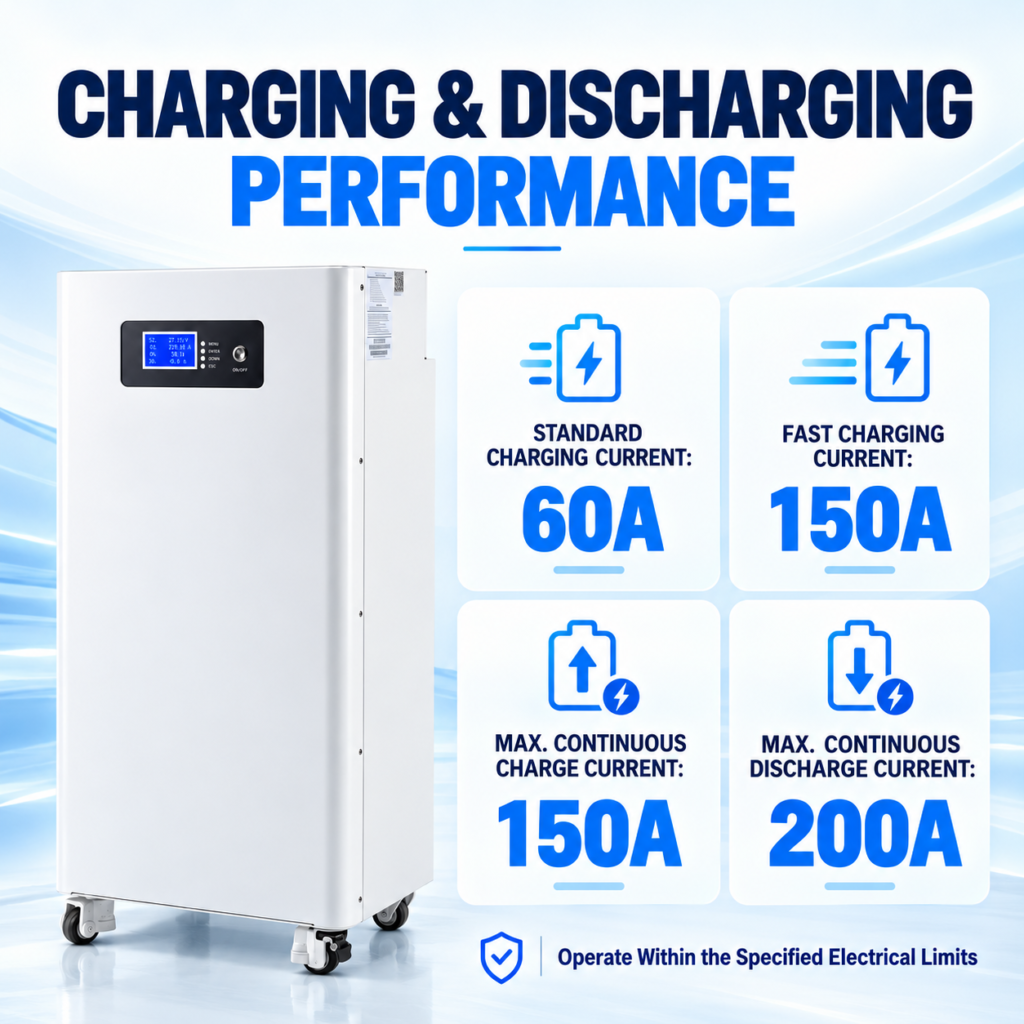
| Courant de charge standard | 60UN |
| Fast Charging Current | 150UN |
| Maximum Continuous Charging Current | 150UN |
| Maximum Continuous Discharging Current | 200UN |
| Cycle-Life Rating | 6,000 cycles dans des conditions d'essai spécifiées |
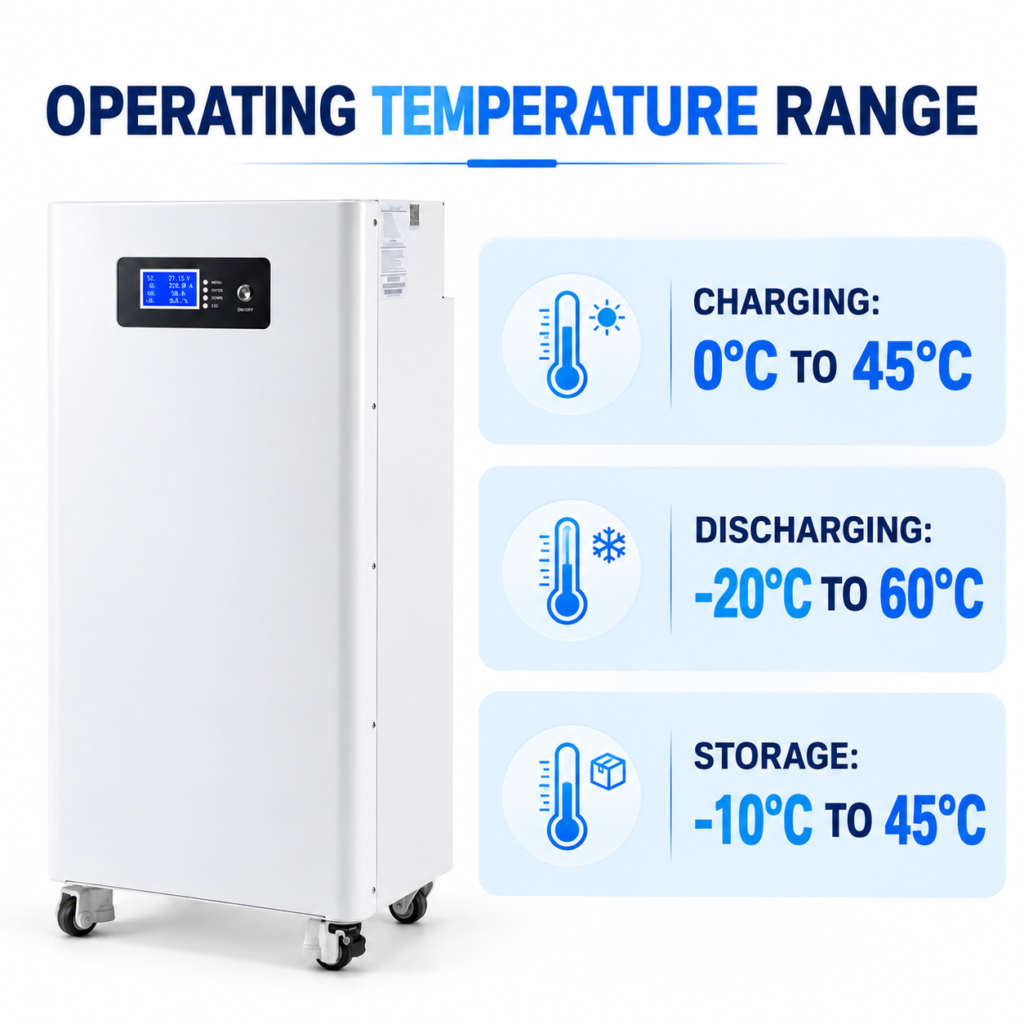
| Température de charge | 0°C à 45°C |
| Température de décharge | -20°C à 60°C |
| Température de stockage | -10°C à 45°C |
| Dimensions (L × l × H) | 890 × 416 × 237mm |
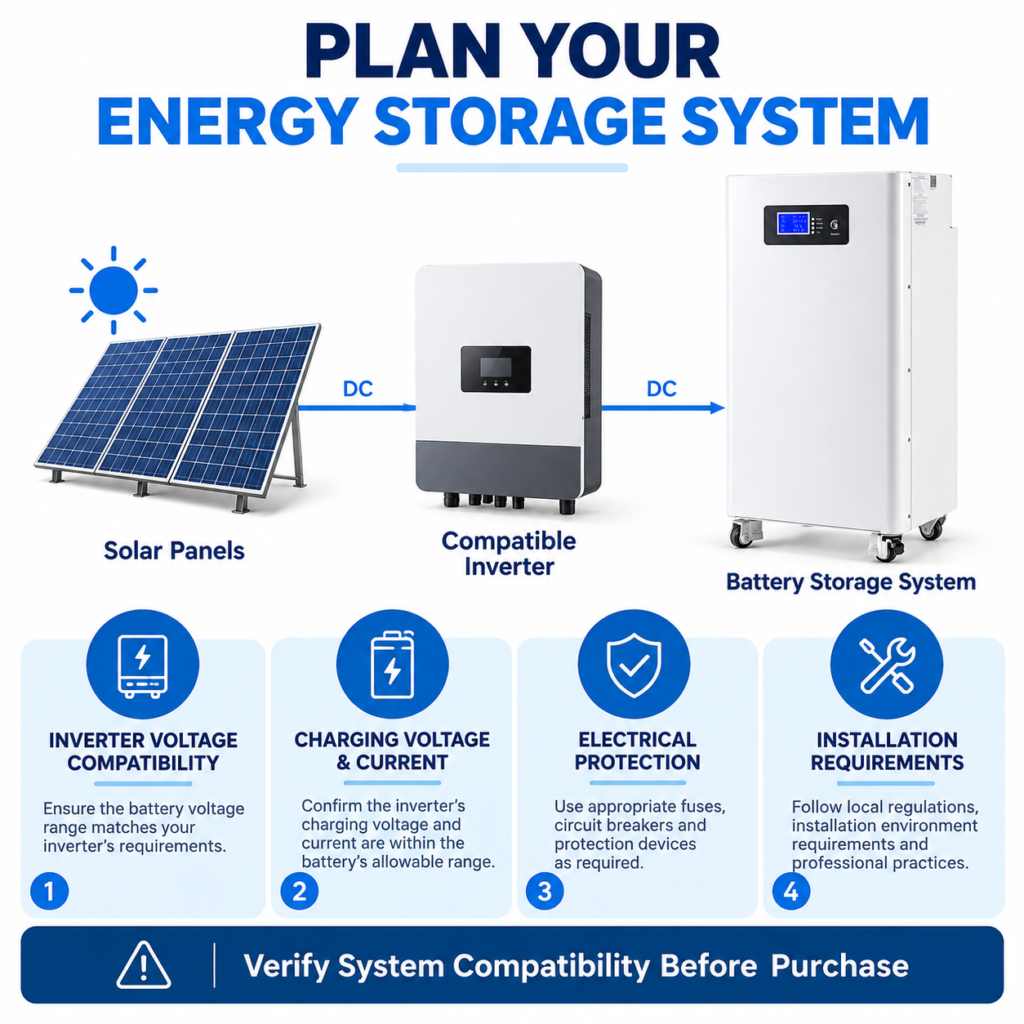
These values should be used as the basis for preliminary product evaluation. Before installation, buyers should confirm compatibility with their inverter, chargeur, electrical protection equipment, and intended operating environment.
3. Why Consider LiFePO4 Battery Technology?
Lithium iron phosphate batteries are widely considered for stationary energy storage because of their established use in rechargeable battery systems.
Suitable for Repeated Charge and Discharge
Solar energy storage systems may charge during periods of solar generation and discharge when electricity is needed. Battery selection should therefore account for the expected operating pattern, current requirements, and charging strategy.
Clearly Defined Electrical Limits
This battery specifies a charge limit voltage of 58.4V ±0.5V and a discharge cut-off voltage of 41.6V ±0.5V. These parameters help system integrators assess whether the battery can be configured appropriately with compatible equipment.
Designed for Energy Storage Applications
The 51.2V 300Ah configuration provides 15.36kWh of calculated nominal energy. This capacity can be considered for applications that require a substantial battery storage unit, subject to load requirements and system design.
Battery performance and service life depend on temperature, conditions de charge, discharge depth, actuel, and other operating factors. Buyers should review the complete technical documentation rather than relying on chemistry alone when comparing products.
4. Potential Applications of a 15.36kWh Battery
The suitability of a battery depends on the required energy, peak power, operating voltage, inverter compatibility, and installation conditions. The following are potential application areas for evaluation.
Residential Solar Energy Storage
For homes equipped with compatible solar systems, a battery can store energy for later use. The appropriate capacity depends on household consumption, solar generation, exigences de sauvegarde, and the design of the complete system.
Backup Power Systems
A battery may be considered for backup applications when paired with compatible power conversion equipment and a properly designed electrical system. Buyers should assess the expected load, starting current of connected equipment, and required backup duration.
Off-Grid Energy Projects
Off-grid projects require careful coordination among battery storage, solar generation, inverter capacity, and load demand. The battery’s specified current and voltage limits should be checked against the system design.
Commercial and Stationary Storage Projects
Installers, distributeurs, and system integrators may evaluate this battery for suitable stationary energy storage projects. Avant le déploiement, they should verify local installation requirements, system protection, and any applicable certification or documentation requirements.
5. Understanding the 6,000-Cycle Rating
Cycle life is an important consideration when comparing rechargeable batteries.
The supplied specification lists a rating of 6,000 cycles with more than 80% capacity retention under specified test conditions. The stated conditions include standard charging and discharging, a 30-minute rest between charge and discharge, and a test temperature of 20 ±5°C.
This rating should not be interpreted as a guarantee that every installed battery will achieve the same result in every application.
Actual cycle life can vary according to:
- Depth of discharge
- Charging and discharging current
- Ambient and battery temperature
- Charging strategy and control settings
- Installation conditions and maintenance
- Actual operating patterns
For project planning, buyers should evaluate the cycle-life test conditions alongside the expected daily energy throughput and operating environment.
6. Charging, Discharging, and Temperature Considerations
Correct charging and discharging settings are essential for battery operation.
The specified maximum continuous charging current is 150A, and the maximum continuous discharging current is 200A. The standard charging current is 60A, while the specification also lists 150A as the fast charging current.
The specified operating temperature ranges are:
- Charging: 0°C à 45°C
- Discharging: -20°C à 60°C
- Storage: -10°C à 45°C
These ranges are not interchangeable. Charging and discharging must remain within their respective limits, and the complete installation should follow the supplier’s operating instructions.
Before connecting the battery, system designers should verify the charger’s voltage and current settings, inverter requirements, cable sizing, protection contre les surintensités, polarity, and installation clearances.
7. What Should Buyers Check Before Purchasing?
For importers, wholesalers, distributeurs, and energy storage system integrators, checking the following items can help reduce procurement and integration risks.
Inverter compatibility: Confirm that the inverter supports the battery’s nominal voltage, charging voltage, current requirements, and any required communication interface.
Application requirements: Estimate energy consumption, peak load, backup duration, and expected charging opportunities.
Dimensions physiques: The specified cabinet dimensions are 890 × 416 × 237mm. Confirm sufficient room for installation, wiring, ventilation, and servicing.
Technical documentation: Request the applicable specification sheets, test reports, transport documents, and certification documents required for the intended market.
Commercial requirements: Confirm minimum order quantity, sample availability, delivery arrangements, options de personnalisation, and warranty terms directly with the supplier.
Communication and parallel operation: If a project requires CAN, RS485, wireless monitoring, or multiple batteries operating together, obtain written confirmation of the supported features before purchase.
These checks are particularly important for projects where the battery must integrate with existing equipment or meet local regulatory requirements.
8. Why Work with an Experienced Battery Supplier?
Selecting a battery is only one part of an energy storage project. Procurement teams also need clear technical information, product documentation, communication during evaluation, and a supplier that understands their application requirements.
Shenzhen Yi Fang Technology Co., Ltée. supports business customers evaluating battery products and energy storage solutions for different markets.
Pour les distributeurs, importateurs, installateurs, and project buyers, sharing the intended application and system requirements early in the purchasing process helps determine whether a product is appropriate for the project.
When requesting a quotation, buyers should provide the target market, estimated order quantity, application, inverter configuration, sample requirements, and expected purchasing schedule. This information helps the supplier review the request more effectively.
9. Foire aux questions
What is the energy capacity of a 51.2V 300Ah battery?
Its calculated nominal energy is 15.36kWh, based on 51.2V multiplied by 300Ah. Usable energy depends on operating limits and system losses.
What is the maximum continuous discharge current?
The supplied specification lists a maximum continuous discharge current of 200A. The connected system must remain within the battery’s operating limits.
What is the maximum continuous charging current?
The specified maximum continuous charging current is 150A. Compatible charging equipment and correct settings are required.
How many cycles is the battery rated for?
The specification lists 6,000 cycles with more than 80% capacity retention under specified test conditions. Actual results vary with operating conditions.
Can this battery work with any solar inverter?
Non. Compatibility must be checked against the inverter’s voltage range, charging settings, current limits, protection requirements, and communication support.
Is the battery suitable for my project?
Suitability depends on the energy demand, peak power, operating environment, inverter compatibility, and applicable installation requirements. Share these details with the supplier for a technical review.
Conclusion
A 51.2V 300Ah LiFePO4 battery provides a calculated nominal energy capacity of 15.36kWh and defined electrical operating limits for evaluating compatible energy storage applications.
Its 6,000-cycle test rating, specified charging and discharging currents, and cabinet dimensions give buyers useful information for preliminary technical assessment. Cependant, final selection should always be based on the complete system design, verified documentation, and actual project requirements.
Planning a solar energy storage or backup power project?
Contact Shenzhen Yi Fang Technology Co., Ltée. with your application, required quantity, target delivery country, and inverter configuration to discuss product suitability and B2B supply options.