
Per i produttori di batterie, cycle life is an important factor when evaluating rechargeable lithium ion battery cells. It affects how frequently a battery pack may need to be replaced, how consistently it performs during long-term operation, and whether it meets the requirements of its intended application.
Tuttavia, the cycle life of a batteria agli ioni di litio is not determined by capacity alone. Charging conditions, corrente di scarica, temperatura operativa, resistenza interna, and battery management all influence how a cell ages over time.
For manufacturers developing high-capacity battery packs, understanding these factors is essential when selecting a suitable 21700 lithium ion battery cell. This article explores the main conditions affecting cycle life and examines the specifications of Yifang’s high-capacity 21700 rechargeable battery cell.
🔋 1. Charging and Discharging Conditions
Charging and discharging conditions have a direct influence on lithium ion battery degradation. Repeated energy transfer causes gradual chemical and structural changes inside the cell, which can reduce its available capacity over time.
Charging current is particularly important. Excessively high charging currents under unsuitable conditions may increase heat generation and accelerate battery aging. Similarly, demanding discharge conditions can place additional stress on the electrode materials.
Per i progettisti di pacchi batteria, it is important to match charging and discharging parameters with the cell manufacturer’s specified operating limits.
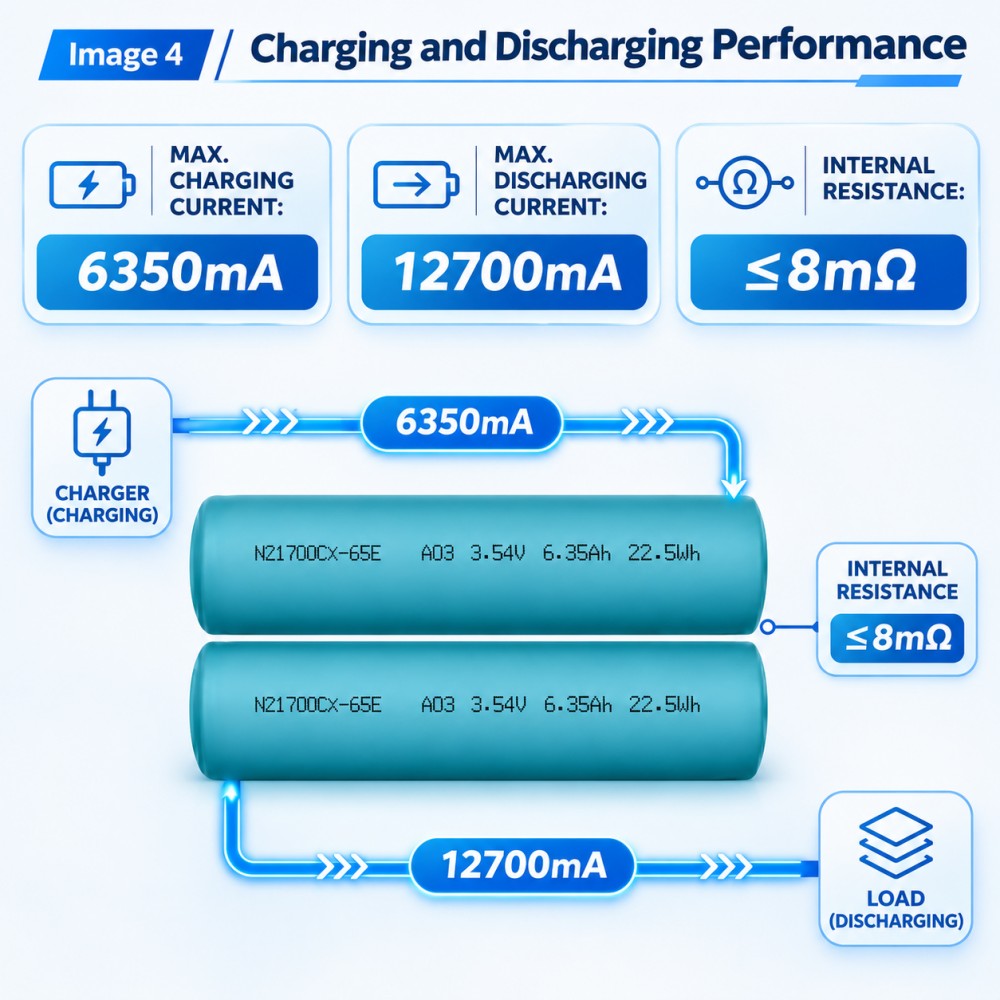
Di Yifang 21700 rechargeable lithium ion battery cell has a maximum charging current of 6.35A and a maximum discharge current of 12.7A under specified operating conditions. These ratings provide useful reference points during battery pack development. Actual charging and discharging settings should follow the manufacturer’s detailed specifications rather than treating maximum ratings as recommended continuous operating values.
🌡️ 2. Operating Temperature and Heat Management
Temperature is another major factor affecting the cycle life of lithium ion battery cells. Both high and low temperatures can influence electrochemical reactions inside a battery.
High temperatures may accelerate unwanted side reactions and contribute to capacity degradation. They can also increase safety risks if a battery operates outside its permitted temperature range. Low temperatures, meanwhile, can reduce charging and discharging performance. Charging under unsuitable low-temperature conditions may also increase the risk of lithium plating.
Effective thermal management is therefore important when designing rechargeable battery packs.
Battery manufacturers should consider:
- Heat generated during charging and discharging.
- Ventilation and heat dissipation within the battery enclosure.
- Temperature differences between individual cells.
- The expected ambient temperature of the application.
- Temperature monitoring and protective controls.
A well-designed thermal management system helps maintain more consistent operating conditions and reduces unnecessary thermal stress on battery cells.
⚡ 3. Internal Resistance and Electrical Performance
Internal resistance affects how a lithium ion battery responds to electrical loads. When current passes through a cell, internal resistance contributes to voltage drop and heat generation.
As a battery ages, its internal resistance may gradually increase. This can lead to greater energy loss, reduced power delivery, and additional heat during operation.
Per i produttori di batterie, internal resistance is an important parameter when evaluating cell consistency and designing electrical configurations.
Yifang’s high-capacity 21700 battery cell features an AC internal resistance of no more than 8mΩ. This specification provides a useful reference for electrical performance evaluation and cell selection.
Tuttavia, AC internal resistance and DC internal resistance are measured using different methods and should not be treated as interchangeable values. Resistance measurements should also be evaluated alongside other parameters, including capacity, voltage behavior, e temperatura operativa.
🔌 4. Battery Management System and Charging Protection
Un sistema di gestione della batteria (BMS) plays an important role in protecting lithium ion battery packs during operation. Although the BMS does not prevent all forms of natural cell aging, appropriate monitoring and protection can help avoid operating conditions that accelerate degradation.
A properly configured BMS generally monitors key parameters such as:
- Sovratensione: Prevents individual cells from exceeding their permitted charging voltage.
- Undervoltage: Helps prevent excessive discharge.
- Sovracorrente: Protects the battery pack against excessive current.
- Temperatura: Monitors operating conditions and supports thermal protection.
- Bilanciamento cellulare: Helps maintain more consistent voltage levels between cells in a series-connected battery pack.
For battery pack developers, BMS configuration should be matched to the selected cell specifications, series-parallel arrangement, e requisiti dell'applicazione.
This is particularly important for high-capacity 21700 pacchi batteria, where multiple cells work together to provide the required voltage and capacity.
📊 5. Cell Consistency and Battery Pack Integration
The performance of an individual battery cell does not automatically represent the performance of a complete battery pack. When multiple lithium ion cells are connected, differences in capacity, resistenza interna, and aging behavior can affect the overall system.
Per esempio, in a series-connected configuration, a weaker cell may reach its voltage limit earlier than other cells. In parallel configurations, differences between cells can also influence current distribution.
To improve battery pack consistency, manufacturers should pay attention to:
- Capacity matching before assembly.
- Consistenza della resistenza interna.
- Voltage matching during pack integration.
- Appropriate series and parallel configurations.
- Reliable electrical connections and protection design.
Selecting cells with clearly defined specifications makes it easier for engineers to evaluate compatibility and establish suitable battery pack designs.
🧪 6. How Do Storage and Usage Patterns Affect Battery Aging?
Battery aging continues even when a lithium ion cell is not actively being used. This process is commonly referred to as calendar aging, which occurs alongside cycle aging.
Storage conditions can influence how quickly this degradation takes place. Long-term storage at high temperatures or at an unsuitable state of charge may accelerate capacity loss.
For battery pack manufacturers and distributors, proper storage and handling procedures are therefore important throughout inventory management and transportation.
Nelle applicazioni pratiche, battery usage patterns also matter. Frequent deep discharges, prolonged exposure to high temperatures, and repeated operation near maximum current limits may place additional stress on the cells.
Maintaining suitable charging levels and operating conditions can help support more stable long-term performance.
🔍 7. Yifang High-Capacity 21700 Cella della batteria agli ioni di litio
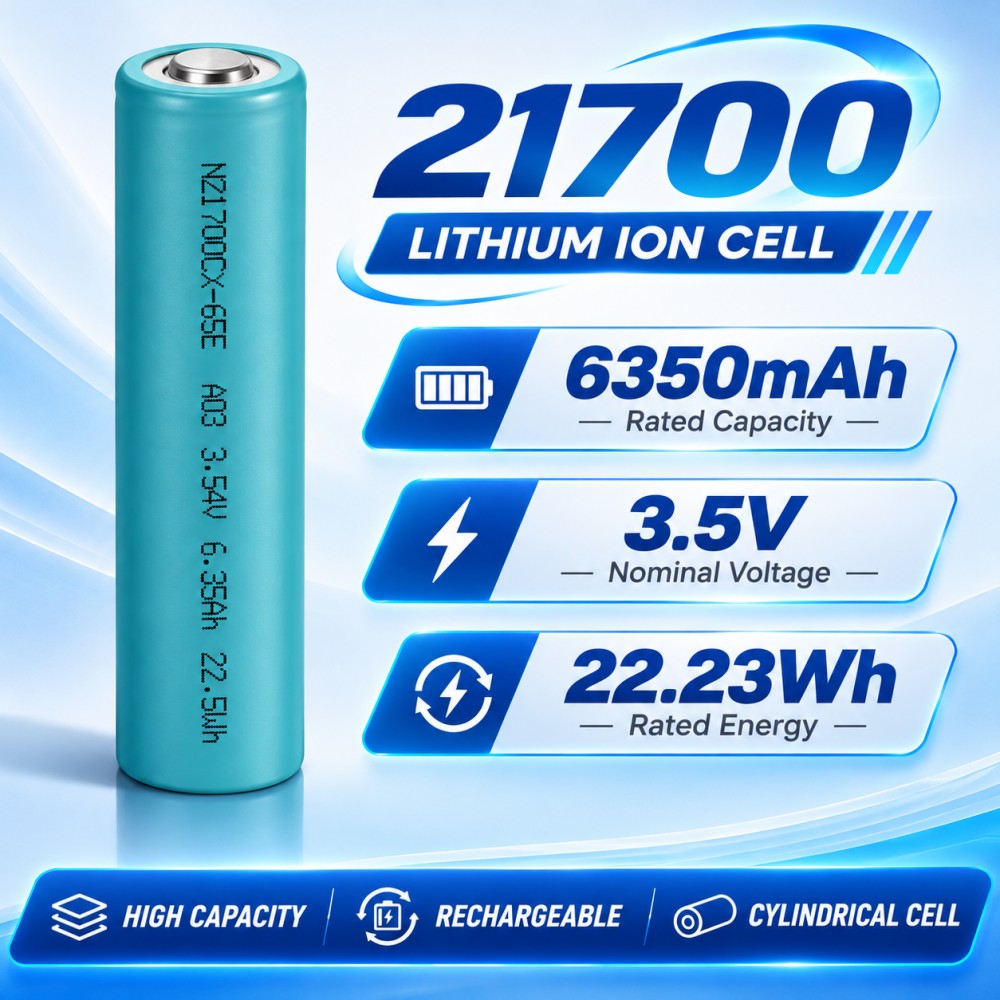
When selecting a 21700 rechargeable lithium ion battery cell for battery pack integration, engineers need to consider more than its physical dimensions. Capacità, tensione nominale, valutazioni attuali, and internal resistance all contribute to the evaluation process.
Yifang offers a high-capacity 21700 cylindrical lithium ion battery cell with the following specifications:
- Capacità nominale: 6350mAh
- Tensione nominale: 3.5V
- Energia nominale: 22.23Wh
- Corrente di scarica massima: 12.7UN
- Corrente di carica massima: 6.35UN
- Resistenza interna CA: ≤8mΩ
- Diametro massimo: 21.40mm
- Altezza massima: 70.75mm
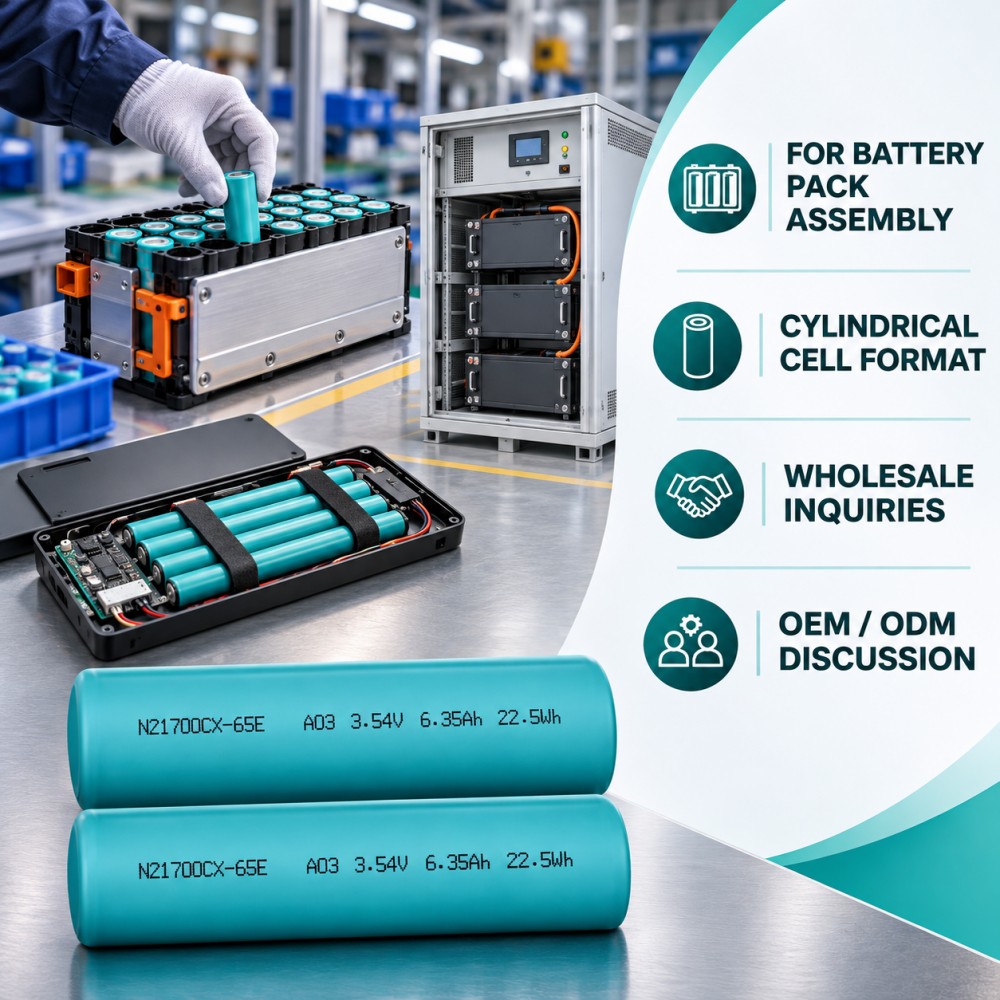
Con una capacità nominale di 6350 mAh, questa alta capacità 21700 battery cell provides a compact cylindrical format for customized rechargeable battery solutions. Its electrical and dimensional specifications offer battery pack designers important reference data when evaluating cell compatibility, configurazione del pacchetto, e requisiti dell'applicazione. For manufacturers developing customized lithium battery packs, reviewing the complete technical datasheet and confirming operating conditions with the supplier are essential steps before production.
Conclusione
The cycle life of a 21700 lithium ion battery cell depends on several interconnected factors, including charging and discharging conditions, temperatura operativa, resistenza interna, BMS protection, consistenza cellulare, and storage practices.
Per i produttori di batterie, selecting cells with suitable electrical specifications is only the starting point. Proper integration, gestione termica, and charging control are equally important for supporting reliable long-term operation.
Yifang’s 6350mAh 21700 rechargeable lithium ion battery cell offers a high-capacity cylindrical solution for customized battery pack development. By evaluating its specifications alongside the requirements of the target application, manufacturers can make more informed decisions when designing rechargeable battery systems.