
A lithium-ion rechargeable cell does not lose capacity simply because it has been used a certain number of times. Its aging is closely related to how it is charged, discharged, stored, and operated. In a real battery pack, température, demande actuelle, cell matching, and system design also play a part.
This is why cycle life should not be treated as a single number on a datasheet. Pour les concepteurs de batteries, the more useful question is whether a cell can maintain stable performance under the conditions of the finished product.
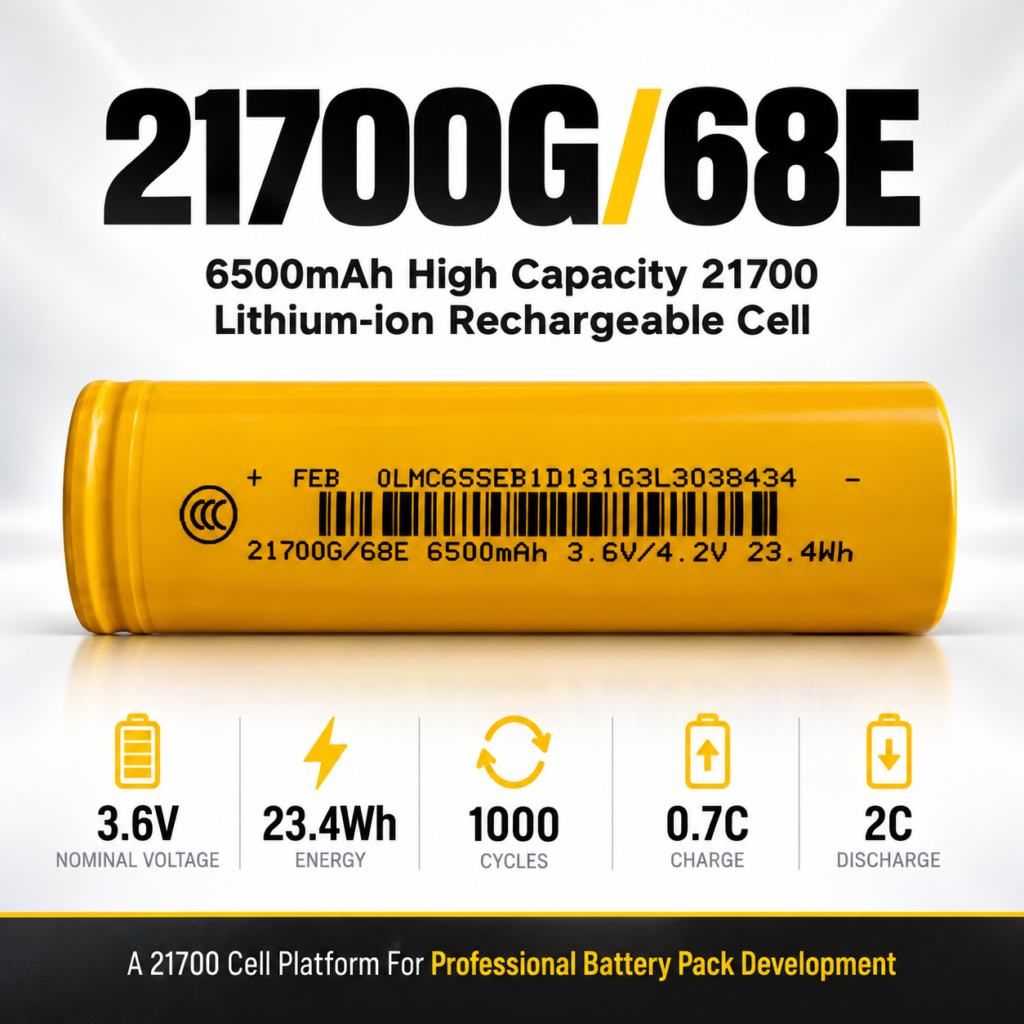
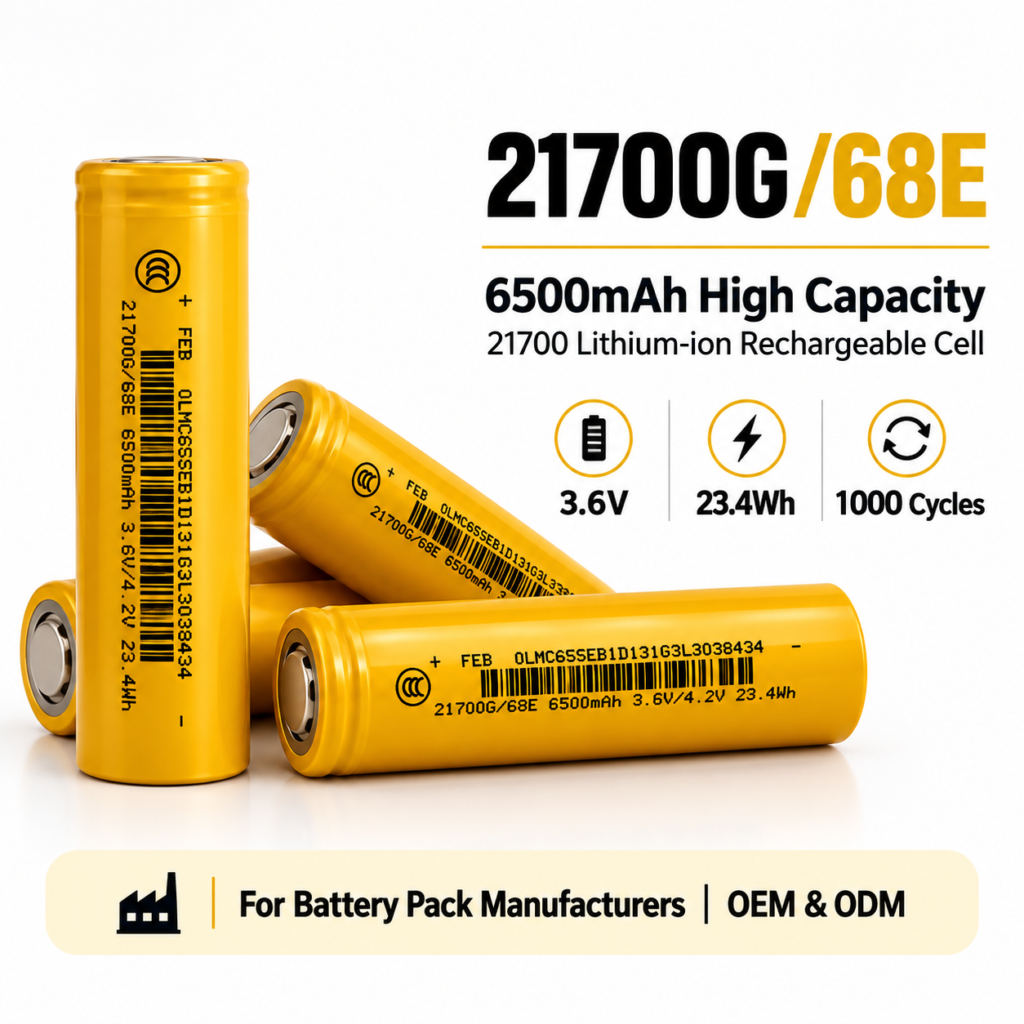
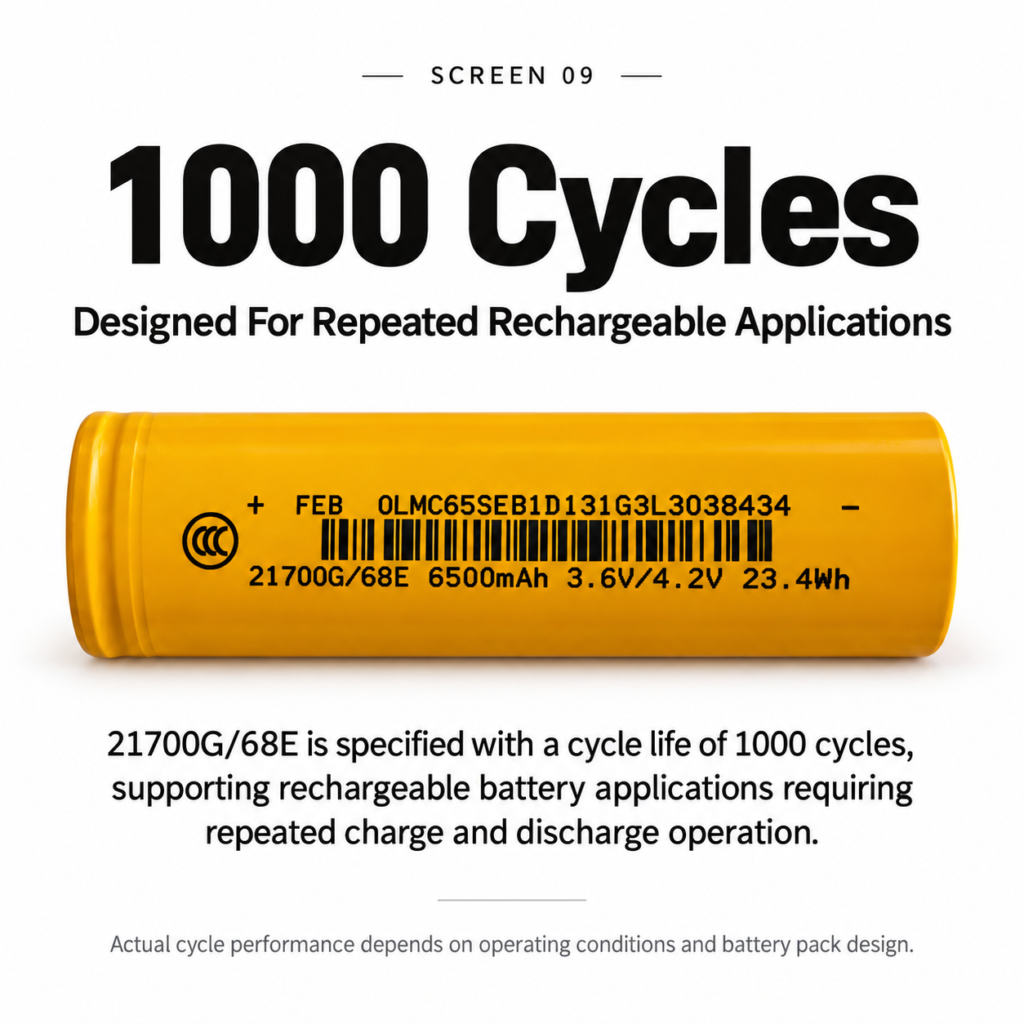
Yifang’s 21700G/68E is a 6500mAh high-capacity pile rechargeable au lithium-ion developed in a compact 21700 format cylindrique. It has a 3.6V nominal voltage, a rated 0.7C charge rate, and a 2C discharge rate. Its rated cycle life is 1000 cycles, providing a reference point for applications that require repeated charging and discharging.
Cycle Life Is More Than a Number
When manufacturers specify cycle life, they test the cell under defined conditions. These conditions normally include charging and discharge rates, température, profondeur de décharge, and a capacity-retention limit.
The result gives buyers a useful basis for comparison. It does not mean that every cell will reach exactly the same number of cycles in every application.
Consider two battery packs using the same cell. One may operate in a moderate environment with regular partial charging. The other may face high temperatures, heavy loads, and frequent deep discharge. Their aging patterns can be very different. Pour cette raison, designers should always read the cycle-life figure together with the test conditions behind it.
Charging Has a Direct Impact on Cell Aging
Charging is one of the most important operating conditions.
The 21700G/68E supports a 0.7C charge rate. Staying within the specified charging conditions helps the cell operate within its intended range.
Charging at a higher rate can increase heat generation and place additional stress on the cell. The effect becomes more significant when fast charging occurs repeatedly or when the battery cannot remove heat effectively.
The charging system also matters. A suitable battery management system should control charging according to the requirements of the cell and the complete pack.
For product developers, the goal is not simply to charge the battery as quickly as possible. A practical charging profile should balance charging time, conditions thermiques, user requirements, and long-term battery performance.
Discharge Current Matters Too
The same principle applies when the battery delivers power.
The 21700G/68E has a rated 2C discharge rate, giving designers a reference for applications with repeated energy demands. Actual battery behavior, cependant, depends on the load profile.
A device that draws a moderate current for several hours puts a different demand on the cell than equipment that repeatedly requires high current for short periods.
High current can increase heat and electrical stress. If this happens frequently, it may contribute to faster capacity loss. Battery designers should therefore look at the complete load profile. Peak current, courant moyen, durée de décharge, and frequency all matter when assessing a cell for a particular application.
Temperature Can Change the Aging Process
Heat is one of the common concerns in lithium-ion battery design.
As cell temperature rises, chemical reactions inside the cell can accelerate. Long periods of operation at elevated temperatures may therefore increase degradation.
Low temperatures create a different set of challenges. They can reduce available performance and affect charging behavior. Charging a lithium-ion cell under unsuitable low-temperature conditions can also create additional risks.
Temperature is not always uniform inside a battery pack. Cells positioned near heat sources may operate differently from cells located in cooler areas. This makes thermal design important. Airflow, cell spacing, enclosure design, and the position of heat-generating components can all influence the operating environment.
Deep Discharge Can Increase Battery Stress
A battery does not need to use all of its available capacity during every cycle.
Depth of discharge (DoD) describes how much of the battery’s available capacity is used before recharging. Repeated deep discharge can place more stress on a cell than a shallower operating range.
This does not mean that every application should use a shallow discharge. The required operating range depends on the product. Portable power equipment may need more available energy, while a backup system may follow a very different operating pattern. The important point is to match the working range with the actual application instead of assuming that the rated capacity should always be fully used.
Cell Matching Becomes Important in Multi-Cell Packs
One cell may perform well on its own. Once dozens of cells work together, consistency becomes much more important.
Battery packs often connect cells in series and parallel to reach the required voltage and capacity. Differences between individual cells can lead to uneven charging and discharge behavior.
Capacité, résistance interne, caractéristiques de tension, and aging rate can vary between cells. If these differences become significant, some cells may experience greater stress than others.
Good cell matching and appropriate pack management can help maintain more balanced operation. This is especially important for battery systems that contain a large number of cells and operate through many charge and discharge cycles.
Battery Pack Design Can Affect the Result
The cell is only one part of the battery.
A finished pack also includes the battery management system, connexions électriques, composants de protection, enceinte, structure thermique, and charging system. Each part can influence how the cells operate.
Par exemple, une mauvaise conception thermique peut créer des points chauds. Une distribution inégale du courant peut exercer un stress supplémentaire sur certaines cellules. Une stratégie de protection inadaptée peut également affecter la plage de fonctionnement du pack. C'est pourquoi la durée de vie nominale d'une cellule ne doit pas être considérée comme un chiffre garanti pour la batterie finie.. Le résultat final dépend de la manière dont le système complet utilise la cellule.
La capacité et le poids doivent encore être équilibrés
Pour de nombreux produits de batterie, les concepteurs ont besoin de plus d'énergie sans rendre le sac inutilement volumineux ou lourd.
Le 21700G/68E offre une capacité de 6 500 mAh pour un poids de 75 g. Ses dimensions sont 70.95 × 21,65 mm, lui donnant le format cylindrique standard associé à 21700 cellules.
Ces spécifications donnent aux concepteurs un point de départ pour évaluer la quantité de cellules et la disposition des packs.. A higher-capacity cell may reduce the number of cells needed for a particular pack capacity, but the final design still depends on voltage, current requirements, espace disponible, gestion thermique, and electrical configuration.
Autrement dit, capacity should be considered as part of the overall pack design rather than as an isolated advantage.
Different Applications Create Different Cycling Conditions
There is no single operating profile for rechargeable batteries.
Portable power equipment may see frequent daily cycling. Energy storage systems can follow longer charge and discharge periods. E-mobility applications may place higher demands on current delivery and thermal management. Robotics systems often need a balance between weight, capacité, and repeated operation. Backup power equipment may spend long periods in standby and operate only when power is needed. These differences matter when evaluating cycle life. A cell suitable for one application may require a different pack configuration or operating strategy in another.
Testing Gives a More Useful Picture
Datasheet specifications provide an important starting point, but commercial battery projects often require additional testing.
Sample testing allows designers to evaluate the cell under conditions that are closer to the finished product. This may include the expected charge rate, discharge profile, température de fonctionnement, profondeur de décharge, and pack configuration.
Testing can also reveal differences between individual cells and help engineers refine the battery management strategy.
Pour les projets de batteries OEM et personnalisés, this stage is particularly useful. It gives the development team an opportunity to identify potential issues before moving into larger-scale production.
Yifang 21700G/68E for High-Capacity Battery Designs
Yifang’s 21700G/68E combines a 6500mAh capacity with a 3.6V nominal voltage in a 21700 cellule cylindrique. The cell supports a rated 0.7C charge rate and 2C discharge rate, with a rated cycle life of 1000 cycles.
Its size and capacity make it suitable for battery designers who need to balance available space, quantité de cellules, capacité du paquet, et poids total. The cell can be evaluated for portable power equipment, systèmes de stockage d'énergie, packs de batteries pour la mobilité électrique, robotique, équipement d'alimentation de secours, et autres solutions de batteries lithium-ion personnalisées. Pour les projets commerciaux, designers can test samples before integrating the cells into series-parallel battery pack configurations. This allows the cell’s performance to be assessed against the actual requirements of the finished product.
What Should Battery Designers Look at Beyond Cycle Life?
Cycle life is important, but it should not be the only selection criterion.
Before choosing a lithium-ion rechargeable cell, designers should look at capacity, nominal voltage, charge and discharge rates, dimensions, poids, conditions de fonctionnement, and compatibility with the intended battery architecture.
The expected duty cycle also deserves attention. How often will the battery charge? How deeply will it discharge? What current will the equipment draw? What temperatures will the battery experience? Answering these questions gives a much clearer picture of whether a cell fits the application than comparing cycle-life figures alone.
Considérations finales
The cycle life of a lithium-ion rechargeable cell depends on the conditions under which the cell operates. Charging rate, courant de décharge, température, profondeur de décharge, cell consistency, and battery pack design can all influence long-term performance.
Yifang’s 21700G/68E offers 6500mAh capacity, 3.6V tension nominale, a 21700 format cylindrique, and a rated cycle life of 1000 cycles. These specifications give battery designers a practical starting point for evaluating high-capacity rechargeable battery solutions.
For a commercial battery project, the most meaningful evaluation comes from testing the cell under the conditions of the final application. That approach helps engineers move beyond the datasheet and understand how the cell is likely to perform inside the finished battery system.