
A lithium-ion rechargeable cell does not lose capacity simply because it has been used a certain number of times. Its aging is closely related to how it is charged, discharged, stored, and operated. In a real battery pack, temperatura, demanda atual, cell matching, and system design also play a part.
This is why cycle life should not be treated as a single number on a datasheet. For battery designers, the more useful question is whether a cell can maintain stable performance under the conditions of the finished product.
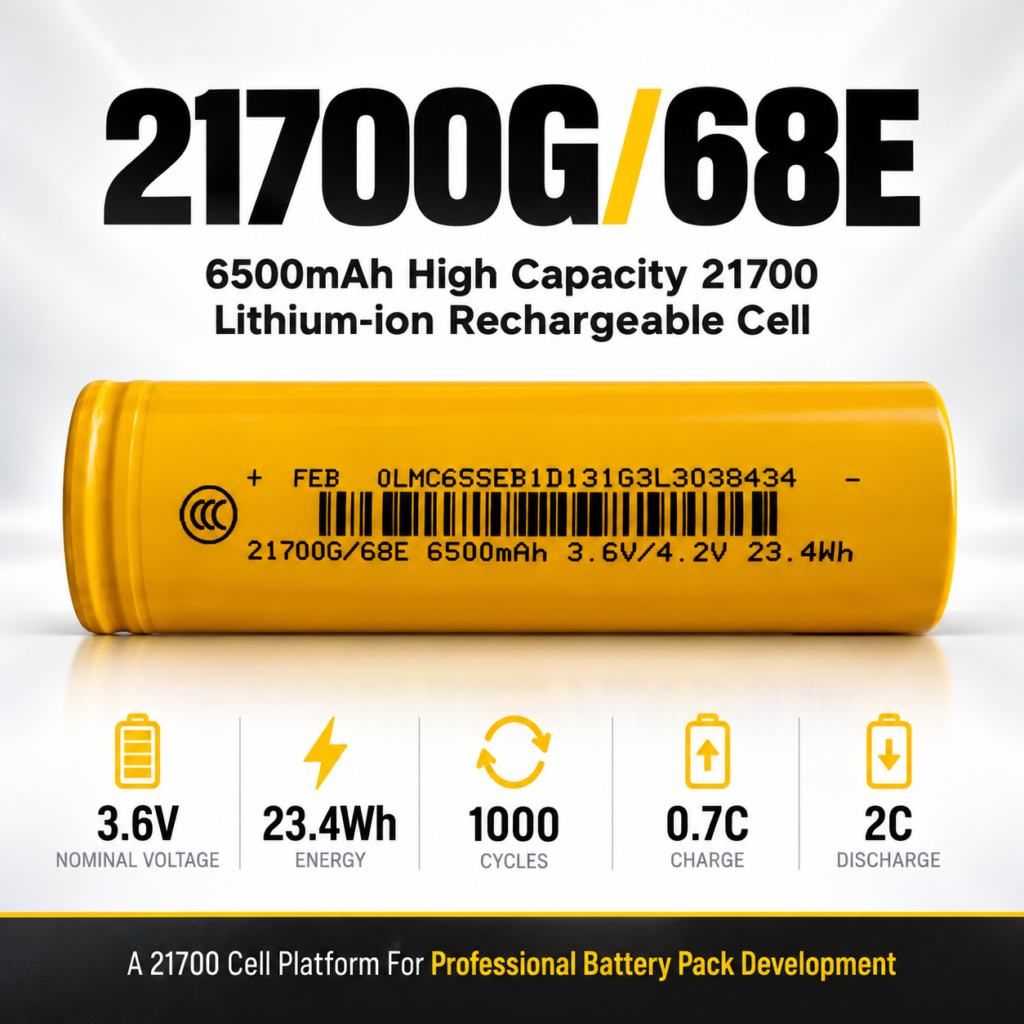
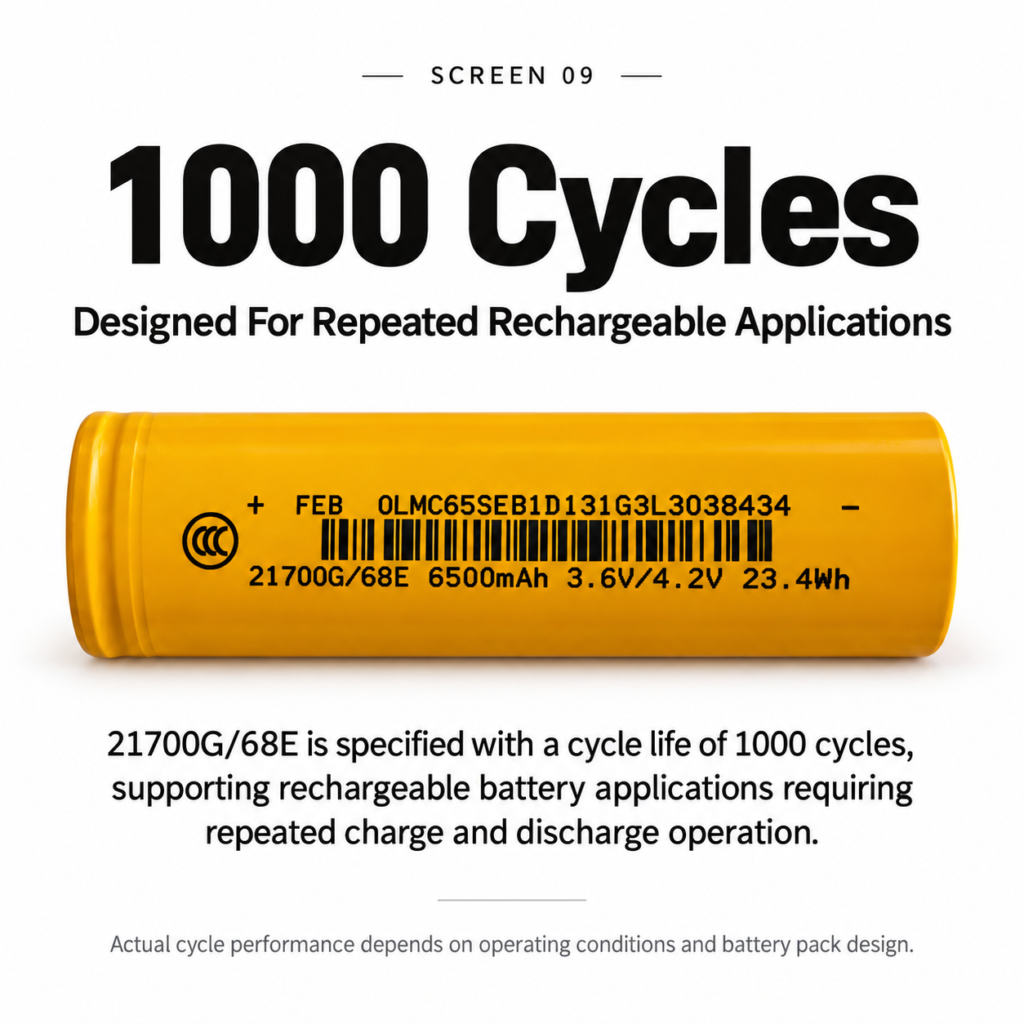
Yifang’s 21700G/68E is a 6500mAh high-capacity célula recarregável de íon de lítio developed in a compact 21700 formato cilíndrico. It has a 3.6V nominal voltage, a rated 0.7C charge rate, and a 2C discharge rate. Its rated cycle life is 1000 ciclos, providing a reference point for applications that require repeated charging and discharging.
Cycle Life Is More Than a Number
When manufacturers specify cycle life, they test the cell under defined conditions. These conditions normally include charging and discharge rates, temperatura, depth of discharge, and a capacity-retention limit.
The result gives buyers a useful basis for comparison. It does not mean that every cell will reach exactly the same number of cycles in every application.
Consider two battery packs using the same cell. One may operate in a moderate environment with regular partial charging. The other may face high temperatures, heavy loads, and frequent deep discharge. Their aging patterns can be very different. Por esta razão, designers should always read the cycle-life figure together with the test conditions behind it.
Charging Has a Direct Impact on Cell Aging
Charging is one of the most important operating conditions.
The 21700G/68E supports a 0.7C charge rate. Staying within the specified charging conditions helps the cell operate within its intended range.
Charging at a higher rate can increase heat generation and place additional stress on the cell. The effect becomes more significant when fast charging occurs repeatedly or when the battery cannot remove heat effectively.
The charging system also matters. A suitable battery management system should control charging according to the requirements of the cell and the complete pack.
For product developers, the goal is not simply to charge the battery as quickly as possible. A practical charging profile should balance charging time, condições térmicas, user requirements, and long-term battery performance.
Discharge Current Matters Too
The same principle applies when the battery delivers power.
The 21700G/68E has a rated 2C discharge rate, giving designers a reference for applications with repeated energy demands. Actual battery behavior, no entanto, depends on the load profile.
A device that draws a moderate current for several hours puts a different demand on the cell than equipment that repeatedly requires high current for short periods.
High current can increase heat and electrical stress. If this happens frequently, it may contribute to faster capacity loss. Battery designers should therefore look at the complete load profile. Peak current, average current, discharge duration, and frequency all matter when assessing a cell for a particular application.
Temperature Can Change the Aging Process
Heat is one of the common concerns in lithium-ion battery design.
As cell temperature rises, chemical reactions inside the cell can accelerate. Long periods of operation at elevated temperatures may therefore increase degradation.
Low temperatures create a different set of challenges. They can reduce available performance and affect charging behavior. Charging a lithium-ion cell under unsuitable low-temperature conditions can also create additional risks.
Temperature is not always uniform inside a battery pack. Cells positioned near heat sources may operate differently from cells located in cooler areas. This makes thermal design important. Airflow, cell spacing, projeto de gabinete, and the position of heat-generating components can all influence the operating environment.
Deep Discharge Can Increase Battery Stress
A battery does not need to use all of its available capacity during every cycle.
Depth of discharge (DoD) describes how much of the battery’s available capacity is used before recharging. Repeated deep discharge can place more stress on a cell than a shallower operating range.
This does not mean that every application should use a shallow discharge. The required operating range depends on the product. Portable power equipment may need more available energy, while a backup system may follow a very different operating pattern. The important point is to match the working range with the actual application instead of assuming that the rated capacity should always be fully used.
Cell Matching Becomes Important in Multi-Cell Packs
One cell may perform well on its own. Once dozens of cells work together, consistency becomes much more important.
Battery packs often connect cells in series and parallel to reach the required voltage and capacity. Differences between individual cells can lead to uneven charging and discharge behavior.
Capacidade, resistência interna, características de tensão, and aging rate can vary between cells. If these differences become significant, some cells may experience greater stress than others.
Good cell matching and appropriate pack management can help maintain more balanced operation. This is especially important for battery systems that contain a large number of cells and operate through many charge and discharge cycles.
Battery Pack Design Can Affect the Result
The cell is only one part of the battery.
A finished pack also includes the battery management system, electrical connections, componentes de proteção, recinto, thermal structure, and charging system. Each part can influence how the cells operate.
Por exemplo, poor thermal design can create hot spots. Uneven current distribution can place additional stress on certain cells. An unsuitable protection strategy can also affect the operating range of the pack. This is why a cell’s rated cycle life should not be viewed as a guaranteed figure for the finished battery pack. The final result depends on how the complete system uses the cell.
Capacity and Weight Still Need to Be Balanced
For many battery products, designers need more energy without making the pack unnecessarily large or heavy.
The 21700G/68E provides 6500mAh capacity while weighing 75g. Its dimensions are 70.95 × 21,65 mm, giving it the standard cylindrical format associated with 21700 células.
These specifications give designers a starting point for evaluating cell quantity and pack layout. A higher-capacity cell may reduce the number of cells needed for a particular pack capacity, but the final design still depends on voltage, current requirements, espaço disponível, gerenciamento térmico, and electrical configuration.
Em outras palavras, capacity should be considered as part of the overall pack design rather than as an isolated advantage.
Different Applications Create Different Cycling Conditions
There is no single operating profile for rechargeable batteries.
Portable power equipment may see frequent daily cycling. Energy storage systems can follow longer charge and discharge periods. E-mobility applications may place higher demands on current delivery and thermal management. Robotics systems often need a balance between weight, capacidade, and repeated operation. Backup power equipment may spend long periods in standby and operate only when power is needed. These differences matter when evaluating cycle life. A cell suitable for one application may require a different pack configuration or operating strategy in another.
Testing Gives a More Useful Picture
Datasheet specifications provide an important starting point, but commercial battery projects often require additional testing.
Sample testing allows designers to evaluate the cell under conditions that are closer to the finished product. This may include the expected charge rate, discharge profile, temperatura operacional, depth of discharge, and pack configuration.
Testing can also reveal differences between individual cells and help engineers refine the battery management strategy.
For OEM and customized battery projects, this stage is particularly useful. It gives the development team an opportunity to identify potential issues before moving into larger-scale production.
Yifang 21700G/68E for High-Capacity Battery Designs
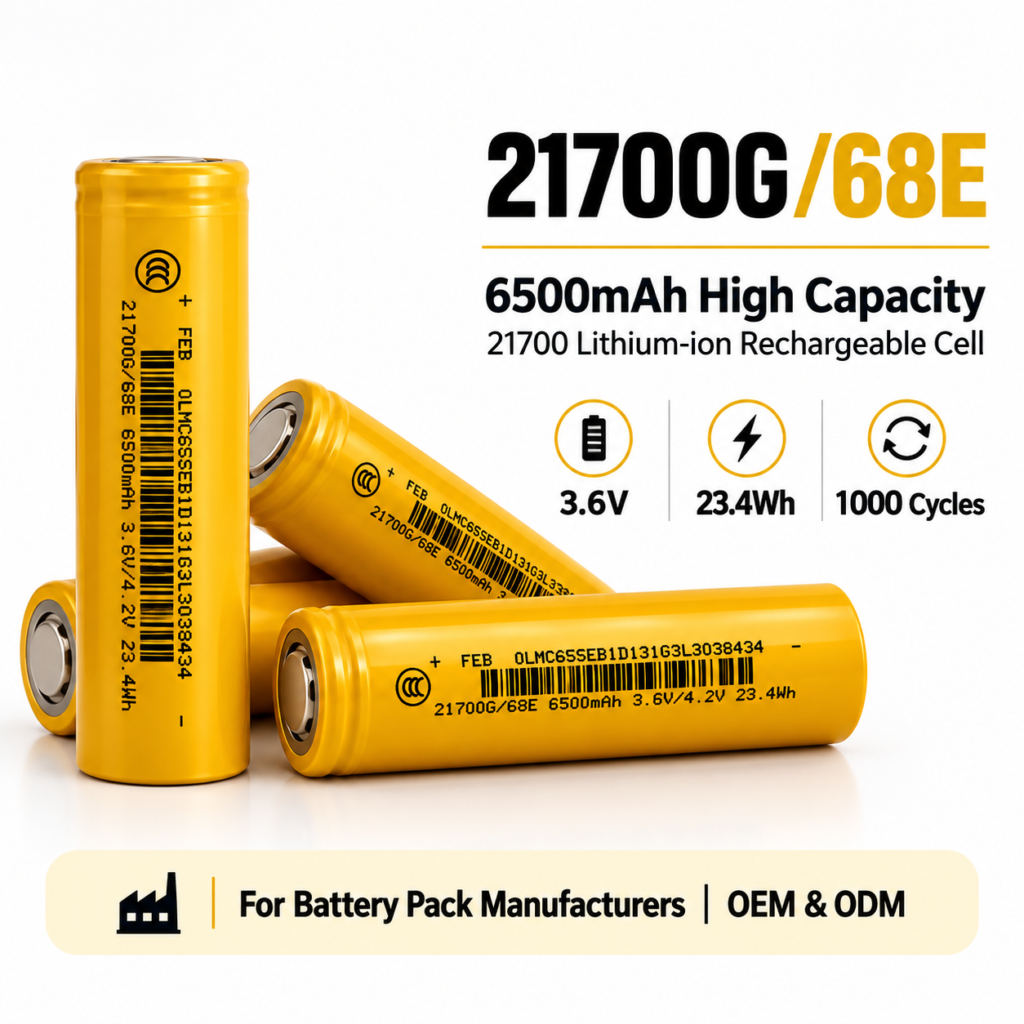
Yifang’s 21700G/68E combines a 6500mAh capacity with a 3.6V nominal voltage in a 21700 célula cilíndrica. The cell supports a rated 0.7C charge rate and 2C discharge rate, with a rated cycle life of 1000 ciclos.
Its size and capacity make it suitable for battery designers who need to balance available space, quantidade de células, capacidade do pacote, e peso total. The cell can be evaluated for portable power equipment, sistemas de armazenamento de energia, baterias de mobilidade elétrica, robótica, equipamento de energia de reserva, e outras soluções personalizadas de baterias de íons de lítio. Para projetos comerciais, designers can test samples before integrating the cells into series-parallel battery pack configurations. This allows the cell’s performance to be assessed against the actual requirements of the finished product.
What Should Battery Designers Look at Beyond Cycle Life?
Cycle life is important, but it should not be the only selection criterion.
Before choosing a lithium-ion rechargeable cell, designers should look at capacity, nominal voltage, charge and discharge rates, dimensões, peso, condições de operação, and compatibility with the intended battery architecture.
The expected duty cycle also deserves attention. How often will the battery charge? How deeply will it discharge? What current will the equipment draw? What temperatures will the battery experience? Answering these questions gives a much clearer picture of whether a cell fits the application than comparing cycle-life figures alone.
Final Considerations
The cycle life of a lithium-ion rechargeable cell depends on the conditions under which the cell operates. Charging rate, corrente de descarga, temperatura, depth of discharge, cell consistency, and battery pack design can all influence long-term performance.
Yifang’s 21700G/68E offers 6500mAh capacity, 3.6Tensão nominal, a 21700 formato cilíndrico, and a rated cycle life of 1000 ciclos. These specifications give battery designers a practical starting point for evaluating high-capacity rechargeable battery solutions.
For a commercial battery project, the most meaningful evaluation comes from testing the cell under the conditions of the final application. That approach helps engineers move beyond the datasheet and understand how the cell is likely to perform inside the finished battery system.